


Analysis by PMOI/MEK
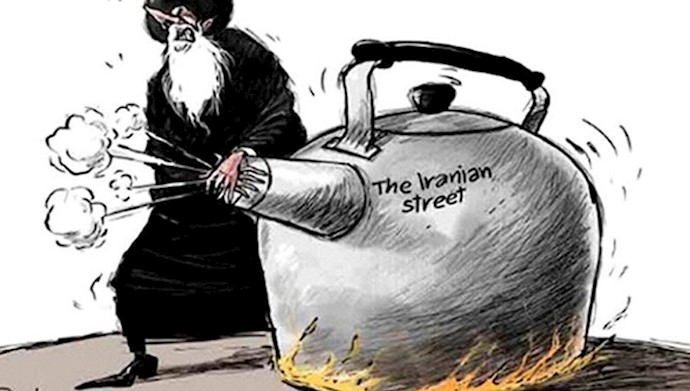
Iran, May 29, 2019 – The mood among ordinary Iranians has become so explosive that despite careful manipulation and the blatant crackdown by regime authorities, anger and dissent seeps through any crack it finds, which is also evident in statements by the rank and file of the regime.
Last Friday, Seyed Ahmad Miremadi, the Friday prayer imam of Khoramabad and Iranian Supreme Leader Ali Khamenei’s representative in Lorestan Province, western Iran, shed crocodile tears for the people who cannot make ends meet.
“The people’s major problem is their livelihoods. It’s the economy. This inflation has put incredible pressure on the people and I don’t know whether some authorities even really know what is happening to the lower and middle class? If they don’t, I invite them to come one day and sit in my office. People who come, they need something to eat. They need some dates to eat after a day of fasting. Aren’t we obliged to care for people’s livelihoods?” he said.
“They say, they’ve taken the foreign currency at state prices but did not import the goods [it was intended for]. To whom do you tell that? Who gave that foreign currency at state prices? Who took the foreign currency? How did he take it? Well, you say it, you should solve it yourself,” Miremadi continued.
There are currently two rates for buying U.S. dollars in Iran. The state-set rate is at 42,000 Iranian rials. However, no currency exchange owner sells dollars at this price except for the government itself. The real market value of U.S. dollars is currently at about 140,000 rials, roughly three times the state-set price.
The government is supposed to sell the petrodollars only for approved endeavors, such as importing basic goods or raw materials that keep Iranian factories running. However, the hard truth is that the kleptocratic system hands out the petrodollars to its relatives and network of corrupt elites who make excessive profits by doing virtually nothing.
Ahmad Alamolhoda, Khamenei's representative in Mashhad, an important city in northeast Iran, also acknowledged the harsh situation of people’s livelihoods and called on Iranian President Hassan Rouhani’s government to manage the status quo and improve the economic situation.
However, most horrified of all was Tehran’s Friday prayer imam Ali Movahedi-Kermani. While repeating other imam’s talking points, he also asked the regime to designate a place where ordinary people can come and complain.
“It’s natural that all the people aren’t alike. Some are supporters of the regime, some oppose the regime. Some have complaints. Some have protested. Where and when should these people talk their hearts out? If someone really wants to meet a minister and propose something, wants to say something, wants to talk his heart out, how can he do that? Is there a way for that in our society? Can they? When they write a letter, later they tell us that we wrote a letter but did not receive an answer. This procedure is wrong. Listen to the people’s complaints and know what the problems of the people are,” he said.
Movahedi-Kermani’s speech was broadcast live from Radio Tehran and while he was saying these very words about listening to the people’s complaints and letting them talk their heart out, an individual in the audience shouted, “I have been stripped of my assets and property, and yet no one cares!”
Let’s listen to what Radio Tehran broadcast live:
A man from the audience shouts, “My assets and property have been taken from me!”
Movahedi-Kermani: “At least learn from the Supreme Leader…”
The man continues to shout.
Movahedi-Kermani: “All right, find the individual who is responsible and tell him that.”
A man from the audience: “They’ve taken my life from me!”
Movahedi-Kermani: “As I said before, tell that to the individual who is responsible. What is the use of saying it here right now? You say that and I hear it [but] that individual isn’t here. You have to tell it to that individual. Now salute the Prophet Mohammad collectively!”
Asking a group to hail the Prophet Mohammad in such settings is a way to brush a sensitive subject under the carpet. When a great number of people salute the Prophet collectively, the protester feels forced into giving up the subject.
Later, when Tehran’s Friday prayers were broadcast on Iranian state-run television, this very part was cut out. There is, however, a very important lesson in this short encounter that can be extended to many similar situations and help us understand why the Iranian regime is not capable of real concessions, change and/r reforms.
The explosive mood in the Iranian society has reached such dangerous levels that even audience members of the regime’s supposedly most loyal core supporters can no longer tolerate it, and risk everything to show their frustration and anger on live TV.
This accumulated anger and tension has paralyzed the regime, knowing that any move can break this balance of human rights violations, harsh crackdown, and propaganda against a society that has been deprived of its most basic rights and needs for over 40 years.
And that is another indication why meaningful reforms have become a paradox and contradiction of themselves in the current regime.