

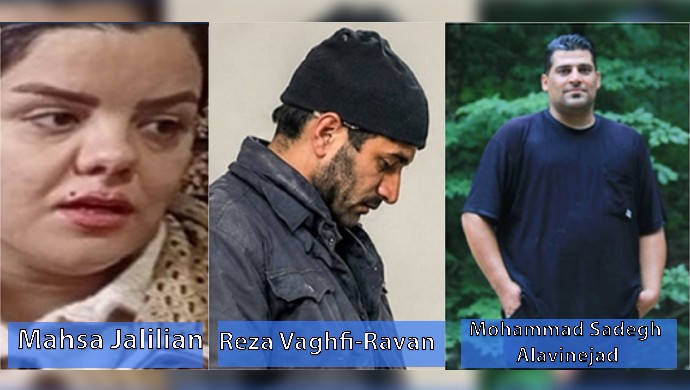

As more information emerges from the historic nationwide uprising that shook Iran from late 2025 into 2026, the People’s Mojahedin Organization of Iran (PMOI/MEK) has confirmed the deaths of three more of its Resistance Unit members. These brave individuals, previously listed as missing, were martyred during the peak of the bloody crackdown four months ago. Their sacrifices highlight the heavy toll paid by the Iranian resistance in its fight to overthrow the clerical regime.
The PMOI has verified the martyrdom of three missing PMOI/MEK members who lost their lives in direct confrontations with the regime’s suppressive forces in January 2026. Mohammad-Sadegh Alavinezhad, a 35-year-old with a master’s degree in electrical engineering, was killed during clashes with regime mercenaries on Enghelab Street in Tehran on January 8, 2026. On January 9, 30-year-old Mahsa Jalilian was shot directly by enemy forces in Eslamabad-e Gharb. A day later, on January 10, 44-year-old Reza Vaghfiravan was martyred during clashes in the city of Shahr-e Rey.
Four months after the December-January uprising, we have been able to confirm the death of three more PMOI/MEK members who were active in the Resistance Units network:
• Mohammad Sadegh Alavinejad, 35, electrical engineering graduate, was killed in clashes with security forces… pic.twitter.com/dsys3zAGUt
— People's Mojahedin Organization of Iran (PMOI/MEK) (@Mojahedineng) May 19, 2026
The battle against repressive security forces
These three heroes join a growing list of fallen resistance members. Previously, the PMOI announced a list of names between January 15 and January 29, 2026. Furthermore, the deaths of five additional PMOI members were confirmed through a list published by the office of regime president Masoud Pezeshkian on February 1, 2026.
The details of these five individuals demonstrate the fierce, organized pushback by the youth who actively targeted regime bases. Mostafa Azizi, 46, Majid Khoushehchin, 40, and 18-year-old Ramtin Mirzadokht were all killed on January 8, 2026, during an operation to take over a base of the regime’s repressive security forces in Vavan (Eslamshahr), Tehran. On the same day, 21-year-old Arshia Barari, a university student and championship-winning karate athlete, alongside 30-year-old cabinet maker Alireza Behgozin, laid down their lives while successfully capturing the regime’s security forces station in Sabzeh-Meydan in Zanjan.
A nationwide uprising led by Resistance Units
The historic protests began on December 28, 2025, initially sparked by Tehran bazaar shopkeepers protesting the collapse of the Iranian rial, soaring inflation, and severe shortages. However, demands for economic relief swiftly transformed into explicitly political slogans calling for regime change. The unrest spread to 400 counties and into universities, heavily supported by the PMOI Resistance Units.
To expand the protests and give them direction while defending unarmed civilians, Resistance Units carried out 630 operations against centers of the Revolutionary Guard (IRGC), the Basij, and other regime institutions. The regime responded with a communications blackout and a severe state crackdown, slaughtering thousands of civilians.
A mosaic of sacrifice across generations
The newly confirmed victims reflect the diverse demographics of the resistance. They join other valiant souls murdered by the regime’s repressive forces during the early January crackdown, such as Dr. Naeem Abdollahi, a 34-year-old who held a Juris Doctor degree and served as an assistant professor of political science at Tehran University. Abdollahi, who was imprisoned in Evin Prison in 2018 and expelled following the 2022 protests, was shot dead by the IRGC on January 8 while commanding Resistance Units in Tehran’s Naziabad district.
Naeem Abdollahi, 34, a PMOI Resistance Unit commander, was shot dead by the criminal IRGC on January 8 in Tehran’s southern Nazi Abad district. He held a Juris Doctor degree, was a political scientist, and served as an assistant professor at Tehran University.
Born in Kermanshah… pic.twitter.com/BST5mcjfqw
— People's Mojahedin Organization of Iran (PMOI/MEK) (@Mojahedineng) January 30, 2026
The regime’s savagery against the youth is also evident in the murder of 18-year-old PMOI supporter Mohammad Bahrami, who was brutally attacked with knives and machetes before being shot by state agents in Azadshahr, Golestan, on January 6.
This mosaic of sacrifice spans all generations. The list of martyrs includes Abbasali Ramezani, a 74-year-old veteran PMOI member and former political prisoner killed in Mashhad on January 19, alongside university student Zahra Bohlouli-Pour, and teenage workers like Reza Ghanbari and the Kadivarian brothers in Kermanshah. From the halls of Tehran University to the streets of Golestan, their blood continues to fuel the movement, joining the 120,000 martyrs who have fallen for freedom over the past four decades.