

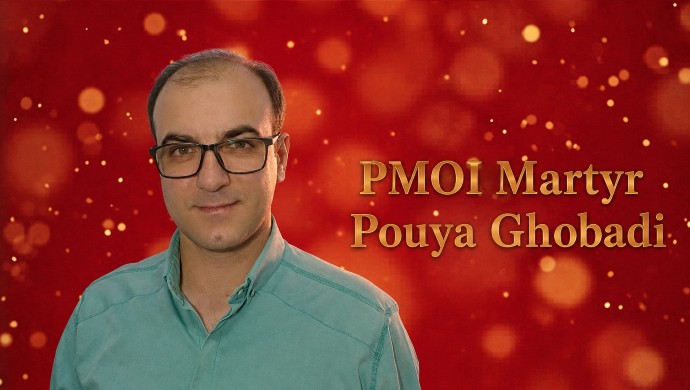

On the morning of March 31, 2026, the Iranian regime executed 33-year-old political prisoner and member of the People’s Mojahedin Organization of Iran (PMOI/MEK), Pouya Ghobadi. Yet, long before he was sent to the gallows, Ghobadi had already defeated his executioners.
A profound letter written by Ghobadi from Brigade 2 of the Greater Tehran Prison (Fashafouyeh) on August 2, 2025, has emerged as a historic testament to the unbreakable spirit of the Iranian Resistance. Penned just days after the regime executed two PMOI/MEK members, Behrouz Ehsani and Mehdi Hassani, the letter proves that the regime’s brutal machinery of death fundamentally fails to break the spirit of its opponents.
For 60 years, the PMOI has demonstrated against both the Shah’s dictatorship and the ruling mullahs that state violence only breeds a more defiant generation. Ghobadi’s letter is a powerful embodiment of this legacy, showing a young man who consciously chose the path of sacrifice for a free Iran.
The regime’s fatal miscalculation: Executions fuel the resistance
The clerical regime relies on executions to spread terror and paralyze society. However, Ghobadi’s letter exposes the strategic failure of this brutal tactic. Rather than instilling fear, the murders of his fellow resistance members only hardened his resolve.
“It is strange that the regime’s executioners, after years of massacring the Mojahedin, still haven’t understood that the execution of people like Mehdi and Behrouz will only add to our faith,” Ghobadi wrote. “It will only add to our courage and combativeness.”
PMOI Prisoner Pouya Ghobadi Performs a Song| Ghezel Hesar Prison https://t.co/I2i8Wohsb4
— SIMAY AZADI TV (@en_simayazadi) April 3, 2026
With astonishing bravery, Ghobadi embraced his potential fate, pledging to his God that he would “absolutely not surrender to this criminal regime.” Foreseeing his own execution, he made a conscious and proud sacrifice: “If the freedom of these people is made possible with the blood of someone like me, I will offer my blood with peace of mind for the liberation of my people.”
Tributes to fallen heroes: Mehdi Hassani and Behrouz Ehsani
A significant portion of Ghobadi’s letter is dedicated to honoring Mehdi Hassani and Behrouz Ehsani. Although Ghobadi noted he was never cellmates with Hassani, he praised Hassani’s legendary defiance. Ghobadi highlighted that Hassani completely “boycotted the court and didn’t attend it,” standing firmly by his political choices and departing the world proudly despite the psychological torture of the regime’s sham retrial processes.
Ghobadi then offered a deeply moving tribute to Behrouz Ehsani, with whom he shared a cell for nine months. He described Ehsani as a “lion-hearted man” whose fierce defiance against regime agents was perfectly balanced by the “utmost humility and modesty” he showed his fellow inmates. Recalling Ehsani’s unshakeable faith, Ghobadi wrote: “I still have the sound of his voice ringing in my ear, saying: ‘I swear to God, at the moment of execution, my heartbeat will not increase by even one beat.'”
The letter also sheds light on the extreme cowardice and brutality of the regime’s prison authorities. Ghobadi revealed that before hanging Ehsani, the executioners at Ghezel Hesar prison brutally beat him. He noted that the guards “hanged him injured and wounded” after mobilizing a massive force of 180 guards to attack just 19 defenseless political prisoners. Yet, even in his final moments, Ehsani “stood tall” against the guards, becoming a “guiding light” for Ghobadi and the entire resistance movement.
And just like Mehdi and Behrouz before him, Pouya defied the regime’s executioners, proving that nothing will stand in the will of Iran’s people to achieve freedom.
Full text of Pouya Ghobadi’s letter
Endless salutations to Mehdi Hassani and Behrouz Ehsani, who sacrificed their pure blood for the freedom of their people. Greetings to them, who stood firm until the last moment with their iron will and taught us the lesson of steadfastness and resistance.
I was not fortunate enough to be cellmates with Mehdi and never saw him even once. I only heard from other friends that one felt fresh and lively beside him, and I learned that he even boycotted the court and refused to attend it. Until his last day—despite the fears and hopes that one might naturally feel in such conditions after every accepted request for a retrial—he stood by his choices and departed proudly.
But Behrouz, with whom I had the honor of sharing a room and breathing the same air for nine months, was a lion-hearted man. Despite the fierce firmness we saw in him when facing the regime’s agents, he served all of us cellmates with the utmost humility and modesty. When they abducted him and took him to Ghezel Hesar, I always kept the thought in my mind that I would see him again.
I was, am, and will be fascinated by his resistance, his humility, and his inner purity. Greetings to him.
I still have the sound of his voice ringing in my ear, saying: “I swear to God, at the moment of execution, my heartbeat will not increase by even one beat.”
How could I ever forget his steadfastness and unshakeable faith?
It is strange that the regime’s executioners, after years of massacring the Mojahedin, still haven’t understood that the execution of people like Mehdi and Behrouz will only add to our faith. It will only add to our courage and combativeness.
I heard that in the height of baseness, the executioners of Ghezel Hesar, after beating the brothers—including Behrouz himself—separated him from the others and hanged him while he was injured and wounded.
In his final moments, Behrouz stood tall against the prison guards who had mobilized 180 personnel to attack 19 political prisoners. We had seen manifestations of his resistance in prison even before that.
Behrouz became a guiding light for me to see and walk the path more clearly. I pledge with my God that, like them, I will absolutely not surrender to this absolute criminal regime and will charge forward until its overthrow.
I pledge to remain steadfast and firm. If the freedom of these people is made possible with the blood of someone like me, I will offer my blood with peace of mind for the liberation of my people. In this path, I ask my God to assist me.
Either we smash the enemy’s head against the stone
Or he suspends our head on the gallows
Pouya Ghobadi
Brigade 2, Greater Tehran Prison (Fashafouyeh)
August 2, 2025