

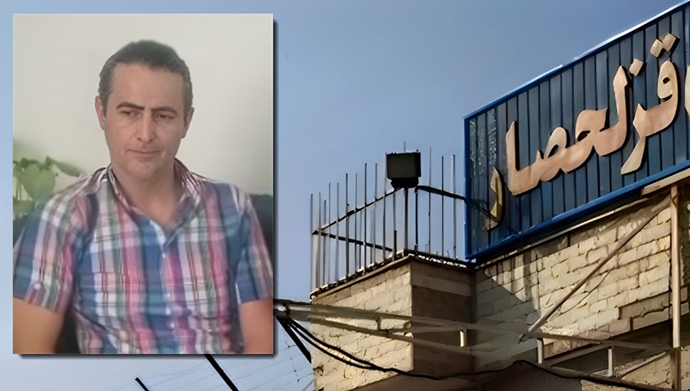

The Iranian regime’s brutal crackdown on dissent has reached a critical point with political prisoner Mehdi Hassani, a father of three, now facing imminent execution. His life hangs precariously in the balance after the regime’s Supreme Court rejected his third request for a judicial review on May 20, 2025, in a blatant disregard for due process.
Hassani’s case is a horrifying testament to the Iranian judiciary’s function as a tool of oppression, systematically targeting dissidents with torture, sham trials, and the death penalty.
A relentless denial of justice
The latest rejection of Mehdi Hassani’s plea for a retrial, announced on May 20, 2025, underscores the Iranian regime’s determination to silence him. His lawyer confirmed that Branch 29 of the Supreme Court dismissed the request—filed on April 28, 2025—for the third time.
Crucially, this decision was made, as in previous instances, without the court even bothering to obtain the original case file from the lower court and without permitting Hassani’s lawyer to review the file. This pattern of obstruction highlights a complete contempt for basic legal procedures and the right to a fair defense.
Hassani is currently incarcerated in Ghezel Hesar Prison, where political prisoners are often held before execution. This is not the first time the judiciary has flagrantly violated his rights. His second retrial request was similarly rejected by Branch 29 of the Supreme Court in April 2025, again without summoning the case file from Branch 26 of the Tehran Revolutionary Court, where the initial death sentence was handed down.
His defense attorney, Adel Ahmadian, at that time expressed outrage at the “total disregard for judicial transparency,” revealing he had been denied access to the case file.
Condemned on politically motivated charges after torture
Mehdi Hassani, a 48-year-old from Zanjan, was arrested on September 11, 2022. His ordeal began with severe torture during interrogations in the notorious Ward 209 of Evin Prison, known for its solitary confinement cells and interrogations under duress. Throughout much of his detention, he was reportedly denied legal access, a grave violation of his rights.
On September 16, 2024, the death sentence was handed down by the infamous Judge Iman Afshari of Branch 26 of the Tehran Revolutionary Court. Afshari is well-known for issuing harsh verdicts against dissidents. The charges against Hassani, which included “Moharebeh” (waging war against God), “corruption on earth,” and crucially, “membership in the PMOI,” reveal the political motivations behind his persecution. On January 7, 2025, the regime’s Supreme Court upheld the death sentence without referring the case for appeal, effectively sealing his fate without a proper judicial review. Amnesty International condemned his trial as “extremely unfair” in January 2025 statements, calling on authorities to overturn the death sentence and citing serious concerns about coerced confessions and the lack of due process.
A chilling part of the regime’s broader execution spree
Mehdi Hassani’s dire situation is not an isolated incident but part of a wider, horrifying escalation of state-sanctioned killings in Iran. Since Masoud Pezeshkian assumed the presidency in July 2024, the regime has overseen the execution of more than 1,100 people. This gruesome tally includes political prisoners, ethnic minority activists, and individuals accused of drug-related offenses, many of whom faced unfair trials without access to legal defense.
The case of Mehdi Hassani, marked by torture, denial of legal rights, and a judiciary determined to enforce a politically motivated death sentence, epitomizes the regime’s weaponization of capital punishment. Urgent international action is needed to halt his execution and to hold the Iranian regime accountable for its systematic human rights violations. Global silence or inaction will only enable further irreversible injustices against the people of Iran and brave individuals like Mehdi Hassani who dare to stand for freedom.