

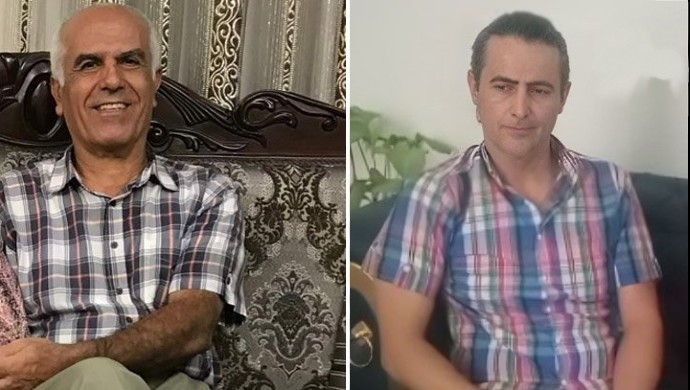

Two Iranian political prisoners, Behrouz Ehsani and Mehdi Hassani, are now at imminent risk of execution following the latest decision by the regime’s judiciary to reject their requests for retrial. Human rights defenders and legal experts have decried the denial of judicial review as a blatant violation of due process in the Iranian regime’s accelerating use of the death penalty to crush dissent.
On the evening of Tuesday, April 22, 2025, defense attorney Adel Ahmadian announced via his official X account that Branch 29 of the Supreme Court had rejected the retrial request for Mehdi Hassani—without even summoning the case file from Branch 26 of the Tehran Revolutionary Court, where the original death sentence had been issued. “This is the second time Branch 29 has refused to review the retrial request,” Ahmadian wrote, expressing outrage at the lack of judicial transparency. “None of the judicial authorities allowed me to review the case file.”
Iran Human Rights Monitor (Iran HRM) also confirmed that the retrial request for 70-year-old political prisoner Behrouz Ehsani has similarly been rejected. Both Ehsani and Hassani now face the implementation of their death sentences in Ghezel Hesar Prison, where they are currently held in the political prisoners’ ward.
The death sentences were initially handed down on September 16, 2024, by the notorious Judge Iman Afshari of Branch 26 of the Tehran Revolutionary Court—infamous for issuing harsh verdicts against dissidents. The charges against the two men included “armed rebellion (baghi), waging war against God (moharebeh), corruption on earth, membership in the PMOI [People’s Mojahedin Organization of Iran], gathering and colluding against national security, and illegal possession of weapons.” On January 7, 2025, the regime’s Supreme Court upheld the death sentences without referring the case for appeal, thereby sealing the fate of the two men without a proper judicial review.
Both prisoners were subjected to severe torture during their detention in Ward 209 of Evin Prison, notorious for its solitary confinement cells and interrogations under duress. Behrouz Ehsani, a former political prisoner during the 1980s, was arrested in Tehran on December 6, 2022. Despite his age and deteriorating health, he endured extended periods of torture. In a message from prison after receiving his sentence, Ehsani declared, “I will not bargain with anyone over my life and am ready to sacrifice my insignificant life for the cause of the liberation of the Iranian people.”
Mehdi Hassani, a 48-year-old father of three from Zanjan, was arrested on September 11, 2022. He was also tortured during interrogations in Evin and reportedly denied legal access throughout much of his detention.
International human rights organizations have condemned the Iranian judiciary’s treatment of Ehsani and Hassani. Amnesty International issued statements on January 16 and 23, describing the trial as “extremely unfair” and called on the authorities to overturn the death sentences. The organization cited serious concerns about coerced confessions, lack of due process, and the targeting of individuals for alleged ties to banned opposition groups.
The situation of these two men unfolds amid a broader crackdown on dissent in Iran. Since the appointment of Masoud Pezeshkian as president in July 2024, the regime has overseen the execution of more than 1000 people. This includes political prisoners, ethnic minority activists, and individuals accused of drug-related offenses—many following unfair trials and without access to legal defense.
The cases of Behrouz Ehsani and Mehdi Hassani highlight not only the peril faced by dissidents in Iran but also the systemic weaponization of the judiciary to silence opposition. As the regime continues its escalation of state violence, international silence or inaction risks enabling yet another round of irreversible injustice.