

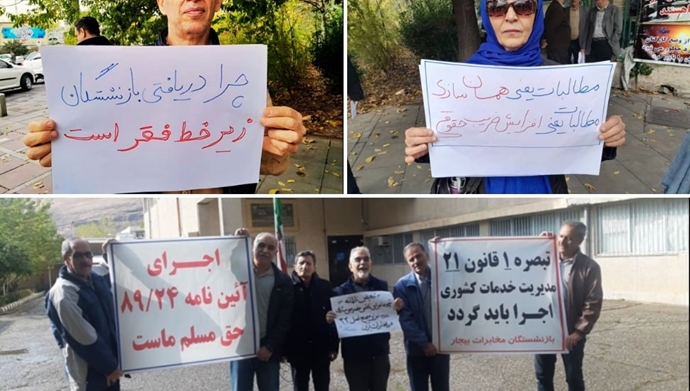

This tradition of deception and plundering is ingrained into the policy of Iran’s autocratic rulers, which they have inherited from the Shah dictatorship before them. Workers who retired after 30 years of hard labor now take to the streets in Iran, demanding justice, their delayed pay, and rightful benefits. Today’s retirees have no control over their savings or assets. Their modest pension fund reserves have been embezzled by corrupt officials, transforming these funds into sources of recurring crises; ultimately, the main victims are these deprived retirees.
Pension Funds: A Powder Keg
The pension fund crisis has become so vast and complex that it is no longer easily solvable. “According to the latest financial reports, the total cash return of pension fund companies is only 8%, and the fund’s assets suffice for only 18 months of pension payments. Some fund subsidiaries have accumulated losses amounting to 16 trillion rials and are in a critical state” (Ham-Mihan, November 2, 2024).
Mismanagement and corruption within these funds are so severe that in just three years, five different directors have been appointed to lead the Social Security Investment Company (Shasta). Losses in companies affiliated with pension funds continue, with officials repeatedly proposing the sale or transfer of these loss-making companies. However, labor activists demand government accountability, asking why and how these assets reached this state: “Do not let the government consume Shasta; Shasta is not state-owned, and no entity has the authority to make decisions for it” (ILNA, November 2, 2024).
These funds have effectively turned into sources of government financing, while retirees have been driven into poverty, with incomes falling far below the poverty line.
Controversial Decisions on Pension Funds
In the next year’s budget bill, the newly appointed government proposes transferring the assets of the national and steel pension funds to the Social Security Organization, aiming to offset part of the government’s debt. A member of parliament stated, “The government owes about 400 to 500 trillion rials to Social Security and wants to cover this debt by merging the funds, but this solution is not logical” (Arman, November 4, 2024).
A labor union activist for retirees also pointed to the government’s 5.5 quadrillion rials debt to Social Security, saying this heavy debt must be paid, or the funds will face an even worse situation next year.
Causes of Imbalance and Bankruptcy in Pension Funds
For decades, pension funds have undertaken economic activities to make portions of premiums profitable. However, a lack of oversight and the use of these funds as vehicles for exploitation and corruption have rendered them ineffective. Subsidiary companies owned by these funds became playgrounds for officials’ relatives across administrations, resulting in catastrophic mismanagement. Rather than generating revenue, these subsidiaries became a financial burden, with pension funds forced to cover their costs.
Additionally, whenever there was a severe budget shortfall, withdrawals were made from the pension funds. Over the years, instead of repaying the principal with interest, only the principal borrowed years earlier was returned, which is one of the primary causes of the funds’ bankruptcy.
“Currently, over 80% of pension fund expenses are funded by the government, accounting for about 16% of the national budget in 2023. Practically, most of the country’s oil revenues are allocated to covering these fund deficits” (ISNA, December 9, 2023).
The Pension Fund Crisis and Regime Security
The quarterly publication Rahbord, affiliated with the Expediency Discernment Council, states: “The pension fund crisis leads to national security threats, including various public disorders, social divides, polarization of society, reduction in national cohesion, loss of government credibility, decreased purchasing power for retirees, feelings of deprivation and poverty, the collapse of adequacy and sustainability indices in retirees’ rights, and more. To address these multi-faceted threats, reforms are needed at parametric, systemic, and structural levels in the social security system…” (Rahbord, December 2020).
If the sham reforms of the past forty years had worked, impoverished retirees would not be taking to the streets in protest. True reform is overthrowing those looting from the pension funds.