

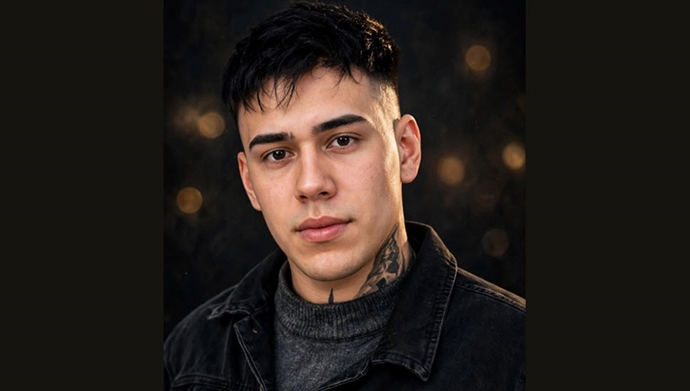

On the morning of Thursday, August 20, 2026, the Iranian regime’s execution machine claimed the life of yet another young dissident. In a brutal, anti-human crime, authorities hanged 21-year-old Ghaem Hosseini, a prisoner of Afghan origin, in Isfahan Prison.
Hosseini was arrested alongside 11 others during the massive January uprising. He was sentenced to death in the “Alikhani Square” case, accused of involvement in the killing of four Special Unit officers who were actively suppressing the protests. The death sentence was issued by the regime’s revolutionary court in Isfahan, presided over by notorious criminal judges Mohammad Barati Dorcheh and Mohammad-Reza Tavakoli.
Hosseini is the fifth brave protester from this specific case to be sent to the gallows. On July 19, 2026, the regime executed 18-year-old Erfan Esfandiari and 24-year-old Gol-Mohammad Mohammadi. In a deceptive move, authorities had transferred them out of the general ward under the false pretext of “meeting the case judge,” sparking a prison strike by their cellmates who demanded information about their fate.
Days later, on July 28, the regime publicly hanged 24-year-old Abolfazl Sepahi and 27-year-old Amirhossein Safari in Isfahan’s Alikhani Square. The judiciary cited fabricated charges of “Moharebeh” (enmity against God) and “corruption on Earth” for alleged acts like blocking streets, carrying Molotov cocktails, and setting fire to a police station.
Yet, rather than cowing the public, the public execution backfired. Despite the deployment of suppressive forces who fired tear gas to disperse the crowd, courageous onlookers protested the savage act, chanting “Dishonorable, dishonorable!” at the executioners.
Throughout these show trials, the regime completely denied the defendants their fundamental legal rights. The young protesters were forbidden from choosing their own independent lawyers, and even the state-appointed attorneys were blocked from accessing the case files. With the execution of Hosseini, seven other young prisoners in this case are now in imminent danger of execution. They are: Alireza Sepahi (24), Shervin Bagherian (18), Amir-Hossein Ebrahimi (19), Amir-Hossein Maleki (19), Ali Dashti (19), Abolfazl Ebrahimi (18), and Alireza Reisi (21).
The Secretariat of the National Council of Resistance of Iran (NCRI) had already sounded the alarm on July 19, 2026, warning international bodies about the grave danger facing these uprising prisoners. The silence and inaction of the international community serve as a green light for the mullahs to continue and intensify their massacres.
Saluting the martyred protesters, Mrs. Maryam Rajavi has urgently called for immediate action to save the lives of political prisoners, especially the remaining youths on death row in Isfahan. The Iranian Resistance urges the United Nations Security Council and all international human rights organizations to take immediate and effective action to halt the wave of executions. The ruling regime must be held accountable for five decades of crimes against humanity and genocide, and its leaders must be brought to justice.
These anti-human executions, particularly brutal public spectacles, are designed to create an atmosphere of fear and terror to prevent another popular uprising. Beset by overwhelming domestic and international crises, the ruling religious fascism is desperately trying to prevent the explosion of public anger.
However, these sentences only strengthen the resolve of the rebellious youths. Ultimately, these executions are not a projection of power, but a glaring display of weakness. They belie the regime’s profound fear of an increasingly restive society that does not fear to stand up against the regime’s apparatus of repression.