

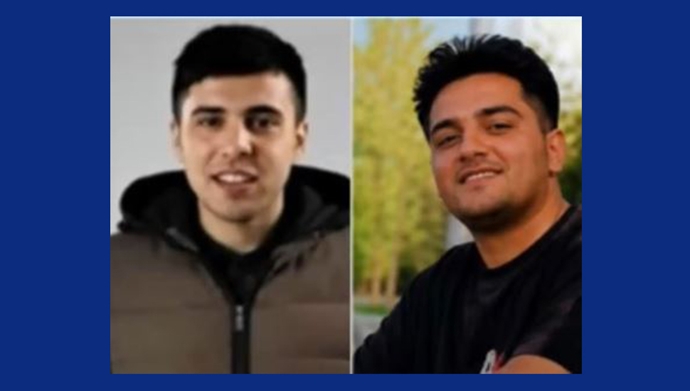

On the morning of Sunday, July 19, 2026, Iranian regime authorities carried out two more political executions, hanging 18-year-old Erfan Esfandiari and 24-year-old Afghan national Gol-Mohammad Mohammadi in Isfahan. Both young men were arrested during the nationwide January 2026 uprising and were executed on fabricated charges of ‘Moharebeh’ (waging war against God) and ‘Efsad-fel-Arz’ (corruption on Earth), as well as the killing of four State Security Force (SSF) officers tasked with suppressing anti-regime protests.
While the regime uses these fast-tracked, state-sanctioned murders in an attempt to project an image of absolute control, these executions are the desperate acts of a terminal dictatorship. They highlight the profound weakness of a regime terrified of its own people and underscore the urgent need for international intervention.
The “Alikhani Square” injustice and the imminent threat to human life
The regime’s own judiciary admitted that the protests at Alikhani Square in Isfahan province, where four SSF officers were killed, occurred “with the aim of overthrowing the system.” The Supreme Court had confirmed the death sentences of 12 protesters tied to this fabricated case on July 5, 2026. In a deceitful move on Saturday morning, July 18, all 12 death row prisoners were taken out of the general ward of Dastgerd Prison under the false pretext of “meeting the case judge.”
This morning, Iran’s regime executed two more protesters, Erfan Esfandiari and Gol-Mohammad Mohammadi.
Mizan, the news agency of the regime’s judiciary, declared the reason for executing the two youth was "possession of various firearms, knives, machetes, daggers, and Molotov… pic.twitter.com/pOPiqoxyvn
— People's Mojahedin Organization of Iran (PMOI/MEK) (@Mojahedineng) July 19, 2026
These criminal sentences were handed down by notorious judges Mohammad Reza Tavakoli and Mohammad Barati Dorcheh, who systematically deprived the prisoners of the right to choose independent lawyers.
With two of the youths already hanged, the remaining 10 political prisoners—many between the ages of 18 and 27—are now at immediate risk of execution. This sudden transfer prompted other prisoners to go on strike to protest the lack of information about the fate of their cellmates.
A systematic campaign of state terror
These latest hangings are not isolated incidents but part of a massive, systematic surge in death penalties targeting participants of recent uprisings. On July 15, 2026, the regime hanged Mohammad Amini Dehaghani in Isfahan Prison and Aref Khoshkar in Ghezel Hesar Prison after subjecting him to brutal torture. This follows the June 1 executions of brave January uprising protesters Mehrdad Mohammadinia and Ashkan Maleki, following a sham trial orchestrated by the notorious “hanging judge” Abolqasem Salavati.
Terrified of resurgent unrest, the judiciary is weaponizing its power to fast-track mass death sentences. The campaign of state terror is widespread, increasingly targeting oppressed Kurdish and Baluch minorities, as well as youths born in 2006 and 2007.
Alongside the gallows, the regime’s security apparatus and the Foundation of Martyrs wage psychological warfare against grieving families. They ruthlessly pressure relatives and offer dirty bribes—such as financial quotas and monthly salaries—to extort them into registering their murdered loved ones as “Basijis” to artificially boost the morale of depleted forces. Yet, families courageously reject these bribes, proving the utter failure of the regime’s billion-dollar propaganda machine.
The responsibility of the international community
The Iranian Resistance calls on the United Nations, human rights organizations, and the European Union to take immediate and effective action to halt the mullahs’ machinery of execution and save the lives of political prisoners, particularly the 10 young men on death row in Isfahan. The dossier of the velayat-e faqih regime’s crimes must be referred to the UN Security Council, and its leaders brought to justice.
Ultimately, these gallows are not a demonstration of power but highlight the profound weakness of a deeply demoralized regime beset by domestic and international crises. These anti-human executions are a desperate and futile attempt to prevent the explosion of popular anger. Rather than silencing dissent, they only strengthen the resolve of rebellious youths, proving the regime’s sheer terror of an increasingly restive society—a nation that no longer fears standing up to confront the mullahs’ apparatus of repression.