

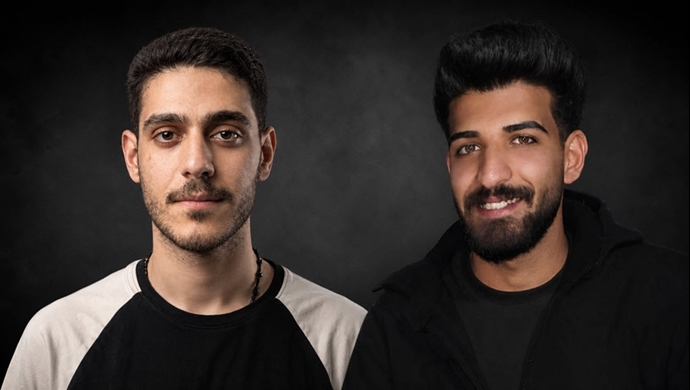

As the religious fascism ruling Iran struggles to contain the fallout from the massive nationwide uprisings of January 2026, it has increasingly resorted to its most macabre tool of terror: public executions.
On the morning of Tuesday, July 28, 2026, the henchmen of the mullahs’ regime publicly hanged two brave young protesters, Abolfazl Sepahi Badjani, 24, and Amirhossein Safari Hosseinabadi, 27. The executions took place at Alikhani Square in Isfahan.
Rather than projecting strength, these brutal public displays expose the deep vulnerability of a desperate regime completely incapable of quelling a rebellious society that no longer fears its apparatus of repression.
In a horrific crime, Iranian regime authorities in Isfahan publicly Amirhossein Safari and Abolfazl Sepahi, two protesters arrested during the January uprising.
Mizan, the Iranian regime judiciary's news agency, said the reason for their execution was the elimination of "four… pic.twitter.com/OKNpXxrHgU
— People's Mojahedin Organization of Iran (PMOI/MEK) (@Mojahedineng) July 28, 2026
The two executed youths were prosecuted for their participation in the January 2026 uprising. According to the regime’s judiciary, as cited by the Mizan news agency, they were leveled with fabricated and draconian charges, including “Moharebeh” (enmity against God), “corruption on Earth,” and alleged involvement in the deaths of four State Security Force (SSF) officers. The regime also accused them of possessing firearms and Molotov cocktails, setting fire to a police station, and blocking streets.
The legal proceedings were nothing short of a medieval sham. The victims were tried in kangaroo courts presided over by notorious criminal judges Mohammad Barati-Dorcheh and Mohammad-Reza Tavakoli. During these trials, the protesters were systematically denied the right to choose their own independent lawyers. In a blatant violation of basic legal rights, even their court-appointed attorneys were barred from accessing their case files.
July 28—Isfahan, central Iran
Citizens gathered at the Alikhani Square to protest the execution of Amihossein Safari and Abolfazl Sepahi, two youth arrested during the January 2026 uprising. In response, the regime's security forces attacked the unarmed gathering and hanged the… https://t.co/VGnPOK7uiE pic.twitter.com/q2Jywk9aTu— People's Mojahedin Organization of Iran (PMOI/MEK) (@Mojahedineng) July 28, 2026
The regime’s transparent goal of creating an atmosphere of terror backfired spectacularly. Aware of the impending state murder, the suppressive forces had deployed agents in the surrounding streets and on rooftops. However, the people of Isfahan refused to be intimidated. Starting the night before the executions, locals began gathering at Alikhani Square after noticing the suppressive forces preparing the site.
As the executions took place, onlookers bravely voiced their outrage. Defying the heavy security presence, the crowd clashed with the regime’s Special Unit forces, repeatedly chanting “Disgrace! Disgrace!” at the executioners. Video reports from the scene captured the intensity of the confrontation, featuring the sound of shootings and showing suppressive forces firing tear gas into the crowds in a desperate, violent bid to disperse the defiant locals.
The July 28 executions are part of a broader, systemic massacre connected to the “Alikhani Square” case. In total, the regime’s judiciary sentenced 12 protesters from the January uprising to death on identical fabricated charges. Just over a week prior, on July 19, 2026, the regime hanged two other defendants from this case: 18-year-old Erfan Esfandiari and 24-year-old Afghan national Gol-Mohammad Mohammadi.
The regime’s methods highlight its cowardice and fear of prison uprisings. On July 18, all 12 prisoners were suddenly removed from the general ward of Isfahan’s Dastgerd Prison under the false pretext of “meeting the case judge”—a deceptive move that sparked a strike among other inmates demanding information about the fate of their cellmates. Today, eight other young men from this case remain on death row and are in immediate danger of being executed.
In a horrific crime this morning, the clerical regime publicly executed two defiant protesters, Amir-Hossein Safari and Abolfazl Sepahi, in Isfahan, Iran.
By carrying out these medieval public hangings and relentlessly executing Iran’s youth, this religious dictatorship… pic.twitter.com/QDNz8MSvHO
— Maryam Rajavi (@Maryam_Rajavi) July 28, 2026
Following the tragic loss of these protesters, Mrs. Maryam Rajavi, the President-elect of the National Council of Resistance of Iran (NCRI), strongly condemned the killings. “With this medieval public crime and the successive executions of Mojahedin youth and brave protesters, the religious dictatorship is desperately trying to prevent an explosion of popular anger and the rise of public protests,” she stated. “However, this only strengthens the resolve of the rebellious youths to overthrow this bloodthirsty regime.”
Mrs. Rajavi once again called upon the United Nations, human rights organizations, and the European Union to take immediate and effective action to halt the mullahs’ execution machine and save the remaining political prisoners on death row. The silence of the international community only acts as a green light for Tehran to continue its massacres.
The dossier of the mullahs’ regime’s atrocities must be urgently referred to the UN Security Council, and its leaders brought to justice for crimes against humanity. The gallows erected in Isfahan are not monuments of power; they are glaring symbols of weakness. They merely belie the regime’s profound fear of an increasingly restive Iranian society—a society that has proven, amidst tear gas and gunfire, that it is no longer afraid to stand up and dismantle the apparatus of repression.