

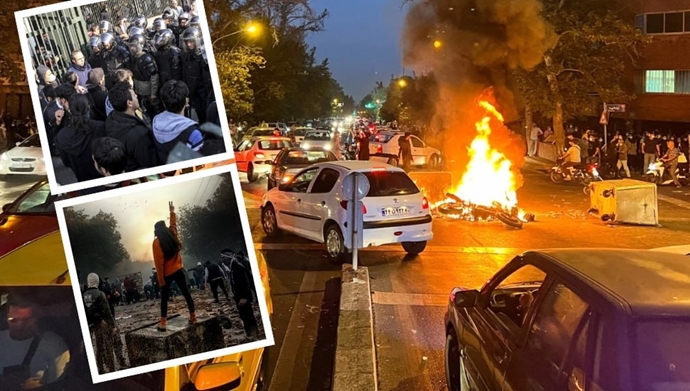

When the dominance of dictatorship and its evil and ominous consequences govern a society, many analysts believe that the roots of political, social, and economic crises must be examined and understood. From this understanding, they seek to offer solutions for these crises. The success of each analyst or expert is directly related to their level of understanding of the nature of the ruling power.
The closer analysts’ understanding is to the root and nature of the ruling dictator, the easier and more comprehensive the solution will be.
A concrete example of this principle can be seen in the political-religious dictatorship ruling Iran. One could analyze the political, economic, social, labor, and cultural crises caused by this regime individually and offer solutions, or one could trace them all back to their root cause and identify the true source.
Iran has suffered from the widespread evil and ominous effects of the mullahs’ regime for more than four decades. During these four decades, the Iranian Resistance has always pointed to the root of this dictatorship and focused on it.
The regime’s factional games have always tried to prevent any investigation into the root causes of Iran’s crises and have used government reshuffles to create false hope for change. The latest example of these repetitive and meaningless games is presenting the now President Massoud Pezeshkian as a solution to the crises.
This approach focuses on the management of appearances, not the true nature of the behind-the-scenes leadership. It identifies purging as the root of the problem, not the decision-making center linked to the office of regime Supreme Leader Ali Khamenei.
This approach loudly decries inflation, unemployment, and poverty in Friday prayers and the media, but not the policies that control the economy and ensure that the people’s share is smaller than the share of the Islamic Revolutionary Guard Corps (IRGC) and institutions connected to Khamenei’s office.
This approach identifies the root cause of decades-long failures as “unprofessional screening, regulatory inflation, the creation of parallel institutions and councils, and ultimately strategic errors in the systems that are supposed to support the people” (Source: The state-run Shargh newspaper, October 8).
The political, social, and economic realities of the past 45 years show that the regime known as the “Islamic Republic” is like a tree that has continuously produced poison and pests. The reason lies in the root that nourishes it: the principle of the Guardianship of the Jurist (Velayat-e Faghih) and the Supreme Leader himself.
The references made by the regime’s newspapers to “unprofessional screening, regulatory inflation, and the creation of parallel institutions and councils” are merely surface-level manifestations that stem from the core of the theocratic system, a foundation that only produces corruption and decay. The fact that they admit to these issues shows that the regime’s corrupt structure has become so blatant that even they are forced to acknowledge it.
Now Pezeshkian speaks of the “rift between the nation and the government,” thinking that he can deny the root cause and continue playing with the toxic political branches for a while longer. What he pretends to be unaware of is that 90% of the people boycotted the elections that made him president. This is the real rift, and the final reckoning between the nation and the regime is inevitable.