

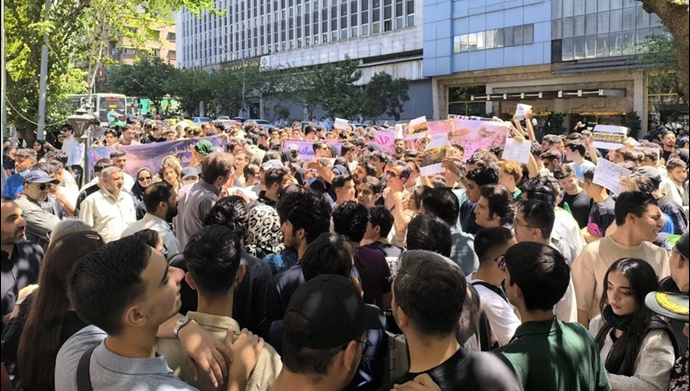

On Tuesday, June 2, 2026, a fresh wave of protests erupted across several major Iranian cities as students rallied against the regime’s discriminatory educational policies. In Tehran, large crowds of students gathered outside the Ministry of Education before launching a protest march toward the Supreme Council of the Cultural Revolution.
The youth were protesting sudden changes to university entrance exam laws, academic record policies, and hurdles to GPA remediation. The unrest was further fueled by Education Minister Alireza Kazemi, who blatantly ignored the severe crises students currently face—including widespread internet disruptions, crushing economic hardships, commuting difficulties, and intense psychological pressures stemming from societal instability. Instead of addressing these grievances, Kazemi explicitly declared that final exams must be held in person, claiming there is no option for remote testing.
Refusal to back down and nationwide expansion
Displaying incredible defiance, students in Tehran staged a sit-in on the ground, delivering a clear ultimatum to regime officials: “We are waiting for results, we won’t go anywhere and we’ll stay right here. This generation is not a generation that retreats with promises and repetitive words; it pursues its rights.”
The demonstrations quickly spread beyond the capital. In Mashhad and Hamedan, youth took to the streets on June 2 to voice their staunch opposition to the regime’s unjust educational metrics and the newly implemented GPA impacts on the entrance exams. Echoing across these cities were powerful slogans highlighting the youth’s rejection of the regime’s systemic injustice. Protesters chanted, “Students will die, but will not accept humiliation,” “Students are awake, they despise discrimination,” “We heard many promises, we saw no justice,” “Enough psychological pressure, give us our lives back,” and “Until we get our rights, we will not rest.”
A united front: Laborers and academics strike
The societal unrest is not limited to the youth, as other segments of society simultaneously stood up to demand their rights. Municipal workers in Shush continued their strike for a second consecutive day on Monday, protesting dire living conditions and a lack of job security. Their primary grievances include unpaid wages dating back to April 2026, insurance arrears, and uncharged service cards.
Despite facing threats of dismissal from regime institutions, the resilient workers have vowed they will not end their strike until their delayed rights and benefits are fully secured.
Meanwhile, in Tehran, illegally dismissed professors from Farhangian University traveled from across the country to hold a protest gathering outside the Ministry of Education. The educators demanded an end to the regime’s arbitrary, security-driven purges in academia and called for a return to work. Demonstrating the regime’s complete lack of accountability and basic decency, the protesting professors revealed that regime officials responded to their legitimate demands using vulgar and inappropriate language rather than providing legal answers.