

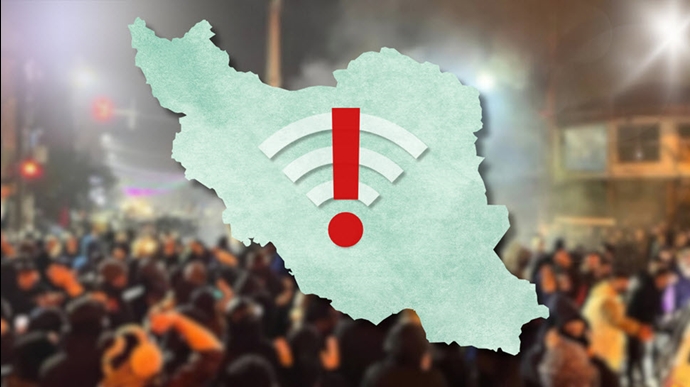

After 88 days of an unprecedented nationwide internet blackout, the Iranian regime is facing escalating internal chaos over whether to restore connectivity. The near-total shutdown, which lasted for over 2,093 hours, began following the start of the recent conflict on February 28, 2026.
According to NetBlocks, this blackout surpassed all previous instances in Iran and globally in both duration and severity. As the regime cautiously attempts to ease this digital dark age, severe factional warfare has erupted.
On May 26, the spokesperson for Masoud Pezeshkian’s government announced on state television that the president had issued a directive to return internet access to the conditions prior to the nationwide uprisings of December 2025–January 2026. The decision was reportedly finalized by a newly formed “Special Headquarters for Organizing and Steering Cyberspace,” chaired by Vice President Mohammad Reza Aref. However, the regime’s fractured state was immediately exposed.
Within hours, the Judiciary’s Mizan News Agency reported that the Administrative Justice Court had issued a temporary injunction to halt the resolution, declaring the Headquarters’ decisions legally invalid until further review.
Rival factions swiftly attacked Pezeshkian’s administration, revealing the regime’s deep-seated fear of another popular uprising. Regime MP Hamid Rasaee mocked the president’s authority, stating that Pezeshkian cannot override the Supreme National Security Council (SNSC), which had restricted the internet to suppress the December 2025–January 2026 uprisings. Rasaee dismissed the announcement as a “media game” to distract the public from soaring inflation caused by an incompetent government, and attacked Aref’s position as illegal due to his son’s US citizenship.
Furthermore, the state-run Hamshahri Daily warned that restoring internet access violates SNSC resolutions and disrupts the regime’s “unified command in wartime.” The outlet openly admitted that restricting the internet is a necessary “security decision,” warning that Pezeshkian’s move sends a message of division to their enemies.
While the regime prioritizes censorship for its survival, this paranoia has devastated the economy. The Minister of Communications admitted that the internet shutdown inflicts a staggering 5 trillion rials in daily losses to the digital economy, with overall daily economic losses reaching 50 trillion rials.
According to the Tehran E-commerce Association, 80 percent of companies experienced a sales drop of more than 50 percent. Because 70 percent of business-to-customer communications relied on blocked platforms like Instagram, WhatsApp, and Telegram, companies have been decimated. This catastrophic loss of revenue has triggered a massive wave of layoffs, with tech companies and large online retailers firing between 30 to 50 percent of their workforce.
The mullahs are now trapped in a fatal dilemma: continue the blackout and risk an uprising fueled by economic ruin, or restore access and hand the Iranian people the tools to coordinate the regime’s overthrow.