

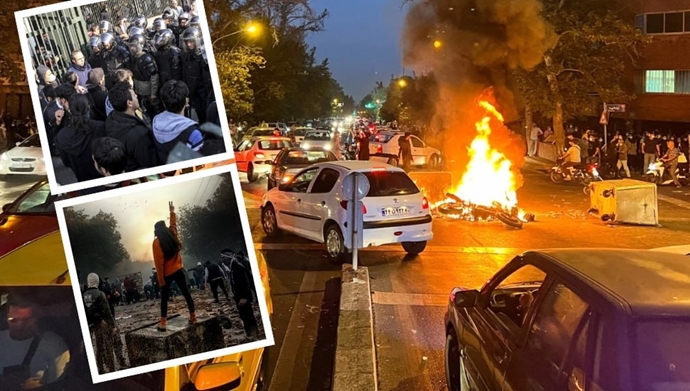

In today’s Iran, all signs point to an explosive atmosphere, one that even the regime and state-affiliated analysts have acknowledged.
Signs of explosion in the IRGC Statement
A statement by the IRGC on “Quds Day” (a name the regime has given to the last Friday of the holy month of Ramadan), published on March 31, appears to be an effort to showcase power and national unity in the face of foreign threats. The statement describes the Quds Day rally as a “new unveiling of the soft power and the vast social capital of the Islamic Republic” and frames it as a response to “the enemy’s toxic propaganda.” Yet beneath these grandiose words lies a tacit admission: society is under “peak economic pressure” and the “atmosphere created by infiltration and sedition movements” is expanding. The repeated emphasis on “social cohesion” and warnings about “social divides” that pave the way for enemy influence point to the regime’s recognition of the fragility of the current situation.
The statement refers to cohesion as a strong fortress that shields the nation from “external threats and internal sedition.” But is this fortress truly unshakable? Or have deep cracks appeared in its walls that even the governing bodies themselves can feel? When the IRGC speaks of the need for widespread participation, especially from the younger generation, it is, in effect, acknowledging the absence of such participation at present. These words reflect less a sense of confidence and more a deep-seated concern: a society simmering under economic and political pressures, whose magma of suppressed anger could erupt to the surface at any moment.
Morteza Alviri and the Repetition of the Collapse Cycle
Morteza Alviri, an analyst and former mayor of Tehran, in his remarks published on March 31, in the Iranian news outlet Tabnak, looks at the current situation through a historical lens. Referring to the mistakes of Mohammad Reza Shah in the 1970s, he points to the repressive and narrow-minded policies that led to the 1979 revolution. The declaration of the Rastakhiz Party as the only legal party and the suppression of all dissenting voices, rather than creating stability, only fanned the flames of public anger.
Alviri warns that history is repeating itself: ignoring expert advice, suppressing critics, and persisting in autocracy could once again drive the country toward collapse or “unfortunate events”!
Alviri raises the question of whether the current leadership is following the same path as the Shah. He believes that the only way to save the country is to rely on the people, not on military or missile capabilities. His words serve as a stark reminder of the widening chasm between the people and the ruling establishment, a fault line poised to release its pent-up energy at any moment.
Zeidabadi and the Repetition of the Collapse Cycle
Ahmad Zeidabadi, in remarks published by the state-run Khabar Online on March 31, 2022, issues an even more explicit warning: “From now on, events will occur that, if there is no consensus over them, very dangerous and bloody conflicts may happen.” This prediction, now read against the backdrop of mounting economic and social pressures in 2025, rings like an alarm sounding from the depths of society.
A society on the edge of the abyss
What emerges from these three accounts is the picture of a society being shaken by multiple pressures. The economic strain, as highlighted in the IRGC’s statement, is like volcanic sulfur gases dispersing in the air. The social fissures, which Alviri and Zeidabadi have warned about, resemble the tremors signaling the underground movement of suppressed rage. And repression and narrow-mindedness, which has repeatedly proven ineffective, are like the hard rocks of the magma chamber that drive the pressure to its peak.
This explosive atmosphere is not a product of imagination, but a reality acknowledged even by power institutions and experts. Like volcanoes, social eruptions are predictable; you can already hear the cracking of the stones.