

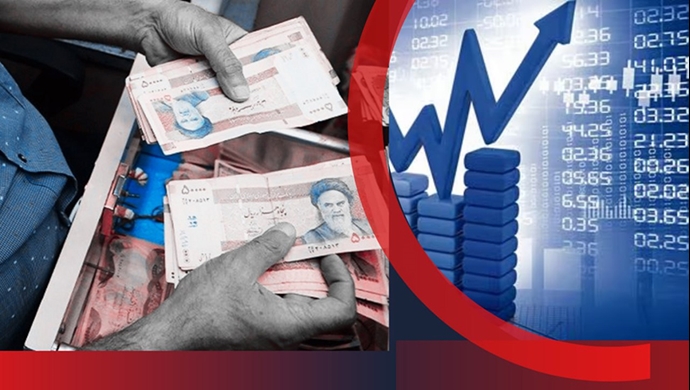

For nearly half a century, millions of suffering people in Iran have been immersed in misery under the rule of the most ruthless, incompetent, and corrupt leaders in Iran’s modern history. Livelihoods, even basic sustenance, have been lost, and people’s tables have shrunk and emptied day by day. The outcry has now reached experts and the middle class. Representatives of the middle class, those at the heart of society, cry out and indirectly criticize the leaders of the ruling mafia and plundering factions, saying, “There is no bread on our table, nor wisdom in the head of the ruler.”
Economist Mohsen Renani has acknowledged the lack of rationality and the futility of economics under the regime ruling of Iran.
On November 1, as he spoke at the Research Center of Iran’s Chamber of Commerce, the state-run Donya-ye Eghtesad newspaper quoted him as saying, “Iran’s economy has reached a point where economic solutions no longer work. Iran’s current issues are political in nature, and its economy cannot be effectively governed. Economic prescriptions to resolve today’s crisis are bound to fail. In an economy where policymakers are embroiled in rent-seeking and policy is dominated by influential groups, there’s no effective remedy. When a bureaucracy survives on corruption, bribery, and rent-seeking, no economic recommendation will be effective.”
Explaining this disastrous situation, Renani emphasizes that writing prescriptions for economic problems under these circumstances only causes harm, incurs costs, and yields no benefit. He referred to the implementation of the regime’s 20-year vision document, stating that despite all the expenses and inflation it imposed on the nation, only 15 percent of it was realized.
Rationality and economic principles dictate that transaction costs should be close to zero; however, in Iran, transaction costs are between 40 and 50 percent. When a producer’s check bounces, or a power outage disrupts production, transaction costs increase.
Noting that natural sources of rent have been exhausted and only legal rent remains, Renani warns that the situation has gone beyond a crisis, entering a disaster in areas such as water, gasoline, and accidents. Rationality is essential for economics, and its absence in Iran means, as Renani puts it, “Economics does not work here.”
The Captivity of “Economics” in the Grip of Reactionary “Politics”
Many analysts attribute Iran’s private-state, oil-driven, rentier economy to the authoritarian policies of reactionary leaders, driving society toward the brink of collapse.
On October 31, Jahan-e Sanat news website wrote, “Some economists who had focused their intellectual and scientific efforts on structural reforms in economic governance have distanced themselves from this approach over the past two or three years…”
The same source mentions economists such as Dr. Mohammad Tabibian, who was one of the first to shift from macroeconomics to political economy, followed by Masoud Nili and others, with Renani now following the same path.
Some media outlets, anticipating future uprisings, write: “The reality is that with Iran’s economy sinking into various whirlpools rooted in political decisions, there is no choice but to set aside caution and more boldly present the harsh truths to managers and politicians. Iran’s economy has been held captive by politicians for decades. If governing institutions continue to ignore this reality and make erroneous calculations, the country will face even greater economic harm” (Source: Jahan-e Sanat, October 31).
The Seven Hurdles of Imbalance
Economist Vahid Shaqaqi examines the issue from the perspective of the failures of governments in recent years. The average inflation rate in Iran over the past 50 years has been around 20 percent; however, in recent years, the average inflation has risen to over 40 percent, significantly reducing the purchasing power of Iranians. Shaqaqi says that Iran’s economy is faced with at least seven major imbalances: in pension funds, water, gas, electricity, gasoline, land subsidence, and the banking sector. These imbalances contribute to budget deficits, and until they are brought under control, inflation will also remain unchecked.
Iran’s Structural Crisis is Unresolvable
Many economists believe that superficial fixes and shuffling agents within the regime’s dominant and rival factions are futile.
On October 30, Tejarat News website quoted Economist Kamal Athari, as saying, “All these developments have led to institutional paralysis, resulting in the destruction of the productive sector and the environment. This is a structural crisis that cannot be managed. The productive and innovative sector in Iran’s economy has nearly vanished because the elites did not prioritize a development model.”
Awaiting the Inflation Engine to Ignite
The budget approach of the government for the year 2025 suggests a predictable inflation rate, which will shrink people’s purchasing power and place additional pressure on lower-income classes.
On October 30, the state-run Alef news website wrote, “The 2025 budget, the first drafted by Pezeshkian’s administration, has an approach that, according to experts, raises inflation expectations and ultimately imposes considerable pressure on people’s livelihoods.”
Iran’s economy has been mired for years in the quagmire of oppressive politics and the flood of instability caused by warmongering, terrorism export, and fundamentalism. Under these circumstances, there is no visible solution other than eradicating the cancerous tumor afflicting the lives and spirits of Iran’s oppressed people.