

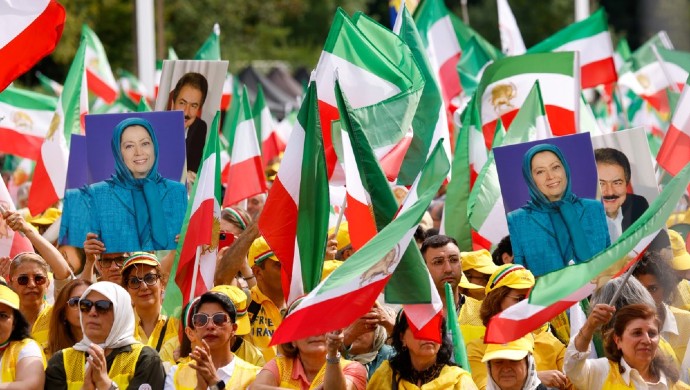

On the 60th anniversary of the founding of the People’s Mojahedin Organization of Iran (PMOI/MEK), a massive rally in Brussels sent a clear message to the world, but more importantly, it sent a shockwave of fear through the clerical regime in Tehran.
The powerful demonstration, which brought together tens of thousands of Iranians, was not just a display of the Iranian Resistance’s strength; it was a catalyst that exposed the regime’s deepest insecurities. Tehran’s delayed and contradictory reaction reveals a leadership terrified of its own people, especially a young generation it can no longer control.
The undeniable success of the rally ignored by Tehran
The streets of Brussels thundered with chants of “Death to the oppressor, be it the Shah or the Supreme Leader” as tens of thousands of Iranians from across Europe gathered to demand freedom. The rally was an undeniable success, drawing immediate and widespread international media attention, reporting that tens of thousands of Iranians had gathered to demand regime change led by the organized Iranian resistance. Belga, Belgium’s official news agency, highlighted the presence of prominent international figures alongside Mrs. Maryam Rajavi.
Faced with this powerful display of organized opposition, the regime’s initial response was a telling one: absolute silence. For a full 24 hours, state-run media outlets pretended the event never happened, hoping a wall of silence could negate the reality broadcast to the world and, more importantly, to the people inside Iran. This silence was not a sign of strength but a symptom of paralysis, as the regime struggled to formulate a response to an event it could neither ignore nor honestly report.
The regime’s desperate and discredited propaganda campaign
After its 24-hour paralysis, the regime broke its silence with a panicked and clumsy propaganda campaign. Suddenly, state-controlled media outlets began pushing a series of clichéd and baseless accusations. They started rehashing old claims the rally was financially backed by foreign states and that “Syrian terrorists” were present at the event. This fabrication exposed the regime’s deep-seated anger over the recent fall of its Syrian ally, Bashar al-Assad, and its attempt to tarnish a gathering of freedom-seeking Iranians with the brush of extremism.
These laughable talking points, centrally dispatched from Supreme Leader Ali Khamenei’s office, were so disconnected from reality that they would fail to convince even the regime’s most hardened loyalists. The propaganda absurdly ignored that international news agencies—not the resistance’s media—had already reported on the “tens of thousands” in attendance and their clear call for regime change.
A regime mouthpiece reveals the true fear
The true reason for the regime’s panic was ultimately revealed by one of its own mouthpieces. Hamshahri, the newspaper controlled by the IRGC-affiliated mayor of Tehran, let the mask slip. In an article attempting to downplay the rally, the paper betrayed the regime’s core anxiety, writing, “The young generation has not understood the dangerous nature of the Mojahedin Organization.”
It went on to lament that the youth, who did not live through the 1980s, lack a “clear image” of the PMOI’s activities from that era—an era the regime has spent four decades distorting with its propaganda. This is a stunning admission. The regime’s greatest fear is not a protest in Brussels, but the fact that its decades-old lies are no longer effective. It is terrified that a new generation of Iranians, connected to the world and inspired by the nationwide activities of the Resistance Units, sees the PMOI not as the regime portrays them, but as a viable and organized alternative for a free Iran.
The Brussels rally, combined with the relentless efforts of Resistance Units inside Iran, sends a clear and deadly message to Khamenei: the movement for freedom is not fading away; it is being reborn in the hearts of Iran’s youth.