

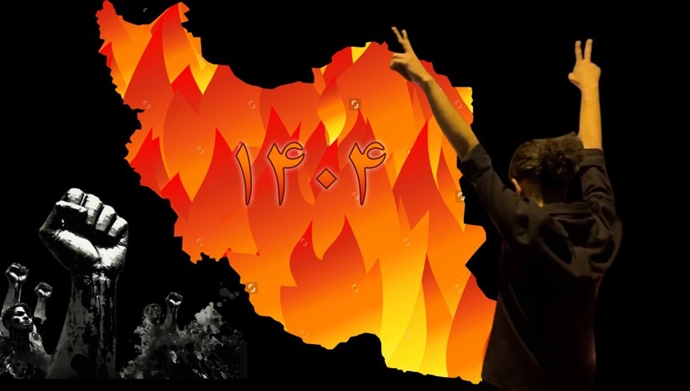

The birth of one crisis from another, irreversibility to stability, and disintegration and collapse of the government are the defining features of the mullahs’ regime as Iran begins the new Persian calendar year. Consider the following excerpt from the state-run Ham-Mihan on March 10:
“What is happening now is not politics; it is a performance. A set of programs, spectacles, and rituals are carried out; the Majlis (parliament) convenes, the government holds meetings, officials go on provincial trips, recite a few Turkish, Kurdish, and Arabic poems, or wear the local attire of different regions. But no tangible results emerge from this government or this system. From this perspective, the meetings of the heads of the three branches are not symbols of unity or achievements of consensus but merely performances of unity. These performances yield nothing for the country, and their consequences fall on the people. The political forces, naturally, will fall into inertia and political suspension.”
This is an excerpt from an analysis examining the outlook for the regime in the Persian year 1404 (starting on March 21, 2025). It is a sign of a year that has yet to begin, but the regime’s future is already reflected in its mirror. A year in which the “mega-event of succession” (Ibid) in leadership is an unavoidable reality, a reference to the potential death of regime supreme leader Ali Khamenei.
The clerical regime steps into the new year while the internal power struggles among its factions have failed to prompt even greater repression from Khamenei. This is because the internal crisis has become inextricably linked with the ever-escalating external crisis, merging with the fate of the regime itself. A year in which “the primary determinant of Iran’s domestic policy is global relations”(Ibid). This policy has always been addressed through “delusions and slogans,” but the situation has become so critical that “until Iran’s relationship with the world is resolved, moderate and reformist political activism is effectively meaningless and impossible. Day by day, the influence of internal forces on domestic affairs diminishes.” (Ibid)
According to regime insiders, the current situation points to a “semblance of statelessness” in the new year. The world is not dealing with an actual government in cleric-ruled Iran because “the government holds no more than 20% of the power, and decisions are made elsewhere.” (Ibid)
Even what still carries the title of “government” is, in the tearful and heavy confessions of its own supporters, facing a reality that is evident in the economy, society’s perception, and the stance of loyalists:
“Today, we see that [regime President Masoud] Pezeshkian’s statements are devoid of content—texts that offer no meaningful message to the audience. The result is the erosion of the government’s social base, its supporters withdrawing into inactivity, economic instability, and market discouragement due to inflation, stock market decline, and economic stagnation. The ultimate outcome of all this is a more negative and hopeless view of politics, leading to its effective shutdown. The continuation of this situation brings nothing but paralysis and despair, eroding national power—both economic and political, internal and external—day by day.” (Ibid)
As the regime’s domestic policy becomes increasingly entangled with its turbulent foreign affairs, the main trajectory is one that “pushes the government further toward collapse” and drives the entire system toward an ultimate reckoning. The regime now faces both social forces and movements of discontent and the growing passivity of its supporters:
“This fragile government, with its unstable conditions and weak social base, is evidently headed for an even more precarious future if widespread protests erupt, particularly from economically discontented grassroots movements. Its loyal forces are becoming more passive by the day, pushing the government closer to collapse.” (Ibid)