

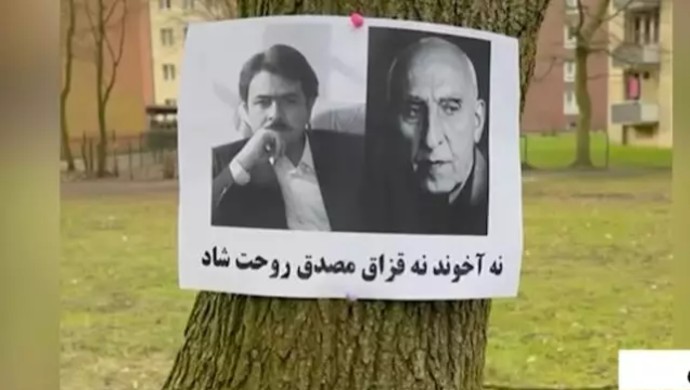

The nationalization of Iran’s oil industry on March 20, 1951, led by Dr. Mohammad Mosaddegh, the leader of Iran’s independence movement, remains a historic milestone and a proud testament to the nation’s struggle against the Shah regime’s treachery and dictatorship. It is one of those events that will never fade into oblivion under the storms of conspiracies, censorship, or repression.
That is why the courageous youth of the nation, in their recent uprisings, have chanted, “Neither cleric nor Cossack – Rest in peace, Mosaddegh,” clearly distinguishing themselves from all forms of dictatorship and dependency. Seventy-four years after that historic event, on Tuesday, March 18, 2025, revolutionary resistance units in Tehran, Karaj, Mashhad, and Bandar Abbas honored the memory of Dr. Mohammad Mosaddegh by putting up banners and carrying out revolutionary actions.
Dr. Mosaddegh’s success in nationalizing the oil industry, despite the conspiracies, demonization, and plots of both the monarchy and the clerics, as well as his victory at the International Court of Justice in The Hague in defending Iran’s rights, proved that establishing a democratic government in Iran—one based on the people’s vote and free from corruption and tyranny—is both attainable and possible. He knew that the fire he ignited against the treason of the Shah regime would never be extinguished, and that dedicated fighters would keep it burning until despotism was eradicated. He clearly stated: “Whether I am alive or not, I hope—and indeed, I am certain—that this fire will not be extinguished, and that the awakened men of this country will continue this national struggle until it reaches its goal…”
Twenty-one years after the nationalization of the oil industry (February 1972), five years after Dr. Mosaddegh’s passing, while the traitorous Shah, intoxicated by what he believed to be the defeat of the national movement, was prosecuting the leadership of the People’s Mojahedin Organization of Iran (PMOI/MEK), Massoud Rajavi, in the Shah’s military court, paid tribute to the great leader of Iran’s national movement, declaring: “After September 1941, Mosaddegh turned oil into a national cause and rallying point, organizing the people and fueling their passion. After the 15th Majlis, the true representatives of the people struggled valiantly. The British-controlled Anglo-Iranian Oil Company, which was in fact an arm of the British government, resorted to bribing representatives, imprisoning freedom seekers, and all forms of repression. Even the so-called ‘land reform’ plan was concocted through the division of royal estates to distract the public from the oil issue. Despite this, oil remained at the center of people’s concerns. At one point, bread suddenly became scarce in Tehran in an attempt to divert public attention and discourage support for Mosaddegh… But ultimately, the will of the people triumphed. The Iranian people marched forward, and on the last day of [Persian calendar year] 1329 [March 20, 1951], oil was nationalized. That day, the people of Iran tasted victory.”
Glory to the late leader of Iran’s national movement, who neither feared prison, exile, nor isolation in Ahmadabad. He endured the demonization by both the Shah and the clerics, bearing all manner of accusations and slander. His only “crime” was that by nationalizing Iran’s oil industry, he dismantled the colonial grip and political and economic influence of the world’s greatest empire from Iran. In his final message from Ahmadabad, he told the valiant Iranian people: “Let them fear no hardship on the honorable path they have embarked upon, and let them continue their sacred movement.”
And blessed be the resistance that today, in the historical continuity of Mosaddegh, has uprooted the shah dictatorship and is pushing the religious despotism of the mullahs toward its downfall. No matter which way they turn, their only fate is to be overthrown by the powerful hands of the people and the organized resistance. Victory to Mosaddegh’s dream and aspiration—freedom and independence for Iran through revolution and a democratic republic.