

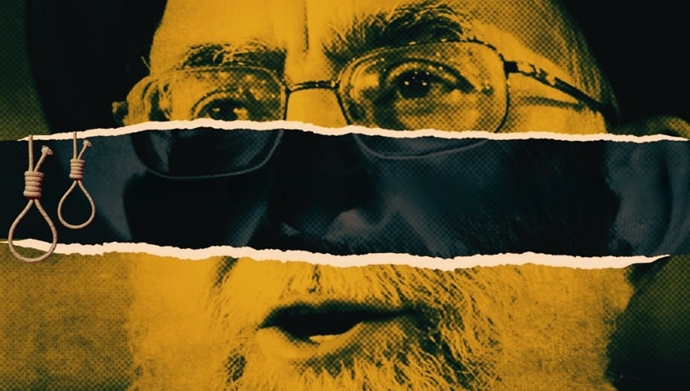

Ali Khamenei, the supreme leader of Iran’s regime, who has been severely weakened under the collapse of his strategic depth in the region—especially with the downfall of the Assad dictatorship, the Iranian regime’s ally of fifty years—issued a warning in his latest speech on Monday, January 28, to his diplomatic operatives engaged in desperate negotiations. He urged them to “open our eyes and be aware of who we are dealing with, who we are negotiating with, and who we are speaking to.”
Khamenei’s troubles are not limited to diplomatic weakness and helplessness. He is trapped within his crumbling regime, buried under the failure of his strategies. The deadly blow of the Syrian dictator’s downfall has acted as a lethal poison in the decaying body of his regime.
His problem is not just the complaints and outrage of IRGC and Basij forces, who question why, despite deploying 100,000 troops and spending billions of dollars, they failed to prevent Assad’s downfall. What happened to the “defense of the shrine”? Why did we withdraw? Was the bloodshed in vain? The real issue is a deep political and strategic wound that has shaken the regime from within, emboldening voices against the bankrupt Supreme Leader. This is especially significant because, for the past two decades, Khamenei repeatedly stood firm against internal dissent from officials who opposed massive investments in Bashar al-Assad’s regime. Despite this, he insisted on sending tens of thousands of IRGC and Basij forces to aid the bloodthirsty Syrian dictator.
A few years ago, when the Syrian dictator, with the help of the infamous IRGC Quds Force Chief Qasem Soleimani and IRGC commander Hossein Hamdani, crushed cities like Aleppo, massacred hundreds of thousands of innocent Syrians, and displaced millions, Khamenei and his inner circle loudly boasted about the supposed success of their strategy in Syria and Soleimani’s triumphs.
But with the rapid collapse of Bashar al-Assad’s rule in Syria and the subsequent revelation of its brutal crimes in Sednaya prison, Khamenei’s strategy came crashing down on him, emboldening regime insiders and state media to openly criticize him. They went so far as to describe his claims about “strategic depth” as nonsense, as in this example from Mohammad Ali Jannatkhah, published by Didar News website on January 12: “… This strategy, based on the so-called idea of strategic depth and such ridiculous talk, cannot endure. In fact, this was history slapping us in the face because we failed to learn from the past, repeated the same mistakes, and paid a heavy and costly price for it.”
Abdolrahim Soleimani Ardestani, a member of the Qom Seminary Teachers Association, also criticized the regime’s involvement in Syria. In an interview with Didar News on December 18, 2024, he said, “A dictatorship oppresses its own people, and we intervene and call it ‘defending the shrine’! The system has made a terrible mistake and must apologize to the people—no whitewashing! Why did we have to defend a ruthless dictator? … These arguments about moving the frontline elsewhere to protect ourselves are neither ethical, nor religious, nor legitimate! They are indefensible! The things we hear have nothing to do with religion!”
In response to such criticism, Khamenei delivered a defensive speech on January 1, saying: “Some people promote the idea that with recent events in the region, the blood shed in defense of the [Sayyida Zaynab] shrine was wasted. This is a major error, a big mistake they are making. The blood was not wasted…”
However, Khamenei’s defensive responses have failed to quell the internal backlash within the regime, and criticism continues to mount. Reacting to the supreme leader’s efforts and the disarray among his IRGC forces, the state run Ham-Mihan, under the headline “Escaping Forward,” wrote on January 16, “One of the usual tactics of hardliners, especially after suffering major defeats, is to escape forward. Instead of acknowledging that their past policies have failed and that they need a shift in perspective and approach, they double down on the same failed policies as if everything they did was right…”