

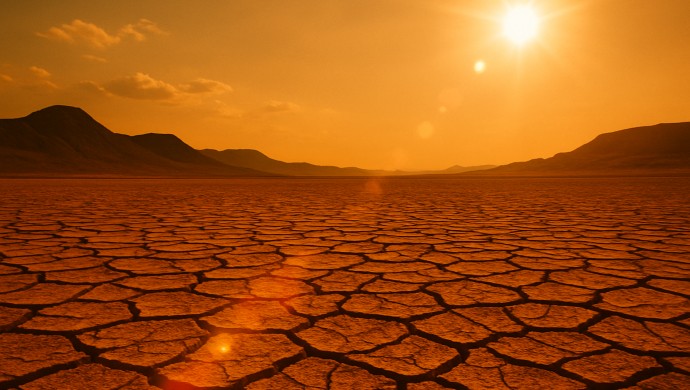

As Iran endures the sweltering heat of August 2025, a devastating water crisis is pushing the nation to its breaking point. While the clerical regime points to the sky and blames a lack of rain, the drying riverbeds and empty reservoirs tell a different story: this is not a natural disaster, but a man-made catastrophe engineered by decades of corruption and catastrophic mismanagement.
The scale of the crisis is staggering. In August, official reports confirmed that three major dams—Shamil and Nian in Hormozgan province and Roudbal Darab in Fars province—have run completely dry. Twelve other dams are on the verge of emptiness. Across the country, only 41 percent of dam capacity is currently full, a direct result of a crippling 42 percent drop in water inflow compared to the previous year. This is not a drought; it is the calculated outcome of a failed state.
The domino effect: A nation paralyzed by incompetence
The consequences of the regime’s policies are rippling through every facet of Iranian society. In the capital, Tehran’s five main dams have seen an average 43 percent decline in reserves, with the critical Lar dam holding just 6 percent of its capacity, teetering on the edge of total failure. This water shortage has triggered another crisis: widespread electricity blackouts. A spokesperson for the water industry has admitted that a shocking 50 percent of the country’s hydropower capacity has been lost, paralyzing homes and industries alike.
This collapse threatens Iran’s very food security. Agriculture, which consumes 90 percent of the nation’s water, is in freefall. According to state-run media, the production of strategic crops like wheat and rice has plummeted, making massive imports unavoidable. The crisis reveals a regime that cannot provide the most basic necessities for its people.
The real culprit: A flood of corruption, not water
The root of this disaster is not a lack of rain, but a flood of greed from the Islamic Revolutionary Guard Corps (IRGC). Over the last five decades, the regime has pursued a reckless dam-building frenzy, increasing the number of dams from 30 to 647—a staggering 22-fold increase—with no regard for Iran’s arid climate.
This policy was never about public welfare. It was driven by a “dam-building mafia” led by the IRGC and its massive construction conglomerate, the Khatam-al Anbiya headquarters. These multi-billion dollar projects served one purpose: to line the pockets of the IRGC and consolidate the political power of Supreme Leader Ali Khamenei. The Khandab dam stands as a monument to their twisted priorities; its sole purpose is not to irrigate farms or provide drinking water, but to supply the Arak nuclear facility.
A thirst for change
The regime’s systematic plundering of Iran’s lifeblood has pushed an already restive population past its limit. The suffering in water-starved communities and blacked-out cities has turned into open defiance. Every week, the night air in towns and cities across Iran rings with chants of “Death to Khamenei!” and “Water, electricity, life, are our undeniable rights!”
This simmering anger boiled over on Friday, August 22, as thousands of citizens in cities like Shiraz and Tehran took to the streets. What began as protests against utility cuts with chants of “Water and electricity are our undeniable right,” quickly escalated into a direct challenge to the regime.
Crowds in Shiraz directed their rage at the dictatorship, shouting “Death to the dictator” and “Iran is not your inheritance.” This unrest is spreading. Similar protests have erupted in Kazerun, while merchants in Tehran rally against power cuts that are destroying their businesses. The movement has been joined by vital labor sectors, with workers at the Karun 4 Dam and on oil platforms holding strikes against deteriorating conditions.
The regime has drained the nation’s reservoirs, but in doing so, it has filled a reservoir of popular fury. This crisis, born of corruption, is now the spark that could ignite a nationwide uprising. The people of Iran are thirsty—not just for water, but for freedom.