

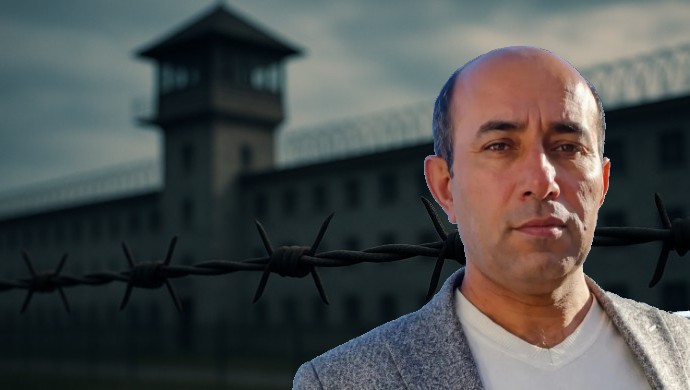

The Iranian regime has once again demonstrated its reliance on executions to maintain power, recently reconfirming the death sentence of political prisoner and People’s Mojahedin Organization of Iran (PMOI/MEK) supporter Yaghoub Derakhshan.
Currently held in Lakan Prison in Rasht, the 51-year-old faces imminent execution after a blatantly rigged judicial process. Derakhshan was arrested in April 2025 and initially sentenced to death for “Baghi” (armed rebellion) in August 2025 by judge Ahmad Darvish-Goftar following an online trial.
In November 2025, the Supreme Court ordered a theatrical retrial, handing the case to the Second Branch of the Revolutionary Court in Rasht. In a stark display of the judiciary’s corruption, this branch is presided over by Mohammad Ali Darvish-Goftar—the son of the original judge. He reconfirmed the death sentence in another online show trial conducted without a defense lawyer present.
A coordinated campaign of sham trials
Derakhshan’s case is part of a broader, systematic wave of death sentences targeting dissidents in Rasht. Recently, the same Revolutionary Court reconfirmed the death sentence of Zahra Tabari, a 68-year-old electrical engineer and PMOI supporter arrested during an April 2025 home raid.
After being sentenced to death in a ten-minute video trial without her chosen lawyer by Ahmad Darvish-Goftar in November 2025, her theatrical retrial was similarly overseen by his son. As expected, Mohammad Ali Darvish-Goftar reinstated the death sentence on April 14, 2026.
Simultaneously, the regime’s Supreme Court has upheld the death sentence of 38-year-old PMOI supporter and poet Amin (Peyman) Farahavar for “Baghi” and “Moharebeh” (enmity against God). Originally sentenced to death by Ahmad Darvish-Goftar on May 1, 2025, without a lawyer present, Farahavar’s retrial request was officially rejected in early May 2026. He remains in Lakan Prison, where he is systematically denied critical medical care despite suffering from internal bleeding from interrogations and severe complications from gallbladder surgery.
Desperation behind the noise of war
Rather than projecting strength, this surge in executions reveals a deeply terrified regime trying to hide its weak position and fear of collapse behind the noise of war. Since the start of the conflict, the regime has ruthlessly executed eight PMOI members from the Resistance Units and more than 20 young people who participated in uprisings or fought the Revolutionary Guards. The mass scale of this crackdown is undeniable; the chief of the State Security Force admitted to arresting 6,500 people since the war began, explicitly noting that 567 of those detainees were connected to the PMOI.
The regime has no answer for an Iranian society that is completely ready to rise up. And in its desperation, it has resorted to sheer brutality. The international community must intervene. The United Nations Human Rights Council, the European Union, and global human rights organizations must break their silence and take immediate, concrete measures to save the lives of all political prisoners facing execution, and secure their immediate release.