

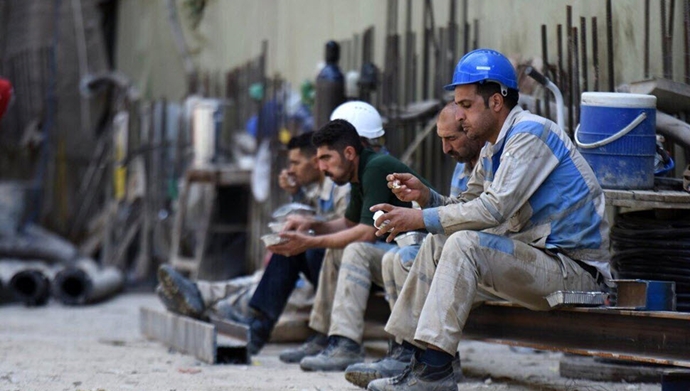

Unbridled price expansion, the relentless erosion of real wages, and deep-seated systemic imbalances have combined to push nearly half of Iran’s populace to the brink of financial insolvency. The traditional buffer between employment and destitution has largely collapsed; full-time compensation no longer covers baseline household expenditures. What was once a condition confined to the frictionally unemployed or disenfranchised strata has now absorbed millions of breadwinners, forcing families to balance multiple jobs simply to maintain a basic standard of living.
The mirage of multiple incomes and reliance on gig economy reliance
The proliferation of secondary and tertiary employment serves as a primary barometer of this economic strain. Ride-hailing platforms demonstrate the scale of workforce overextension: combined registration data from Iran’s ride-hailing apps Snapp (exceeding 8.5 million drivers by early July 2026) and Tapsi (roughly 1.4 million) indicates that nearly 10 million individuals are enrolled across both services. Surveys reveal that over 86 percent of these drivers operate on the platforms as a supplementary or tertiary revenue stream, highlighting a systemic necessity where formal employment fails to meet minimum subsistence requirements.
Hyperinflation and the decile divide
Central Bank of Iran figures from July 2026 record annual inflation at 61.4 percent, with point-to-point price acceleration touching approximately 84 percent. This continuous decline in currency purchasing power has depleted personal savings and outpacing nominal wage updates. Lower-income groups bear a disproportionate burden, as essential food items represent the vast majority of their monthly outlays.
Projections published by the Majlis Research Center trace a steep upward trajectory in absolute poverty:
- 2006: 15% of the total population
- 2021: 30% of the total population
- 2026: 41% (projected baseline)
- 2028: 45.5% (projected trajectory under current policy trends)

Distributional analyses from the Statistical Center of Iran indicate that six out of ten income deciles currently fall below the recognized poverty line, leaving only the upper two deciles with clear financial buffers.
Ecological stress and disproportionate rural deprivation
Rural environments face a compound crisis of structural degradation and localized hyperinflation. According to World Bank evaluations, absolute poverty among rural residents stands at approximately 52 percent, a metric expected to worsen as climate anomalies, water deficits, and soil subsidence undermine agricultural output.
| Regional Metric | Urban Centers | Rural Regions |
| Point-to-Point Food Inflation | 85% – 90% | ~108% |
| Projected Poverty Rate (2028) | ~40% – 42% | >50% |
| Primary Economic Drivers | Real estate overhead, wage lag | Water scarcity, crop failure, food prices |
Nutritional deficits and shrinking social budgets
As housing overhead absorbs an increasing percentage of urban family income, discretionary allocations for healthcare, education, and nutrition have declined. Official dietary surveys report a drop in daily per-capita energy intake from 2,431 calories in 2017 to 2,182 calories in 2021, reflecting direct compromises in food consumption quality and volume.
State relief organizations have expanded their client bases in response to these conditions:
State Welfare Organization: Administers direct support to roughly 8 million beneficiaries (~9% of the national population).
Imam Khomeini Relief Committee: Assists an estimated 5.2 million individuals spanning 2.5 million households.
Despite nominal increases in social welfare appropriations, ongoing double-digit inflation continues to diminish the net purchasing power of state transfers.
Labor market insolvency and urban dislocation
The rise of the “working poor” underscores a fundamental shift in the nation’s socio-economic fabric, where holding formal, full-time employment no longer offers protection against absolute poverty. Long-term macroeconomic stagnation, capital flight, international trade restrictions, and recent geopolitical instability have further constrained fiscal reserves. Consequently, distress-driven migration from depleted agricultural zones to informal settlements on the peripheries of major cities continues to expand, shifting the geographic distribution of poverty rather than alleviating its underlying causes.