

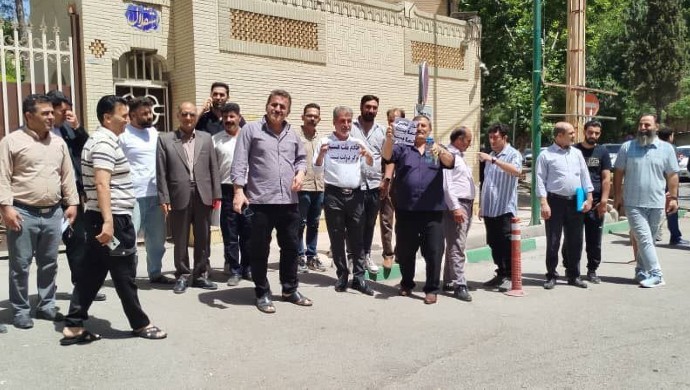

The Iranian regime’s abject failure to maintain even the most basic infrastructure, particularly a stable electricity supply, is wreaking havoc on the lives and livelihoods of the nation’s bakers. These essential workers, who provide the daily bread for millions, are now facing financial ruin and unbearable working conditions due to constant, unannounced power outages. The regime’s incompetence and neglect have not only emptied ovens but have also filled the streets with angry bakers demanding their fundamental rights, highlighting a deepening crisis that resonates far beyond the bakery door.
More footage of protests by bakers in Sanandaj.#IranProtestspic.twitter.com/Ym2KAKB5wO
— People's Mojahedin Organization of Iran (PMOI/MEK) (@Mojahedineng) May 22, 2025
The widespread and sudden power cuts have become a daily torment for bakers, a significant segment of Iran’s hardworking populace. These blackouts directly translate into spoiled dough, wasted resources, and crippling financial losses. One baker, voicing the collective frustration, warned regime officials, “It’s 5:30 AM and they cut the power. What are we supposed to do at 5:30 AM, thanks to the electricity company? Should I come and pour this dough on your heads? What kind of situation have they created for us? God is not pleased; stop these actions. God is witness, this will cost you dearly.”
This raw testimony encapsulates the despair of workers who see their labor and precious ingredients turn to waste due to the regime’s gross mismanagement.
May 22—Neyshabur, northwest Iran
Protest by bakers against increased expenses for flour, labor, and other essentials. The bakers closed their shops and gathered in front of the Bakers' Union building to demand action from authorities.#IranProtestspic.twitter.com/xt6pmde93p— People's Mojahedin Organization of Iran (PMOI/MEK) (@Mojahedineng) May 22, 2025
The regime’s disastrous “Nanino” system, ostensibly designed for smart bread sales, further compounds the misery caused by power outages. As reported by state-affiliated media outlet Asr Iran on May 18, “When the power is cut and the baker is forced to throw away soured dough instead of baking bread, they practically have no data to enter into the Nanino system. Consequently, they are mistakenly accused of selling flour, their quota is reduced, and they are hit from several directions.”
This systemic flaw, exacerbated by the unreliable electricity supply, punishes bakers for the regime’s own failures, pushing them deeper into economic hardship.
May 21—Shiraz, southern Iran
Protest by bakers against the regime's economic policies affecting their livelihoods.#IranProtestspic.twitter.com/VJmu7qz0Kc— People's Mojahedin Organization of Iran (PMOI/MEK) (@Mojahedineng) May 21, 2025
Even elements within the regime are forced to acknowledge the severity of the crisis. One regime media outlet, Etemad, stated on May 19 that “from a social perspective, power outages have pushed public dissatisfaction to its peak and weakened trust in the government. Currently, bakers in most cities have resorted to protests.” Recognizing the escalating anger, a member of the regime’s parliament, Ahmad Fatemi, on May 21, issued a stark warning: “Today, the country’s bakeries are facing serious problems… Regarding the frequent power cuts and widespread blackouts, I warn that this has exhausted people’s patience. It has exhausted the patience of production units and industry owners.” Despite these admissions, the regime offers no tangible solutions, content to let essential services crumble.
May 20—Khorramabad, western Iran
Bakers rally outside the governor's office, protesting bread prices and lack of subsidies.#IranProtests pic.twitter.com/vxskvDHG4U— People's Mojahedin Organization of Iran (PMOI/MEK) (@Mojahedineng) May 20, 2025
The direct consequence of this infrastructural collapse and systemic neglect is the wave of protests sweeping through Iranian cities. Last week, bakers staged coordinated demonstrations in Qom, Mashhad, Isfahan, Ahvaz, Kermanshah, Mahshahr, Ilam, Birjand, Neyshabur, and Sanandaj, demanding their most basic rights.
The regime’s official news agency, IRNA, was compelled to report on May 17 that bakers in various provinces “gathered in front of provincial or governorate offices demanding attention to the problem of power cuts, social security insurance issues, improvement of living conditions, and reform of flour and bread prices.”
May 20—Qaemshahr, northern Iran
Bakers rally to protest economic grievances such as bread prices or reduced subsidies.#IranProtestspic.twitter.com/V3yvCuMt2p— People's Mojahedin Organization of Iran (PMOI/MEK) (@Mojahedineng) May 20, 2025
On May 22, 2025, bakers in Sanandaj specifically protested the regime’s failure to provide stable utility rates and the unreliability of essential services like water and electricity, which were described as either unavailable or prohibitively expensive. That same day, a baker in Jakigour, Sistan and Baluchestan, directly accused officials of “theft” for the financial losses incurred due to unannounced power cuts ruining their dough and impacting people’s access to bread.
The regime’s crisis in managing the electricity supply is not an isolated issue but symptomatic of its broader incompetence and corruption that is pushing various sectors to the brink. Hossein Salahvarzi, former head of the regime’s Chamber of Commerce, expressed fear over the potential for these protests to escalate, writing on May 19, “In hot regions like Khuzestan, long blackouts led to protest gatherings. Currently, bakers in most cities have resorted to protests; these dissatisfactions, in a context of over 35% inflation and a poverty rate of 30-35%, can turn into larger unrest.”
May 18—Yasuj, southwest Iran
Protest by bakers against unpaid subsidies, high operational costs, low income, and other job-related difficulties.#IranProtestspic.twitter.com/f6cH7W2dIC— People's Mojahedin Organization of Iran (PMOI/MEK) (@Mojahedineng) May 18, 2025
The struggle of Iran’s bakers is a stark indictment of a regime that can no longer provide the most fundamental necessities for its people. The simmering anger over empty ovens and darkened bakeries is a clear sign that the Iranian people’s patience is wearing thin.