

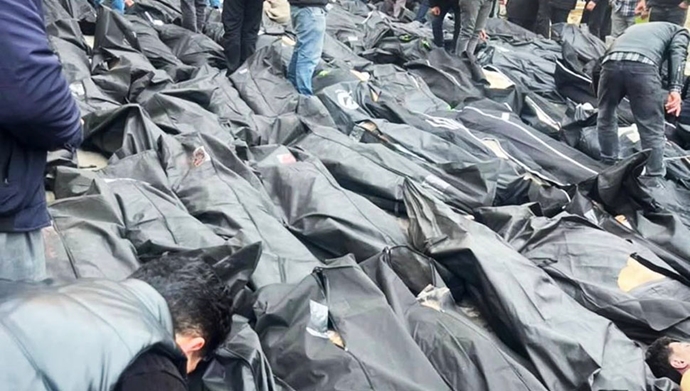

On January 12, 2026, as the nationwide uprising in Iran entered its sixteenth day, the People’s Mojahedin Organization of Iran (PMOI/MEK) released a harrowing report that lays bare the true scale of the regime’s brutality. According to the network of the Iranian Resistance inside the country, more than 3,000 protesters have been killed across 195 cities between December 28 and January 11. These figures, compiled through extensive research from local sources, hospitals, forensic offices, and families of the victims, indicate a systematic campaign of mass killing. Even international observers, often conservative in their estimates due to information restrictions, are acknowledging the carnage. Some news outlets have reported casualties to be above 20,000.
The unrest, which erupted on December 28, 2025, initially began as an economic strike by bazaari shopkeepers in central Tehran, sparked by the rial’s sharp plunge and fears of bankruptcy. It started near the Alaeddin Shopping Centre and quickly engulfed the Tehran Grand Bazaar. However, the slogans rapidly shifted from economic grievances to explicit calls for the downfall of the regime. By the time the protests expanded geographically to hundreds of locations and socially to include universities, the regime’s response had transitioned into a total war against the populace.
To hide this crime against humanity, Supreme Leader Ali Khamenei ordered a digital blackout on January 8. The regime, terrified by the bravery of the rebellious youth, cut off the internet completely to slaughter people in silence. Amnesty International confirmed on January 9 that authorities were blocking internet access to conceal the scale of their lethal crackdown and severe human rights violations. In a display of utter cynicism, state media has broadcast images of the bodies, falsely attributing the killings to opposition “rioters.”
Iran's regime:
1- Kills protesters by the thousands
2- Blames the deaths on protesters themselves
3- Monetizes its crimes by extorting the families of the victimsThis is a recurring pattern with this regime. In the 1980s, regime authorities forced families of PMOI martyrs to… https://t.co/Sci6kHuk4A pic.twitter.com/VHCeuTHxPL
— People's Mojahedin Organization of Iran (PMOI/MEK) (@Mojahedineng) January 13, 2026
Despite the blackout, leaked images from the Kahrizak forensic center in Tehran have revealed a catastrophic scene reminiscent of the darkest days of the 1980s and the 2019 massacre. Corridors and courtyards are piled with bodies wrapped in black covers. Kahrizak has been transformed from a detention center into a geography of crime where the “right to life” has been suspended. Distraught parents are seen wandering among the corpses, searching for their children, desperate to reclaim their identities from a regime that seeks to bury them in anonymity. Reports indicate that the regime is extorting families thousands of dollars to hand over the remains of their murdered children.
Any illusion of a “moderate” faction within the regime has been shattered. On January 11, regime President Masoud Pezeshkian echoed the rhetoric of the Shah’s final days, labeling protesters as foreign-backed terrorists. In a brazen lie to justify the bloodshed, he claimed protesters were “beheading” and “burning” people, asserting that authorities must act with “decisiveness.” This was reinforced by Parliament Speaker Mohammad Bagher Ghalibaf and Judiciary Chief Gholam-Hossein Mohseni-Ejei, who threatened “no leniency” and “severe punishment” for anyone arrested.
PMOI: Death Toll from nationwide uprising surpasses 3,000 as of January 11
My condolences to the people of Iran, particularly to the families, relatives, friends, and fellow activists of these proud martyrs. This major crime against humanity will not go unanswered by the Iranian… pic.twitter.com/QjeVAgnAip— Maryam Rajavi (@Maryam_Rajavi) January 12, 2026
Mrs. Maryam Rajavi, President-elect of the National Council of Resistance of Iran (NCRI), has condemned this slaughter as a “major crime against humanity.” Offering condolences to the families of the fallen, she emphasized that the perpetrators will undoubtedly face justice in a future democratic Iran. The blood of over 3,000 martyrs proves that the regime has reached a point of no return. The gap between the people and the state is now unbridgeable, and no amount of repression can extinguish the fire of this uprising.