


Tuesday, January 13, 2026
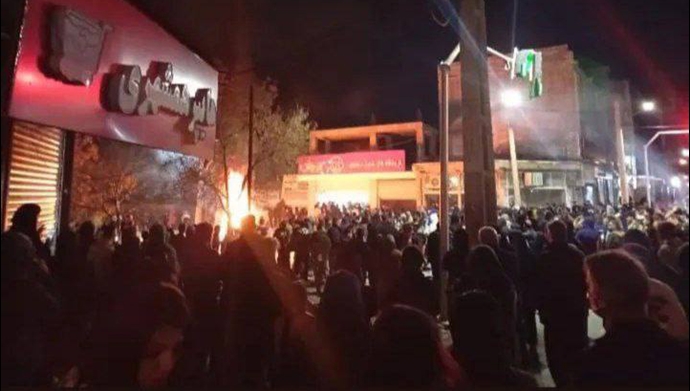
The nationwide uprising against the religious dictatorship in Iran has reached its seventeenth day on Tuesday, January 13, 2026. Following a bloody sixteenth day where the death toll surpassed 3,000 and the European Parliament banned regime diplomats, the confrontation between the Iranian people and the regime’s suppressive apparatus has entered a more critical phase.
On Tuesday, the regime displayed clear signs of panic and desperation. Fearing the role of students in the uprising, authorities ordered the evacuation of university dormitories in Tehran. Simultaneously, the regime has begun fortifying city centers in Ahvaz and Dezful with concrete walls, effectively turning them into military zones. While the international community, including Germany, the Netherlands, and the UN, issued strong condemnations, the regime’s Judiciary Chief vowed “no leniency” and ordered the accelerated execution of protesters.
Day 17 Roundup: Execution orders, concrete walls in Khuzestan, and governorate takeover in Quchan
On Tuesday, January 13, 2026, the seventeenth day of the uprising saw the regime resorting to martial law tactics in major cities while the rebellious youth continued to strike back at the apparatus of suppression.
Key highlights from today include:
- “No Mercy” Execution Orders: Gholamhossein Mohseni Eje’i, the regime’s Judiciary Chief, labeled protesters as “Mohareb” (waging war on God) and ordered judges to issue death sentences without delay or leniency.
- Concrete Walls in Ahvaz: In a sign of extreme fear, the regime has blocked central streets in Ahvaz and Dezful with concrete barriers and established military checkpoints.
- Universities Evacuated: To prevent student gatherings, the regime ordered the immediate evacuation of University of Tehran dormitories for 10 days and moved exams at Urmia University to virtual platforms.
- Quchan Governorate Taken: In a heroic act of defiance on Monday night, rebellious youth in Quchan took over the governorate building and set fire to the IRGC headquarters.
- Horror in Morgues: Reports confirm that the regime is piling bodies in warehouses and charging families extortionate fees—up to 7 billion rials—to return the bodies of martyrs.
- Global Condemnation: Leaders from Germany, the Netherlands, Austria, and the US have condemned the crackdown, while the UN Special Rapporteur warned that the death toll is likely in the thousands.
- 120-Hour Blackout: NetBlocks confirmed that Iran has been offline for 120 hours, a deliberate attempt to mask crimes against humanity.
Judiciary Chief Eje’i orders speedy executions; “No Leniency”
As the uprising proves resilient against field suppression, the regime is turning to its judicial slaughterhouse. Gholamhossein Mohseni Eje’i, the Judiciary Chief of the mullahs, met with members of the parliament’s security commission today. He explicitly labeled the protesters as “Mohareb” (enemies of God), a charge that carries the death penalty under the mullahs’ law. Eje’i stated there would be “no leniency” and issued orders to accelerate trials and the issuance of death sentences, signaling a new wave of state-sanctioned murders.
Regime extortion: 7 billion rials for the bodies of martyrs
Iran's regime:
1- Kills protesters by the thousands
2- Blames the deaths on protesters themselves
3- Monetizes its crimes by extorting the families of the victimsThis is a recurring pattern with this regime. In the 1980s, regime authorities forced families of PMOI martyrs to… https://t.co/Sci6kHuk4A pic.twitter.com/VHCeuTHxPL
— People's Mojahedin Organization of Iran (PMOI/MEK) (@Mojahedineng) January 13, 2026
Shocking reports from the Legal Medicine Organization (forensics) reveal the depth of the regime’s depravity. In Tehran and Karaj, the bodies of martyrs are piled up in open areas and hallways. In Kahrizak, the situation is particularly harrowing; authorities are using pickup trucks to transfer bodies to cold storage. They have set up monitors displaying images of the victims for families to identify their loved ones. Cruelly, the regime is demanding 7 billion rials from grieving families as a condition to release each body. In Bandar Abbas, bodies have been moved to a shed under heavy security.
Tehran: University dorms evacuated; Street clashes continue
Fearing the explosive potential of the student movement, the regime has ordered the immediate evacuation of University of Tehran dormitories for a period of ten days. Similarly, Urmia University has shifted all exams to virtual platforms to prevent students from gathering.
Despite these measures, Tehran remains a volatile combat zone. On Monday and Tuesday, districts including Bahar Street, Sadeghiyeh, Nezam Abad, Punak, Elahiyeh, and Kargar witnessed intense clashes. Brave youth confronted the regime’s special units, chanting “Dishonorable, Dishonorable!” and “Death to Khamenei.”
https://twitter.com/netblocks/status/2011114025636016478
Ahvaz and Dezful: Concrete walls and martial law
In the oil-rich province of Khuzestan, the regime has effectively imposed martial law. Fearing the spread of protests in Ahvaz, authorities have installed concrete walls in the Naderi district and Abdul Hamid Market, blocking central streets to impede the movement of protesters. In Dezful, security forces and Basij militia have set up checkpoints on every street, reinforcing them with concrete barriers in a display of absolute terror of the people.
Quchan and Babol: Bases burned and police disarmed
The resistance has escalated to direct takeovers of regime centers. On Sunday night in Quchan (northeast Iran), rebellious youth launched a daring offensive, taking over the governorate building and setting fire to the IRGC headquarters. The heroic battle left several martyrs.
In Babol (northern Iran), youth attacked Police Stations 12 and 14 on Salman Farsi Street, which had been firing on demonstrators. The protesters succeeded in disarming the stations. In Ilam, an IRGC agent named Rahimi, known for killing protesters, was killed during clashes.
January 12—Marvdasht, southern Iran
New videos obtained from yesterday's protests shows protesters celebrating after forcing regime security forces to retreat.#IranProtests #IranRevolution pic.twitter.com/3Gjre6nn9D— People's Mojahedin Organization of Iran (PMOI/MEK) (@Mojahedineng) January 13, 2026
Isfahan: Snipers on rooftops, youth control suburbs
In Isfahan, an undeclared martial law is in effect. Snipers have been stationed on the rooftops of mosques and schools in the city center. However, the suburbs—including Najafabad, Falavarjan, Sepahan Shahr, and Baharestan—are reported to be under the control of the people. Rebellious youth set fire to banks and the regime’s sham city council building in Malekshahr.
International Isolation: World leaders condemn “Massive Violence”
We call on the Iranian leadership to protect its population rather than threaten it. The regime’s violence against its own people is not a sign of strength, but of weakness. It must end immediately. To underscore this message, we are working on further EU sanctions.
— Bundeskanzler Friedrich Merz (@bundeskanzler) January 13, 2026
As the regime plunges Iran into darkness with a 120-hour internet blackout, the international community is speaking out.
- Germany: Chancellor Friedrich Merz stated, “The regime’s violence against its own people is not a sign of strength, but of weakness,” and announced work on further EU sanctions.
- Netherlands: Prime Minister Dick Schoof urged the regime to stop the violence, stating, “The brave men and women in the streets of Iranian cities deserve our support.”
- UN: Mai Sato, UN Special Rapporteur, warned that the death toll is likely in the thousands and condemned the internet shutdown as an attempt to conceal violence.
- USA: Congresswoman Judy Chu expressed awe at the bravery of Iranians standing
Together with other UN experts, I condemn Iran's ongoing internet shutdown—a deliberate attempt to conceal the violence being perpetrated against nationwide demonstrations.https://t.co/wx0vV4Bhpz
The dangerous rhetoric labelling peaceful protesters as 'terrorists,' 'rioters,' or…— Mai Sato (@drmaisato) January 13, 2026