


Analysis by PMOI/MEK
Feb. 2, 2019 – In a January 29 session of the Iranian regime’s Majlis (parliament), some MPs expressed once again their compassion and concerns for the livelihood of ordinary Iranians.
But considering the sheer amount of concern that emanates from all levels of the ruling elite, Friday prayer Imams, MPs, cabinet ministers, the president, and the Supreme Leader himself, one wonders how things could have become so bad in the first place, and why the situation isn't improving when every single authority and official agrees that the situation is unbearable?
During the parliamentary session, Mehdi Farshadan, representative from the Kurdistan province, attacked the government of Hassan Rouhani and said: "Kurdistan's economy is absolutely paralyzed. A rooted backward state has infested all aspects of our farming, manufacturing, roads and water of Kurdistan and you don't want to see it… Dear Mr. Rouhani, today, unemployment, divorce, suicide, drug addiction, mismanagement, discrimination, and other social difficulties have skyrocketed in Kurdistan. Therefore, my silence as the representative of the people of Kurdistan is treason regarding the people's vote and you and your team's slumber is treason to the people's trust.
"Please consider those honorable young people in Kurdistan's cities who rummage through garbage at night to collect a kilo of plastic or some cardboards to make ends meet? Please say what happened to your promises of creating jobs?" he further added.
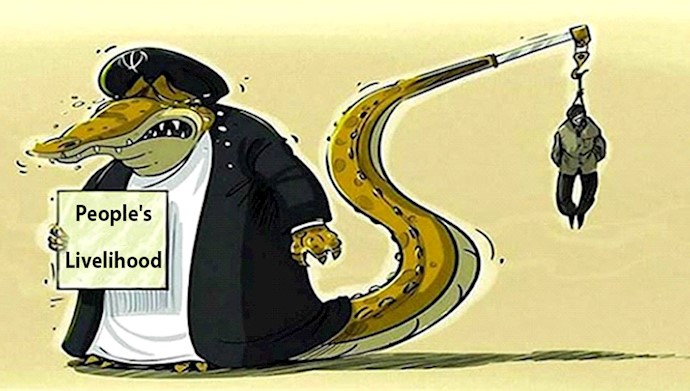
One of the main reasons why Iranian officials started this chorus of crocodile tears is their fear of an uprising by the poor and hungry.
In the same parliamentary session, MP Mohammad Qomy quoted an old proverb that some scholars attribute it to Islam's prophet, Mohammed. The proverb basically says that a regime can survive blasphemy and infidelity but never injustice. The MP further added that "examples of injustice are widespread."
Another reason for the crocodile tears is an inter-factional fight between the political elite over shares of the imported meat market and trafficking of livestock to foreign countries. In many cases, expressions of concern over the livelihoods of ordinary people are just excuses to put pressure on the opposing faction for a greater share of a lucrative business or an outright attempt to throw accomplices from another faction under the bus.
"My first notice is addressed to the minister of agriculture, minister of industry, mine, and trade, and the interior minister regarding controlling the market. Inflation has broken the back of the people. Gentlemen, find a solution for the people. On the eve of the 40th anniversary of the Islamic Revolution, meat costs 1 million rials."
It's worth noting that the minimum monthly wage in Iran for 30 days of work is currently about 11.5 million rials. In other words, a worker earning the minimum wage in Iran can buy 11 kilos of fresh meat if they would spend all their monthly income on this one item.
While experts estimate the poverty-line around 40-50 million rials in urban areas, one can conservatively guess that more than half the population lives in poverty.
No matter what Iranian MPs and officials say, ordinary Iranians won't believe their innocence will unleash their popular lash sooner or later. After 40 years of nepotism and kleptocracy, Iranians have learned that there isn't any difference between the opposing faction in the Iranian theocracy when it comes to the interests of the nation and its people.
During the end-2017 uprising across Iran, It was ordinary Iranians who famously introduced on of the most popular chants in Iran's current popular sphere: "Conservatives, Moderates! The game is over!"