

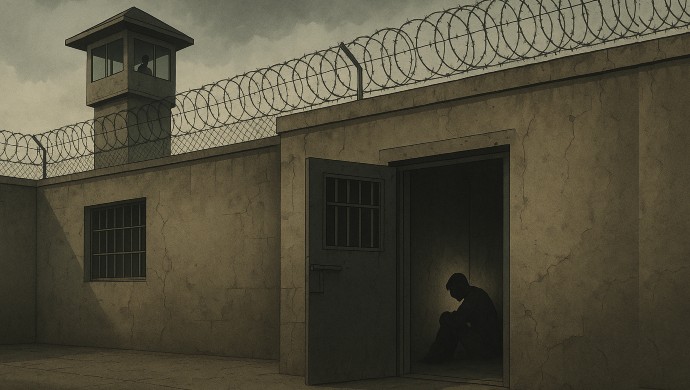

Thirty-one-year-old Abbas Yavari has become the latest victim of the Iranian regime’s brutal penal system, dying under severe torture in a Shiraz detention center.
Arrested during the massive nationwide uprisings of January 2026, Yavari was initially transferred to Shiraz Central Prison in late February. On March 26, authorities moved him to an undisclosed detention facility where he was tortured to death. In a familiar tactic used by the regime to cover up its crimes, state agents informed Yavari’s family on March 29 that he had “committed suicide.”
Human rights monitors and sources indicate that interrogators subjected Yavari to lethal torture to extract a forced confession. The regime intended to falsely implicate him in the alleged killing of Basij paramilitary members during the recent protests in the Ma’ali Abad and Molla Sadra areas of Shiraz.
Accelerating the machinery of death
Yavari’s murder is not an isolated incident but a symptom of a much broader, state-sanctioned killing spree. Following the December 2025 and January 2026 uprisings that severely weakened the clerical establishment, the state apparatus is weaponizing the judiciary to instill terror.
In the past month alone, the regime has carried out 13 political executions. These victims include seven young protesters from the recent uprisings and six members of the People’s Mojahedin Organization of Iran (PMOI/MEK).
Sham trials and imminent threats
The threat to surviving detainees remains critical. In Tehran, the regime’s judiciary recently issued hasty, collective death sentences against four protesters: Mohammadreza Majidi Asl, 34, his wife Bita Hemmati, Kourosh Zamaninezhad, and Behrouz Zamaninezhad. Handed down by the notorious Judge Iman Afshari of Branch 26 of the Tehran Revolutionary Court, the sentences were based on absurd charges such as “operational action for a hostile state” and “using explosives and weapons.” These rulings relied heavily on forced confessions extracted under extreme physical and psychological torture. Additionally, the court ordered the total confiscation of their personal property.
Meanwhile, in Shiraz, two other political prisoners, 28-year-old Manouchehr Vafaei and 32-year-old Navid Naqdi, are at imminent risk of execution on fabricated charges related to the killing of two IRGC-affiliated Basij members in 2024. Another young protester, Abolfazl Salehi Siavashani, also remains in grave danger of the gallows.
A call for international intervention
The speed and severity of these executions and sentences expose a regime deeply terrified of the rebellious Iranian youth and the simmering volcano of public anger. Desperate to preempt another uprising, the clerical establishment relies on sheer terror to maintain its fragile grip on power.
The National Council of Resistance of Iran (NCRI) has stressed the urgent need to refer the dossier of the regime’s crimes to the United Nations Security Council. The international community cannot remain silent while Tehran slaughters its citizens. Immediate, binding intervention is required to halt the regime’s killing machine, investigate the use of torture in Iran’s prisons, and save the lives of political prisoners trapped on death row.