

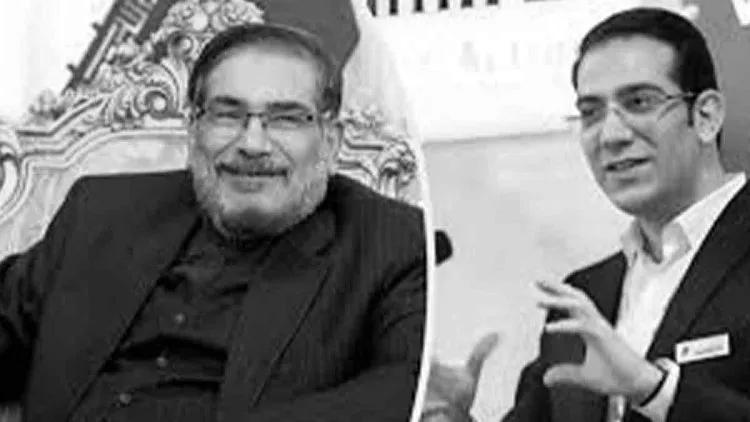

The secrets of Ali Shamkhani, the apprentice who became an emperor, reveal events that become more exposed with each passing day of the rule of the mullahs in Iran.
In 1980, a young man named Ali Shamkhani, then an apprentice at a bicycle repair shop in Ahvaz, wrote a passionate letter to Ruhollah Khomeini the founder of the mullahs’ regime ruling Iran: “I have nothing for this revolution and war except my life. If you do not accept even that, then the Khuzestan IRGC is at your disposal, and I will return to being Ali Shamkhani, the bicycle repair apprentice.”
In this letter, he introduced himself as a humble and devoted commander ready to sacrifice his life for the revolution and the war. But now, after 43 years, that same bicycle apprentice has become one of the most powerful and wealthiest figures in Iran. Oil tankers, luxury villas, high-rise towers in the upscale Elahieh neighborhood of Tehran, a private bank in Oman, and multimillion-pound companies in London—these are parts of a financial empire bearing the name of Shamkhani and his family. How did Shamkhani experience such a meteoric rise, and who knows the secrets behind his amassed wealth?
A Letter from Khuzestan: The Beginning of a Legend
Amid the political turmoil of 1980, Ali Shamkhani, then the Islamic Republic Guard Corps (IRGC) commander in Khuzestan province, wrote a letter to Khomeini and commanders in Tehran, complaining about the harsh conditions of the war and shortages in resources. At the end of the letter, he signed as “Ali Shamkhani, bicycle repair apprentice.” This letter, however, was just the beginning of a path that would take him from a bike shop in Ahvaz to the heights of power and wealth.
Shamkhani’s Family Empire
Today, the name Shamkhani is no longer associated with bicycle repair but is instead tied to a vast financial empire whose traces extend both inside and beyond Iran. His children, especially his two daughters, Zeinab and Roghieh are at the center of this empire.
Zeinab Shamkhani married Seyyed Hassan Mirmohammad Vali in 1989. The couple owns luxurious properties in Lavasan, an affluent suburb northeast of Tehran, and high-end towers in Elahieh, a wealthy district of the capital. Their names are linked to major financial deals and profitable development projects.
Roghieh Shamkhani has truly placed her in the spotlight are her business activities:
Mari Group LTD in London: She owns 100% of this multimillion-pound company, which is active in various investment sectors.
Khazar Khorshid Resort in Ramsar: This luxury resort on the Caspian coast was handed over to her in 2017 in a controversial auction by the Execution of Khomeini Order Organization (a powerful regime-affiliated organization). The reported sale price was shockingly low—allegedly less than the price of a domestic-made car.
From Oil Tankers to a Private Bank in Oman
Ali Shamkhani’s wealth is not limited to real estate and foreign companies. Oil tankers registered under his children’s names, stakes in the Arvand Free Trade Zone, and a private bank owned by his son in Oman are all part of his financial empire. This empire reveals Shamkhani’s deep influence in the political and economic networks of Iran and the region. The question remains: how did a bicycle apprentice amass such a fortune?
Bicycle Repair Apprentice: The Most Lucrative Job in the World?
If we are to believe the story of Ali Shamkhani, then the job of a bicycle apprentice surely deserves a spot in the Guinness World Records. How could someone who once said he had “nothing but his life” now own villas in Lavasan, towers in Elahieh, companies in London, and luxury resorts? This astonishing rise seems to have less to do with entrepreneurship and more with access to massive regime-backed privileges and power networks.
Secret to Success or Access to Regime Privilege?
Ali Shamkhani’s story is a textbook case of a fascist figure turning into a key player in economic and political networks. His rise from a bicycle shop to the peaks of wealth and power is tied more to access to exclusive opportunities and regime-backed privileges than to personal effort. The transfer of the Khazar Khorshid complex at a negligible price, ownership of multimillion-pound companies in London, and influence over mega-projects like the Arvand Free Trade Zone all point to a complex web of connections and favoritism.
This narrative also raises important questions about economic transparency and justice in Iran. How can someone with such humble beginnings amass this level of wealth without clear explanations? Is this fortune the result of entrepreneurship or the product of abusing political positions?
One of the requirements for rising through the ranks of theft and corruption is allegiance to the regime’s supreme leader.
In this regime, anyone who rises to high positions must have both ideological and practical allegiance to the leadership. The most important aspect of this allegiance is its practical form, which is embodied in executions and repression. In the end, Ali Shamkhani’s story may be just one example among many. This narrative is not only about an individual but about a system that allows some to rise from apprentice to emperor, while others are not even given the chance to ride a bicycle.
Ali Shamkhani, the bicycle apprentice of 1980, now stands at the center of a vast political and financial empire. From oil tankers to luxury villas and foreign companies, his and his family’s wealth has raised many questions. This is less a tale of success and more a warning about privilege, power, and inequality. Perhaps it’s time to ask: who will be the next bicycle apprentice?