

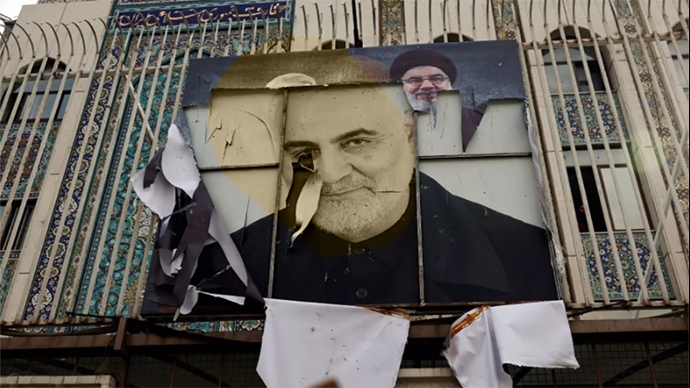

Tehran’s proxy forces in the Middle East have become a liability for the Iranian regime.
The point is that the balance of regional and international power is tightening its grip on the regime, and the time has come for the regime to pay the price for its expansionism and crimes under the worn-out slogan of “exporting the revolution.” For the past 46 years, “exporting the Islamic revolution” has served as a license for any crime to prolong the regime’s survival. How many deafening cries were made under the banner of exporting the revolution by Friday prayer leaders (appointed by the regime’s supreme leader) and the regime’s propaganda outlets, and under the shadow of these cries, they imposed religious tyranny and political repression across Iran.
Now the time has come for the regime to face the consequences of its self-propelling crimes—both domestically and internationally. Now, the regime’s officials, in a tone of repentance, are denying the “organizational relationship between Iran and the resistance groups.” This distortion and cowardly resort to lies—even in front of the regime’s own insiders—is nothing but a sign of the shift in the internal, regional, and international balance of power against the clerical rulers.
On April 5, in an interview with ISNA news agency, politician Hamidreza Taraghi claimed: “The resistance groups are not under Iran’s command and have no organizational or proxy relationship with Iran. The West is aware of this. They connect the resistance forces to Iran to implement their plan of accusing Iran of supporting terrorism. These groups might receive assistance from Iran, and Iran has no hesitation in helping them in defense of the oppressed.”
The audience of these fear-ridden words about the shifting balance of power first takes seriously the power of time to reveal the truth, and second, recognizes the return of the consequences of crimes to their source at the heart of the clerical regime.
When former Minister of the Islamic Revolutionary Guard Corps (IRGC), Mohsen Rafighdoost boasted that Hezbollah of Lebanon was established with Iranian missiles and ideology, was politician Hamidreza Taraghi making such claims? When Hassan Nasrallah, the Secretary-General of Hezbollah, laughed and said, “As long as Iran’s money and weapons exist, so do we,” how did the regime’s officials feel, and did they ever imagine days like this?
When Friday prayer leaders, meaning representatives of the Supreme Leader, shouted for years that Lebanon means the Islamic Republic, Yemen means the Islamic Republic, Iraq means the Islamic Republic, and Syria is the thirty-fifth province of Iran, the regime’s officials had no issue with interference and crimes in other countries and never thought of denying an organizational relationship with them.
When Qasem Soleimani was organizing the regime’s supported forces, mobilizing manpower and funds for them, and spending weeks and months orchestrating crimes in Syria and Lebanon, were these actions carried out without an organizational relationship? How is it possible to send billions of dollars, truckloads, and even planeloads of weapons to Lebanon, Syria, and Yemen, and accomplish such massive operations without predetermined coordination and organizational ties?
It is well known that regime’s regional proxies have been and remain subdivisions of the Quds Force, and there is no need for extensive evidence to prove this organizational cycle. It is as clear as day to the people of Iran, the people of the region—especially the people of Lebanon, Yemen, Syria, and Iraq—as well as to European governments, that these proxies would not last even a month without administrative, organizational, logistical, and financial connections to the regime’s think tanks and the personal control of regime supreme leader Ali Khamenei.
Therefore, the main issue must be understood it is the fear of the awaited moment of overthrow by the Iranian people, linked to the pivotal developments of this fateful year. The main issue is that the regime’s parasitic exploitation of global appeasement and leeching under the cover of trade and political deals has been caught in the intense twists of internal and international accountability—to the point where the regime’s survival depends hour by hour on unfolding developments.
This is the core issue that the regime’s official turns away from so as not to face its terrifying reality. The rest is foolish storytelling and rewriting history to avoid accountability.