

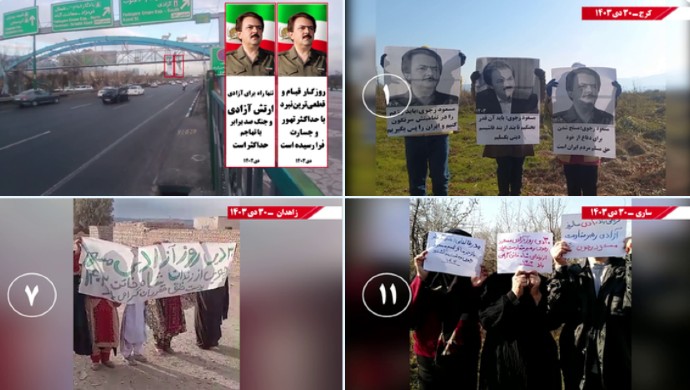

January 20 marks the anniversary of the last group of political prisoners from the Shah prison in 1979. On that day, 126 political prisoners, including Massoud Rajavi and other leading members of the PMOI, were released from prison.
On January 18, 2025, corresponding to the anniversary of the release of the last group of political prisoners from the Shah’s prisons in 1979, PMOI Resistance Units in Iran commemorated this historic day.
Tehran
"Iran's democratic revolution will be victorious" pic.twitter.com/z1WhEuDLf6— People's Mojahedin Organization of Iran (PMOI/MEK) (@Mojahedineng) January 19, 2025
In a series of coordinated actions, resistance units across several Iranian cities engaged in anti-regime activities. These acts included displaying images of Massoud Rajavi alongside quotes from his speeches emphasizing resistance and the fight against the regime. Their actions underscored the resilience and determination of those opposing the regime’s oppressive rule.
The activities spanned numerous cities, including Tehran, Mashhad, Karaj, Rasht, Hamedan, Bandar Abbas, Sanandaj, Bandar Anzali, and Talesh. In each location, messages of hope and defiance were prominently displayed:
Mashhad
"Iran's democratic revolution will be victorious" pic.twitter.com/mdXz1QNvO9— People's Mojahedin Organization of Iran (PMOI/MEK) (@Mojahedineng) January 19, 2025
- Tehran (Tehransar Boulevard): “The Iranian people’s democratic revolution will succeed.”
- Karaj (Azadi Street): “The Iranian people’s democratic revolution will succeed.”
- Mashhad (Vakilabad Highway, Saba Boulevard, and Amiriyah Boulevard): “The Iranian people’s democratic revolution will succeed” and “The regime must be overthrown entirely.”
- Rasht (Rashtian Boulevard and Ghali Pour Boulevard): “The Iranian people’s democratic revolution is in the hands of its people and insurgents.”
- Bandar Anzali (Jahangardi Street): Visual tributes to the resistance.
- Talesh (Salsal Street): “January 19 marks the anniversary of Massoud Rajavi’s release from the Shah’s prison.”
- Hamedan (Azadi Boulevard, Baharestan Street, and Badi-ol-Zaman Boulevard): “We must break the chains of religious fascism.”
- Sanandaj (Farhangian Complex): “We must fight until the chains of religious fascism are broken.”
- Bandar Abbas (Delgosha Street): “You, dictator; I am Arash, fire answers fire.”
Mashhad
"The regime must be overthrown in its entirety" pic.twitter.com/6kIcyP6dlD— People's Mojahedin Organization of Iran (PMOI/MEK) (@Mojahedineng) January 19, 2025
On January 19, the Resistance Units commemorated the anniversary of the freedom of political prisoners, especially the release of Massoud Rajavi, with anti-regime activities across various cities in Iran, including putting up banners, graffiti writing, distributing leaflets, and writing slogans against the regime in public places.
Tehran:
In the capital, slogans such as “The era of the uprising and the decisive battle with maximum courage and bravery has arrived” and “Khamenei and his executioners understand only the language of force and decisiveness” emphasized the importance of continuing resistance and the need for strength and determination in confronting the regime. These slogans conveyed a message of courage and resilience in the struggle.
Tehran
"You can't keep a nation in chains forever" pic.twitter.com/JLLovApXGs— People's Mojahedin Organization of Iran (PMOI/MEK) (@Mojahedineng) January 20, 2025
Karaj:
Rebels raised slogans like “We will continue our fight until this regime is overthrown” and “We must overthrow the regime in its entirety and take back Iran.” These messages called for practical and serious actions to end the dictatorship and asserted the people’s natural right to defend their freedom.
Isfahan:
In Isfahan, the slogan “Death to the mullahs’ regime, long live the Army of Freedom” expressed the people’s absolute rejection of the mullahs’ rule and their support for organized resistance. This slogan demonstrated the people’s protest against the regime’s oppressive policies.
Tabriz
"Happy January 20, the anniversary of the release of Massoud Rajavi from the prisons of the shah regime" pic.twitter.com/z43CooOUB3— People's Mojahedin Organization of Iran (PMOI/MEK) (@Mojahedineng) January 20, 2025
Mashhad:
In Mashhad, slogans such as “With the uprising, the sun is about to rise” and “The regime understands only the language of force and decisiveness” provided hope for a brighter future and emphasized the need for strength and determination in confronting the regime, encouraging people to continue their fight.
Yazd:
Similar slogans were seen in Yazd underscored the necessity of forceful and decisive confrontation with oppression. This slogans reflected the determination of the people of Yazd to stand against the religious dictatorship.
Rasht
"The anniversary of the release of the last group of political prisoners from the prisons of the shah regime" pic.twitter.com/02UeA24dN1— People's Mojahedin Organization of Iran (PMOI/MEK) (@Mojahedineng) January 20, 2025
Rasht:
In Rasht, rebels expressed their rebellious spirit with the slogan “Rebels roar, surrender is forbidden.” This slogan reflected the people’s resolve to resist oppression and continue their fight until freedom is achieved.
Mahabad:
In Mahabad, the slogan “The only path to freedom is to strike back against the regime” symbolized the revolutionary spirit of the people and the importance of taking serious and organized steps to escape dictatorship.
Zahedan
"Happy January 20, the anniversary of the release of Massoud Rajavi from the prisons of the treacherous shah." pic.twitter.com/n9AQj5b9Dm— People's Mojahedin Organization of Iran (PMOI/MEK) (@Mojahedineng) January 20, 2025
Sari:
In Sari, reflecting on historical memory, the slogan “Ayatollah Taleghani: Torturers and interrogators were terrified of the name Massoud Rajavi” highlighted the historical role of resistance in weakening the regime and reminded the people that standing against dictatorship has a long and successful history.
These actions underline the commitment of the resistance units to their ultimate goal: the overthrow of the ruling regime and its replacement with a democratic system. The displayed slogans and imagery reflect their firm belief in the necessity of continued resistance, unity, and a decisive struggle against religious dictatorship.
Sari
"Happy January 20, the anniversary of the release of Massoud Rajavi from the prisons of the treacherous shah." pic.twitter.com/7yBmTeC6M0— People's Mojahedin Organization of Iran (PMOI/MEK) (@Mojahedineng) January 20, 2025
The resistance units, known for their courage and sacrifice, continue to inspire the broader Iranian population in their quest for an Iran where human rights, democratic governance, and the people’s right to self-determination are upheld.
January 20, 1979, marked a turning point in the history of Iran. Following the release of the political prisoners, the People’s Mojahedin Organization of Iran (PMOI/MEK) and other groups that sought freedom assumed an active role in the protests that shaped the 1979 revolution. Less than a month later, the monarchy collapsed.