

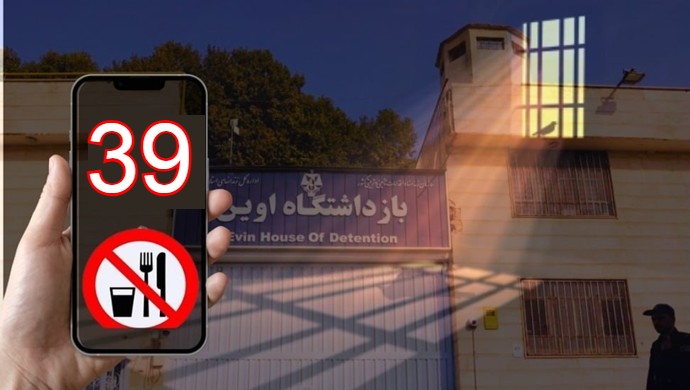

The 39th week of the “No to Executions Tuesdays” campaign was held in 23 prisons across Iran, with inmates going on a hunger strike on Tuesday, October 22, 2024. This week’s protest saw the inclusion of Sheiban Prison in Ahvaz for the first time, increasing the number of participating prisons to 23.
The prisons that joined this week’s campaign include Evin (women’s ward, wards 4 and 8), Ghezel Hesar (units 3 and 4), Central Karaj Prison, Greater Tehran Prison, Khorramabad, Arak, Asadabad Prison in Isfahan, Nezam Prison in Shiraz, Bam, Mashhad, Lakan Prison in Rasht (women’s and men’s wards), Qaemshahr Prison, Ardabil Prison, Tabriz Prison, Urmia Prison, Salmas Prison, Khoy Prison, Naqadeh Prison, Saqqez Prison, Baneh Prison, Marivan Prison, Kamyaran Prison, and Sheiban Prison in Ahvaz.
In their statement for the 39th week of the campaign, the striking prisoners emphasized the grim reality of escalating executions in Iran. They declared, “As we mark the anniversary of the 2022 protests and honor the memory of those who lost their lives in that movement, we are witnessing an alarming surge in executions. In the Iranian month of Mehr alone (September 22 to October 21), over 150 people were hanged.”
The statement from the prisoners also highlighted a recent disturbing development: four political prisoners from the Arab ethnic minority in Sheiban Ahvaz have been transferred to solitary confinement in preparation for execution. The statement warned, “These individuals’ lives are in grave danger,” and condemned the act as another repressive tactic by the regime to stifle dissent.
The prisoners participating in the “No to Executions Tuesdays” campaign condemned the ongoing systematic executions and called on all political, civil, and human rights activists and organizations, both in Iran and internationally, to unite against these acts of state repression. “Today, standing against the issuance and execution of death sentences must become a social demand. This will only be achieved through resistance, solidarity, and collective will,” their statement read.
The recent surge in executions comes at a time when the Iranian regime faces increasing domestic and international pressures. According to the National Council of Resistance of Iran (NCRI), since Massoud Pezeshkian took office as President in July 2024, at least 342 people have been executed, including 13 women. The Iranian month of Mehr alone saw 147 confirmed executions, marking one of the highest monthly tallies in recent years. The NCRI noted that this number is even higher than during the presidency of Ebrahim Raisi, known for his involvement in the 1988 mass executions, and warned that the actual number of executions may be even greater.
The executions have continued unabated in recent weeks. On Monday, October 21, 2024, two prisoners were hanged in Jiroft Prison. A day earlier, on Sunday, October 20, five individuals were executed across multiple facilities, including a female prisoner in Tabriz.
Further executions in this month suggest an ongoing and deliberate pattern by the regime to use capital punishment as a means of control. The NCRI reported that on October 16 alone, 18 prisoners were executed in various prisons across the country, underscoring the government’s efforts to instill fear and suppress potential dissent.
“The regime, surrounded by crises on all sides, resorts to executions to quash any hint of resistance,” the NCRI warned and called on the United Nations, the European Union, and human rights organizations worldwide to take urgent action to stop the wave of executions. “Failing to act sends a dangerous message to the regime that it can continue its crimes with impunity,” the NCRI emphasized.
This intensified use of the death penalty has prompted growing calls for international solidarity with the “No to Executions Tuesdays” campaign. The initiative, which started as a form of resistance by political prisoners, has become a symbol of defiance against the state’s harsh policies. Human rights advocates and organizations around the world have been urged to amplify the voices of these prisoners and call for accountability from the regime.