


Internet censorship is one of the repressive policies through which Iran’s regime tries to maintain control over cyberspace and public opinion. This policy has been pursued more seriously since the popular protests in December 2017, and alongside this, the regime’s cyber army has grown significantly. However, even earlier, in the early 2010s, Supreme Leader Ali Khamenei established the “Supreme Council of Cyberspace” and once remarked, “If I were not the Supreme Leader today, I would definitely be in charge of cyberspace in the country.”
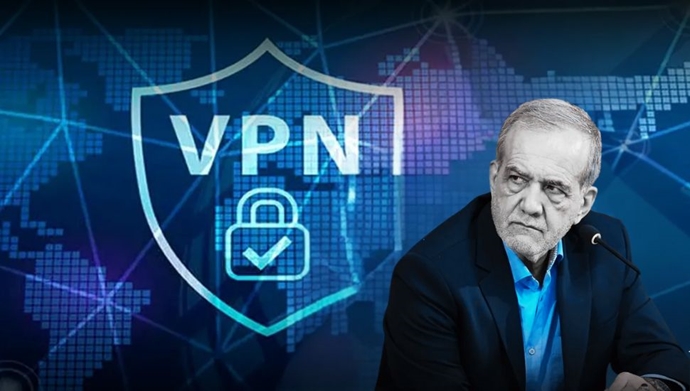
During the presidential elections that followed the death of former regime president Ebrahim Raisi, one of the slogans of Massoud Pezeshkian was lifting the internet filter. On his X account, he made a statement to attract voters: “We must free the internet. If elected, I will stand against filtering and restore the businesses that were shut down.” Even at the time, some regime insiders saw Pezeshkian’s claim as unrealistic and believed that this issue was not within his authority at all.
Now, two months after Pezeshkian took office, it has become clear that all those promises were empty. Even regime media admit that “lifting restrictions is not going to happen anytime soon. Can you just lift restrictions with the press of a button?” (Source: Asr-e-Iran news website, October 9). Interestingly, not only is there no glimmer of hope in terms of lifting the filter, but in the latest news, one of the biggest enemies of art, freedom, and cyberspace, MP Hamid Rasaee, has been appointed head of the “Art, Media, and Cyberspace” committee of the Cultural Commission of the Majlis (parliament).
Aside from the fact that the regime’s major decisions have always been within the authority of regime supreme leader Ali Khamenei, the filtering mafia is run by the same factions that also control the VPN market. If we trace these groups, we end up at one of the “seven-headed dragon of corruption” that is controlled by Khamenei’s office.
Therefore, the issue of lifting censorship, which is linked to information dissemination, the internet, communication, and consequently protests and potential uprisings, is entirely beyond Pezeshkian’s capabilities. If Pezeshkian’s supporters ignored this fact, they are now slowly realizing, after seeing how powerless their president is, that “if the internet censorship profiteers can tie the hands and feet of the president in one area and the monopoly profiteers dominate another, nothing will ever get done. If in every sector the mafia is so powerful that even the president cannot act, then we should give up on welfare, the economy, and elections altogether. It’s obvious that the censorship mafia, with a financial turnover of around 600 trillion rials, wields tremendous power, and fighting it is very difficult” (Source: Arman-e Emrooz, October 14).
The emptiness of Pezeshkian’s slogans about lifting the internet filter not only reflects the institutional powerlessness of the presidency in this regime but also points to the deep-rooted corruption and filtering mafia within the clerical regime.
Despite the grand and appealing promises, no effective action has been taken, nor will it be taken, in this regard. Cyberspace has always been a source of fear for the regime’s leaders, which is why it is controlled by regime institutions tied to the highest authorities. The regime’s main goal with filtering is to suppress any dissenting voices, prevent people from accessing free information, and strengthen domestic messaging apps that can easily be spied on and controlled by regime agencies.
In contrast, the people and youth of Iran, who dealt a major blow to Khamenei and his allies by boycotting the elections, never participated in the elections nor placed any hope in Pezeshkian’s false promises. Through their own ingenuity and using various VPNs, they have thwarted the regime’s desperate efforts and have consistently succeeded in making their voices for freedom heard around the world.