

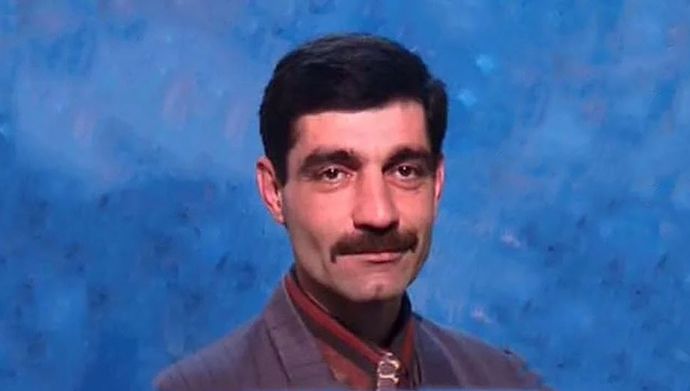

In a brazen act of desperation, the Iranian regime’s security forces launched a violent raid on Ghezel Hesar prison on July 16, attempting to abduct one of Iran’s longest-serving political prisoners, Saeed Masouri. According to a harrowing report from the Iran Human Rights Society (HRS), the regime’s henchmen stormed the political prisoners’ ward without a judicial warrant, intending to move Masouri, a supporter of the People’s Mojahedin Organization of Iran (PMOI/MEK), to an unknown location. The plot was only thwarted by the courageous and collective resistance of his fellow inmates, who forced the guards to retreat.
This violent episode is not an isolated incident but a clear indicator of a new, brutal wave of repression. Saeed Masouri has become a prime target for the regime precisely because he is an emblem of 25 years of unbroken resistance. Arrested in December 2000, he has been imprisoned for a quarter-century without a single day of furlough, a testament to his unwavering spirit in the face of tyranny.
A warning from behind bars: preventing a repeat of history
In a powerful letter dated July 17, 2025, Saeed Masouri explained that his resistance is not about fearing a transfer but a conscious act to prevent another state-sanctioned crime from unfolding in the shadows. He draws a chilling parallel to the 1988 massacre of political prisoners, stating his refusal to cooperate is “only so that the massacre does not take place in silence and obscurity, as it did in 1988.”
He warns that the regime’s goal is “suppression, suppression, and more suppression” and an escalation of “killings and more executions.” Masouri directly equates the current climate, where security forces are given “fire at will” authority, with the infamous “Death Committee” that sent thousands to their deaths in 1988. His message is an urgent alarm bell intended for the entire world: “Let the world hear this time that ‘a crime is in progress’ and, of course, a resistance against it!”
Unmasking the regime’s two-fold strategy: elimination and diversion
The attempt on Masouri is part of a sinister, two-fold strategy. First, it is a calculated plot to eliminate him. The HRS report confirms that Ministry of Intelligence agents have directly threatened his life in the past month, while his family has endured threatening phone calls. This points to a plan for an “enforced disappearance”—a known regime tactic to covertly murder political opponents.
Second, the chaos surrounding Masouri serves as a “deliberate smokescreen” for a wider crackdown. The regime is creating turmoil to secretly accelerate the executions of other political prisoners on death row in Ghezel Hesar. Among those in imminent danger are Behrouz Ehsani and Mehdi Hasani, whose requests for a retrial have been denied, and Abolhassan Montazer, who is being held in complete uncertainty. As Masouri himself notes, this brutal campaign is not a sign of strength but an “admission of the regime’s helplessness” and “structural collapse,” which it tries to hide by taking revenge on prisoners.
A legacy of resistance and an urgent call to the world
Despite a quarter-century of torture and persecution, Saeed Masouri’s spirit remains unbroken. In his letter, he draws strength from a legacy of Iranian resistance, from national heroes like Siavash and Ario Barzan to the liberating message of Islam, vowing never to “take a step back in this path of freedom and nobility.”
His courage places a grave responsibility on the international community. Human rights organizations have made it clear that any harm that befalls Saeed Masouri will be considered an extrajudicial killing, with direct responsibility lying with the judicial and security authorities under the command of Supreme Leader Ali Khamenei. Silence in the face of such blatant brutality is complicity. The world must heed this warning and translate condemnations into concrete political action. The life of Saeed Masouri and all political prisoners in Iran is a red line.