

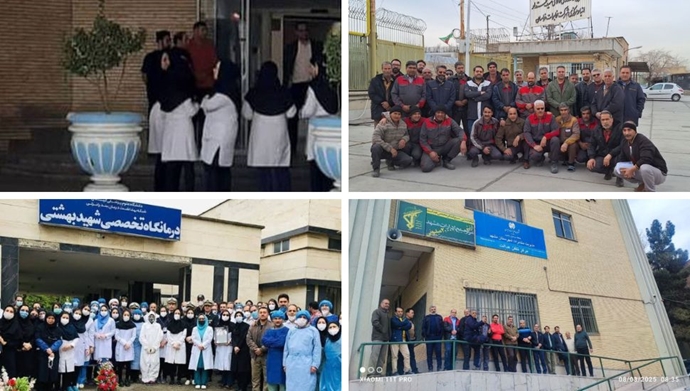

On March 8, Iran witnessed a new wave of strikes and protests in multiple cities, as workers from various sectors took to the streets to express their anger over deteriorating living conditions, widespread corruption, and the authorities’ failure to respond to their demands. These protests included employees of the Telecommunications Company of Iran, healthcare workers, truck drivers, farmers, and oil sector employees, reflecting the widespread dissatisfaction with the Iranian regime.
Strikes in the telecommunications sector
March 8—Iran
Strikes and protests by the employees of the Telecommunications Company of Iran (TCI) in multiple provinces across the country.#IranProtests pic.twitter.com/xchrepwmTo— People's Mojahedin Organization of Iran (PMOI/MEK) (@Mojahedineng) March 8, 2025
Several provinces in Iran, including Khorasan Razavi, experienced widespread strikes by employees of the Telecommunications Company of Iran (TCI). In Mashhad, workers protested against unpaid wages, the flawed implementation of the job classification system, and the continued presence of intermediary companies that exploit their rights without providing adequate guarantees.
Protests in the healthcare sector
In East Azerbaijan Province, in the city of Tabriz, the surgical staff at Imam Reza Hospital went on strike, refusing to perform surgeries in protest against the authorities’ neglect of their demands. Healthcare workers have long complained about deteriorating working conditions, low wages, and lack of government support.
March 8—Bandar Anzali, northern Iran
Nurses and staff of Beheshti Hospital go on strike, protesting unpaid wages and Nowruz bonuses.#IranProtests pic.twitter.com/Merlq8zGqf— People's Mojahedin Organization of Iran (PMOI/MEK) (@Mojahedineng) March 8, 2025
In northern Iran, in the city of Bandar Anzali, nurses and staff at Beheshti Hospital also went on strike, demanding the payment of their overdue salaries and Nowruz bonuses, which the government has yet to pay. This reflects the ongoing neglect of healthcare workers by the regime.
Demonstrations and protests in other sectors
Protests extended to other parts of the country as well. At the Turkish border, truck drivers gathered to denounce corruption in the industry and mining sector and demanded the release of their trucks, which had been unlawfully seized by authorities.
In Isfahan, farmers staged a protest against the government’s failure to fulfill its promises, particularly regarding the provision of water for agriculture and compensation for their losses due to the regime’s failed agricultural policies.
In the oil sector, employees who had passed the 2013 employment examination staged a protest in Ahvaz, denouncing the systemic discrimination and marginalization they face from government officials.
March 8—Mashhad, northeast Iran
Contractors of Mashhad International Exhibition rally to protest price hikes by regime authorities.#IranProtests pic.twitter.com/uOAoaxC1vl— People's Mojahedin Organization of Iran (PMOI/MEK) (@Mojahedineng) March 8, 2025
Implications of protests
These strikes and protests highlight the growing public outrage against the Iranian regime’s policies, which continue to ignore citizens’ demands and fail to provide even the most basic living conditions. The persistence and expansion of these protests indicate that Iran’s economic and political crisis is worsening. While the regime remains focused on its regional interventions instead of addressing domestic hardships, the question remains: Will the Iranian regime reverse its oppressive policies, or is the country heading toward greater escalation?