


Within hours of the impeachment and announcement of the dismissal of Iranian regime minister of economy Abdolnasser Hemmati on Sunday, March 2, declared in the Majlis (parliament) by speaker Mohammad Bagher Ghalibaf, news broke about Mohammad Javad Zarif being summoned by Gholamhossein Mohseni Ejei, the chief of judiciary, and his dismissal was announced. These two simultaneous dismissals showed that a shift in the internal balance of the regime was taking place.
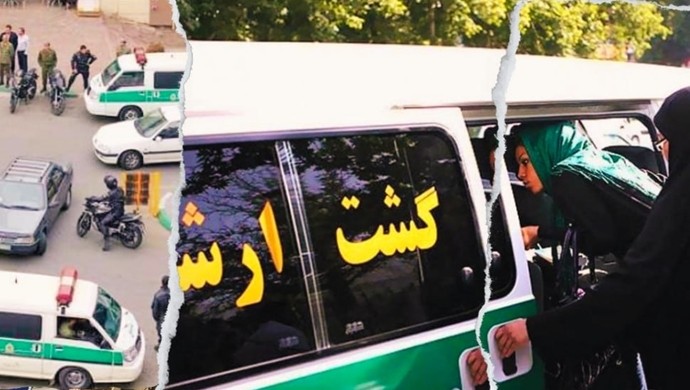
On March 4, 209 members of parliament, by signing a letter addressed to Ghalibaf, demanded the promulgation of the repressive bill known as “Chastity and Hijab.” In a section of the parliament members’ letter for the promulgation of the bill, with an implicit reference to the conditions that led to the disbanding of Guidance Patrol cars and the fearful halt of the “Hijab” bill, it is stated: “Although the special conditions in the past months could be considered a reason for postponing the law, but after the Supreme Leader’s statements on January 8 of this year… provide the basis for the promulgation of the law.”
Subsequently, regime president Masoud Pezeshkian, in fear of the people’s anger flaring up, opposed the plan through his executive deputy, Mohammad Jafar Ghaempanah, who wrote on his X account on Thursday, March 6: “The President emphasized today that I cannot implement the Chastity and Hijab law because it creates problems for the people.”
With this note, the infighting over the forced hijab bill intensified. On March 7, the state-run Entekhab newspaper wrote: “Alamolhoda’s criticism of Pezeshkian: He has been unfair and disloyal to the Leader; he says, ‘We wanted to negotiate, but because the Leader says so, we don’t negotiate”… He says: ‘We will not implement the hijab law because we do not want to stand against the people’; is the implementation of the hijab law really standing against the people? Are these members of parliament not the people? More than 80 percent of the people’s representatives wrote a petition for the hijab law, are these not the people? If you do not want to stand against a certain group because of the hijab law, you must stand against God….’”
The same publication wrote in another news item: “Several radicals, gathering in front of Ayatollah Javadi Amoli’s house, demanded the promulgation of the hijab law. In a video published of this gathering, the speaker of the gathering said that we have come to complete the proof; some of our scholars, who should be supporting the front of the revolution, have been silent.”
At the same time, cleric Ahmad Khatami, a member of the Guardian Council and the Assembly of Experts, attacked Pezeshkian in the Friday prayers and said: “All officials are obliged to implement the law. That I do not implement it, I do not stand against the people, this is against the government.” Khatami added: “You swore in parliament and before the people to implement the law, for the umpteenth time I explicitly say to the respected officials that hijab is one of the certainties of religion, hijab is one of the undoubted certainties of religion… These people want to make hijab forgotten. As long as we have blood in our bodies, we will not let it happen.”
On the other hand, on March 6, the state-run Jahan News website, in an article titled “It is not clear what the consequences of implementing the hijab law are,” writes: “Common sense dictates that, given the economic and social wounds, the time for implementing the hijab law has not come; in other words, the numerous livelihood challenges on the ailing bodies of various classes of people have severely reduced the threshold of tolerance, and any tension in the current situation is like a spark on a fire that has unknown consequences.”
It seems that Khamenei believes that in order to deal with this explosive situation, the only solution is to eliminate and perform surgery to close the rifts in the crisis-ridden government and intensify repression and suffocation. It is no coincidence that, simultaneously with these developments, the regime has added dozens more executions to its record of crimes; unrestrained executions that have been met with fiery responses from the resistance units.