


Reporting by PMOI/MEK
Iran, August 19, 2021—While the coronavirus is expanding in Iran and most people have been laid off, many Iranian families are unable to make ends meet and this is leading to malnutrition for millions of people. To add insult to injury, food prices are skyrocketing across the country.
"Since (late March), we have seen a 90 percent increase in the price of sugar, a 35 percent increase in the price of oil, a 30% increase in the price of rice, and a 20 percent increase in the price of beans and other items," said the Tehran Food Union secretary in reference to the unbridled rise in food prices.
Regime officials are also forecasting a 20 to 30 percent increase in meat prices this fall. Outrageous meat prices have led many people to remove meat from their menus.
However, the semi-official ISNA news agency reported that red meat is going to be more expensive, indicating that meat prices will reach 1.5 million rials (around $5.50) per kilogram.
One of the reasons for the increase in meat prices is government policy. Previously, a kilo of domestic meat was about 740,000 rials (around $2.70). However, regime-linked businesses, consisting of a slate of small conglomerates that have established a mafia-style monopoly, have sought to import meat from abroad and set the price at 1.2 million rials (around $4.40). This has led to higher prices for domestic meat.
Afshin Sadr Dadras, executive director of Iran’s Central Livestock Union, said back in March that the government was importing meat without using the country's meat reserves. This shows that the purpose of the import is not to provide for the country’s needs, but to increase the profits of the above-mentioned mafia.
Three other reasons for the increase in meat prices are:
-domestic meat smuggled to foreign countries
-the role of government brokers and intermediaries
-severe shortage in animal feed
There is no limit to skyrocketing prices due to institutionalized corruption. That is why all aspects of the Iranian people’s lives have been impacted and many are living in poverty. And there is no end in sight.
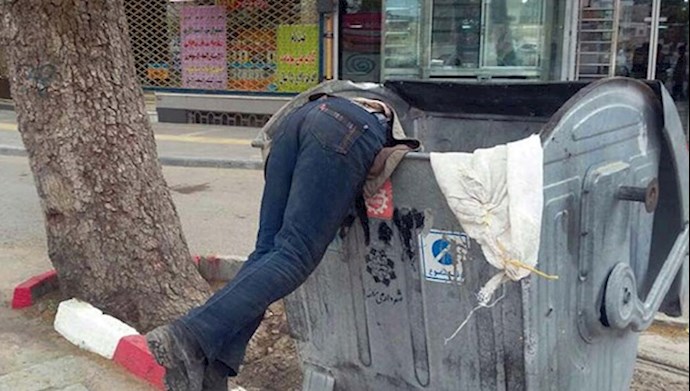
In tandem with prices of basic goods, poverty is also growing across Iran, and with it are coming social dilemmas that have become an all-too-common sight in the streets of large cities.
"These days we are witnessing an increase in garbage collection in cities and villages. This phenomenon is the result of bad economic conditions and an increase in social harm. Garbage collection is becoming a challenge in the country,” according to an August 14 report by the state-run Asr-Iran website.
The spread of garbage collection is due to poverty and deprivation, while the regime’s municipal and state security forces also extort money from the same poor and deprived people. If they have nothing to give to the regime’s forces, their garbage and collected waste are confiscated.
Tehran City Council chief Mohsen Hashemi Rafsanjani said on April 13 that the “Garbage Mafia” exploits 14,000 homeless people in Tehran, including small children.
Rafsanjani described the current situation of these children “an unsolved issue” and “a growing plague” that has become a source of income for what some described as “organized economic gangs.” Unsurprisingly, these “gangs” are closely associated to regime officials and entities.
“The ‘Garbage Mafia’ uses homeless street children as workers, extensively damaging our society,” Hashemi said.
According to a 2017 study, Tehran is home to 14,000 garbage collectors, of which 4,700 are children. Forty percent of these children are completely illiterate, 37 percent have dropped out of school and work an average of ten-and-half hours per day.
Reports indicate that Iran’s waste trade is estimated to be valued at hundreds of millions of dollars. The dry waste cycle in Tehran alone is worth about 30 trillion rials per year (around $120 million), of which 70 percent is the share of informal waste collection.
Inflation, poverty, and the ever-worsening coronavirus outbreak have brought Iran’s society on the verge of explosion, and officials fear that the situation will lead to another nationwide uprising.
As the death toll of Iran’s coronavirus outbreak is escalating, the regime continues to delay on purchasing Covid-19 vaccines and is poised on inflicting even more pain and damage to the country’s population.
Over 370,300 people have died of the novel coronavirus in 547 cities checkered across all of Iran’s 31 provinces, according to reports tallied by the Iranian opposition People's Mojahedin Organization of Iran (PMOI/MEK) as of Wednesday afternoon local time, August 18. The official death toll declared by the regime stands at 99,108, around a fourth of the actual figure.
Every day, at least 600 families in Iran mourn the loss of their loved ones due to the lack of vaccines. This situation has gradually put society at risk of depression, preoccupation, impulsive behaviors, and rising social unrest. As these pressures increase, people’s tolerance is decreasing.
“The calamity is that many of these pains may not heal with the people behind them coming into the office and leaving long-term impacts. Today, if we do not think of a solution for the near future … we will pay dearly,” according to an August 17 report by the state-run Aftabe Yazd newspaper.