

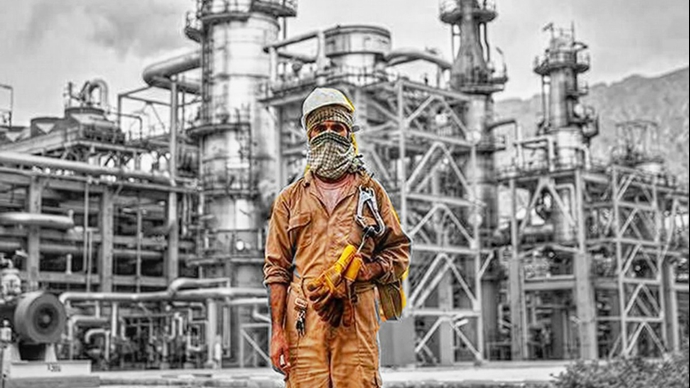

The struggles of the oppressed and suffering workers in Iran’s oil, gas, and petrochemical industries are a historical and symbolic representation of the Iranian people century-long struggle for freedom from oppression and exploitation. The Iranian working class movement has always learned great and historic lessons from their battles. For two centuries, Iran’s oil industry has been the main source of vast and unaccounted income for dictatorships. As a result, anti-worker regimes have been extremely vigilant and watchful over the mental and physical state, capabilities, organizations, assemblies, demands, and aspirations of this segment of Iran’s working class. They never miss an opportunity to suppress and contain the justice-seeking and equality-demanding actions of workers employed in this strategic industry. Especially since the memory of the magnificent strikes by oil industry workers during the late stage of the shah dictatorship terrify the ruling mullahs. The sector’s obvious grievances include professional pressures, low wages relative to harsh and exhausting working conditions, generally hot and bothersome environments, the prevention of organizing and assembling rights, and continuous oppression and suffocation. The struggles of Iran’s workers, like life itself, continuously renew, advance, and progress, despite facing setbacks, failures, and bleeding wounds along the way.
Suppression of Oil Industry Workers
After Ruhollah Khomeini, the founder of the mullahs’ regime, ceded to the ceasefire with Iraq in 1988, his right-hand man, Ali Akbar Hashemi Rafsanjani, formed a government that began the oppression and mistreatment of Iranian workers and laborers. For oil industry workers, this marked the start of the gradual removal of benefits for those working under harsh conditions. Blank contracts were new slavery documents, and the outsourcing of services and, worst of all, the emergence of exploitative contracting companies brought enormous suffering and pain to the workers, which continues to this day. The governments of Hassan Rouhani and especially deceased Ebrahim Raisi tightened the noose on contract workers in the oil industry, sparking strikes and uprisings in this deprived segment of the Iranian working class. In 2020, project workers went on strike, naming it the “Campaign.”
July 20—Tehran, #Iran
Customers of state-backed Modiran Vehicle Manufacturing Company rally in front of the Ministry of Industries, Mines, and Trade, protesting unjust and illegal price increases by the company.#IranProtestspic.twitter.com/TAcu98MoTu— People’s Mojahedin Organization of Iran (PMOI/MEK) (@Mojahedineng) July 20, 2024
The demand for six months of overdue wages and salary increases considering the economic crisis, expressed by 45,000 workers on strike, became a firm and lasting protest. The following year, increased leave privileges were added to the list of demands. In response, the clerical regime attempted to suppress further actions with threats, arrests, false charges, and forcing written commitments for six months of unpaid work. The June and July 2021 strikes in over 60 industrial centers, including Bushehr and South Pars Petrochemical, Abadan Oil Refinery, and other oil complexes, terrified the regime to the extent that 700 workers from the Tehran Oil Refinery were fired. Regime agents and their exploitative contractor supporters resorted to dirty and shameless tricks, but the strike that year was ultimately successful.
Dozens of Days of Strike by Oil Contract Workers
In the latest chapter of the struggles of oil contract workers, thousands of workers in 120 oil and gas centers nationwide have responded to the call of their fellow workers for a large strike and have been striking for nearly a month. Their demands are the same as in 2021: “We, the workers of Iran’s oil industry… who make up two-thirds of this vast industry, demand a fair payment system and the elimination of middlemen, brokers, and contracting companies. ” (Source: the official IRNA news agency, August 18, 2021).
Other fair demands have also been added: “Considering the 45% inflation rate in wage increases and improving workers’ livelihoods, receiving overdue wages and benefits, improving dormitory conditions, improving workers’ food, increasing safety at work, and granting 14 days off for every 14 days of work.”
July 19—Lavan Island, southern #Iran
Workers of the Iranian Offshore Oil Company resume protests as authorities continue to ignore their demands for changes to the wage determination policies, job classification, company management, and other basic needs. #IranProtests pic.twitter.com/Fi1rlmf94x— People’s Mojahedin Organization of Iran (PMOI/MEK) (@Mojahedineng) July 19, 2024
This campaign, in its new round of struggle, has united at least over 25,000 contract, temporary, and official oil workers, and has managed to impose new contracts on employers in some centers and companies. With the slogan: “Unity, Unity, Against Poverty and Corruption,” oil industry workers aim to root out oppression, injustice, and exploitation in the anti-worker clerical regime. Meanwhile, the agents associated with the Islamic Revolutionary Guard Corps (IRGC), and Iranian regime supreme leader Ali Khamenei’s office have attempted to break the strike by distributing money and making false promises to other workers, but so far, they have not succeeded.
Hear the Voice of 100,000 Striking Oil Workers
The workers’ struggle their rights, despite censorship, intimidation, arrests, and imprisonment by the regime, has increased the workers’ awareness and knowledge.
On July 17, Rouydad 24 news website quoted a spokesman for the workers as saying, “United workers have everything, divided workers have nothing; this is not the 19th-century slogan of workers in France and Britain; right here along the Persian Gulf, contract workers deprived of oil and gas industry benefits in Iran have launched a campaign… In 2020, these workers demanded a change to 12-hour workdays over 24 days per month. Today, their demand has reached 14 days work and 14 days rest. This process started and never stopped, reaching the point where today more than 100,000 workers are united, demanding their rights even in complete news silence through strikes, because without us workers, how can contractors make billions?”
The new campaign and battle of striking workers, with the slogan “All workers share the same table” and named “14-14,” in refineries, petrochemicals, and other oil and gas centers, struck a heavy blow to the regime, proving that the time for revolution has come.