

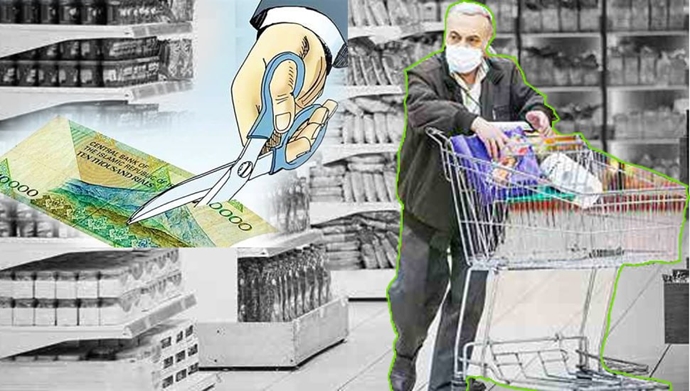

“Economic surgery” is one of the terms that has become a favorite phrase of Iranian regime president Massoud Pezeshkian, and he mentions it in every interview. But by looking into his various statements, no one can grasp the substance of this surgery. In his remarks in Mashhad, he said, “Naturally, we need to have surgeries in many areas to be able to get the country out of this situation.”
Now, when we delve deeper into his statements, we realize that one example of this economic surgery was increasing the price of bread, the staple food of the deprived people, which rose by an average of 70%. The second step, or example, is the increase in gasoline prices.
Pezeshkian has slipped the topic of gasoline price hikes into his comments several times. In his remarks on August 28, he said, “I (as the government) don’t have money for wheat, medicine, supplies, or retirees’ salaries, but I’m selling gasoline, worth 500 rials per dollar, for 100 rials. What logic accepts that we are doing this?”
His deputy, Mohammad Reza Aref, also hinted at increasing gasoline prices, saying, “What sensible mind says to import gasoline in dollars and sell it at 15,000 rials per liter?”
But since no “sensible mind” believes the regime’s lies, all this victimhood regarding the import of gasoline in dollars and its consumption in rials domestically needs to be fact-checked.
Regime expert Hemat Gholizadeh said: “It has always been like this… A ship carrying oil would leave the country towards nations like China or India, and then an equivalent amount of gasoline would be imported into the country. We are not paying global market rates for the gasoline consumed domestically, and the import of this vital energy carrier is done through barter. So, no dollars are exchanged for this to be a concern.”
In the same interview, he further exposes Pezeshkian’s deceit—that he is supposedly losing money and providing subsidies to the Iranian people.
On, September 9, the state-run Khabar Online news website quoted him as saying, “The concept of hidden subsidies is a fabricated idea that has become a justification for price hikes in Iran. They compare prices in the domestic market with those in regional and international markets, claiming that hidden subsidies are being paid on some goods, including energy carriers.”
On the other hand, the Iranian people have no issue with aligning gasoline prices with global prices, given that wages are also adjusted on par with those in developed countries. However, the regime’s figures deceitfully ignore this point.
Another issue they overlook is the high gasoline consumption of low-quality domestic cars, which consume at least 12 liters per 100 kilometers, while modern cars average 4 liters per 100 kilometers. This means if domestic cars were replaced with foreign equivalents, Iran’s gasoline consumption would decrease by one-third.
However, the regime has made imported cars so expensive that people cannot afford to buy them, forcing them to rely on vehicles made by domestic companies—companies that are controlled by the regime’s associates.
After the increases in bread and gasoline prices, Pezeshkian’s next steps for economic surgery will be raising the prices of goods, eliminating the remaining subsidies, reducing social services, and looting pension funds.
Thus, the “economic surgery” referred to by Pezeshkian means maximum plunder and looting. He intends to reach into the pockets of the underprivileged as much as possible to cover his budget deficit and finance his government, stealing their last remaining assets.