

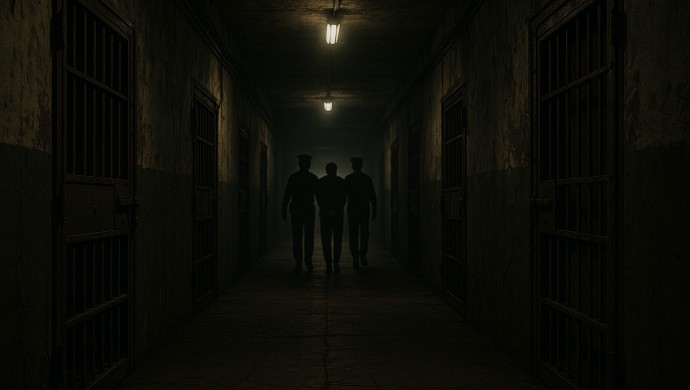

On the morning of October 4, 2025, the clerical regime in Iran committed another series of state-sanctioned murders, hanging seven political prisoners in the prisons of Sepidar (Ahvaz) and Ghezel Hesar (Karaj). These brutal executions are not a display of strength but the frantic actions of a regime cornered by public anger and terrified of a popular uprising. As Mrs. Maryam Rajavi, the President-elect of the National Council of Resistance of Iran (NCRI), stated, these killings are Supreme Leader Ali Khamenei’s “desperate attempt to instill fear and terror in society and to prevent the eruption of public anger.”
The gallows are merely the most visible weapon in the regime’s arsenal. Behind prison walls, a systematic war of attrition is being waged against political prisoners through judicial manipulation, psychological torture, and a deliberate policy of “slow execution” by denying life-saving medical care. This multi-pronged assault reveals a dictatorship that has lost all legitimacy and now relies solely on brute force to survive.
A new wave of state-sanctioned murder
The latest execution spree deliberately targeted ethnic minorities, a classic divide-and-rule tactic employed by the regime to suppress dissent. In Ahvaz’s Sepidar Prison, six Arab compatriots—Ali Mojadam, Moein Khanfari, Seyed Salem Mousavi, Mohammadreza Moghadam, Seyed Adnan Ghobeishavi, and Habib Deris—were executed after years of imprisonment and torture. They were convicted by the regime’s so-called Revolutionary Court on vague charges of acting against national security.
In Ghezel Hesar Prison, the regime executed Saman Mohammadi-Khiareh, a 35-year-old Kurdish political prisoner. His case is a stark illustration of the judiciary’s complete subservience to the security apparatus. While his death sentence was once overturned by the Supreme Court due to a lack of evidence, he was retried under pressure from intelligence agencies and sentenced to death again. Saman had repeatedly declared that his confessions were extracted under severe torture, a fact the regime’s courts willfully ignored.
The looming gallows: A judiciary weaponized for murder
For every prisoner executed, many more are trapped in the regime’s judicial death machine, their lives used as bargaining chips by a desperate state. The judiciary actively manipulates legal processes to keep dissidents on death row, ensuring its tools of terror are always ready.
The case of Mohammad Javad Vafaei Sani, a 28-year-old boxing coach from Mashhad, epitomizes this judicial malice. He was arrested in March 2020 and sentenced to death on the charge of “corruption on earth.” Astonishingly, his death sentence was overturned twice by the Supreme Court due to legal flaws. Yet, in September 2024, a lower court sentenced him to death for a third time, and this verdict has now been upheld. This relentless pursuit demonstrates the regime’s determination to execute him, regardless of its own laws.
Meanwhile, the regime continues to use its tired tactic of fabricating links between supporters of the People’s Mojahedin Organization of Iran (PMOI/MEK) and foreign intelligence services to justify murder. On September 27, political prisoners Hamed Validi and Nima Shahi were sentenced to death, baselessly accused of being part of an “espionage network linked to Mossad and the Monafeqin [the regime’s derogatory term for the PMOI].” The regime’s own Mizan News Agency announced the verdict without even naming the prisoners, exposing the farcical and opaque nature of these kangaroo courts.
Fourteen other PMOI supporters are under the threat of execution as the regime continues to ramp up executions to prevent uprisings in Iran.
‘Slow execution’: The regime’s campaign of attrition
For those who survive the judicial gauntlet, the regime deploys a more insidious weapon: a strategy of “slow execution” through systematic medical neglect and psychological warfare.
This is not mere negligence but a deliberate policy. On September 25, 2025, political prisoner Somayeh Rashidi died in Qarchak Prison after being fatally denied medical care. Despite suffering repeated seizures, her transfer to a hospital was delayed by a prison doctor who claimed she was “feigning illness.” Her death was a state-sponsored murder. Similarly, Mohammad Ali Akbari Monfared, a paralyzed political prisoner with severe heart disease, is being left to perish in Fashafuyeh Prison. The Ministry of Intelligence is actively blocking his release despite the regime’s own Legal Medicine Organization stating he cannot endure imprisonment.
The cruelty extends to psychological torment. On September 30, political prisoner Mehdi Vafaei Sani was lured from his ward in Evin Prison under the false pretext of a family visit, only to be ambushed by intelligence agents and taken to an unknown location. This act is part of a broader campaign of collective punishment against his family; Mehdi’s mother is also a political prisoner, and his cousin is the aforementioned Mohammad Javad Vafaei Sani, who is on death row for his affiliation with the PMOI.
A call for international action
The evidence is undeniable: Iran’s prisons are not correctional facilities but instruments of state-sponsored terror. From the gallows to the prison clinic, the regime is waging a war of extermination against political prisoners. The international community cannot remain silent. It is time to heed the Iranian Resistance’s call to expel this criminal regime from the international community and hold its leaders, starting with Khamenei, accountable for 46 years of crimes against humanity. Urgent action from the UN and international human rights bodies is needed to investigate these atrocities and save the lives of those who continue to defy tyranny, even from behind bars.