

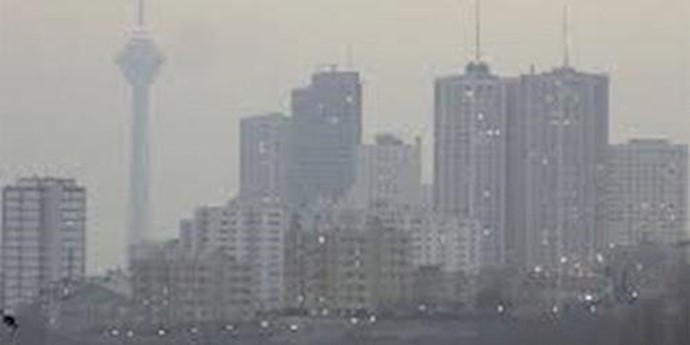

“The destruction of businesses,” “production collapse,” “air pollution,” “land subsidence,” “environmental degradation,” and various forms of “imbalances,” repeatedly highlighted by Iranian regime president Masoud Pezeshkian, have recently led to the “closure of the country.” This is the solution of a regime trapped in a swamp of crises, mocked even by its own experts.
State media use the themes of imbalance and closure as headlines to describe the catastrophic state of the country. The daily Ham-Mihan wrote on January 12, “The headlines read, ‘Iran is shut down.’ Now air pollution and imbalances have joined forces, placing the government in a crisis.”
The paper continued: “Almost the entire country has shut down, without any government official providing a proper and convincing explanation for the cause. It appears that electricity and gas shortages may be the main reason; however, due to the lack of precise and clear communication, another cause cannot be ruled out. If the reason is indeed electricity and gas shortages, the question arises: what is the root of this crisis?”
Other media outlets discussed the “energy imbalance crisis and air pollution” and the shutdown solution: “Out of 31 provinces, 23 are either completely shut down or have partially closed administrative, banking, educational, and service institutions” (Jahan-e Sanat, January 12).
Mojtaba Razavi, head of the regime’s Industry and Mining House in Mazandaran, spoke about the energy crisis: “We have reached the end of the line; we have no electricity in either summer or winter.” He added, “The term ‘energy imbalance’ is a cover-up for incompetence, which has become a meaningless buzzword for officials” (Entekhab, January 12).
“Imbalance” is the elegant and respectable term for systematic corruption and governmental plunder, whose outcomes are the astonishing rise in prices, the devaluation of the currency, and the incapacitation of the people during scorching summers and freezing winters.
At the onset of power cuts and rationing, Pezeshkian deceitfully claimed that the aim was public health: “We are cutting electricity to avoid burning mazut in power plants and polluting the air.” However, in late December, it was revealed that air pollution, caused by mazut burning in power plants, was the reason for school closures and the shutdown of various educational, health, and administrative centers in Tehran, Tabriz, Mashhad, Arak, and Alborz provinces. It turned out that not only did they cut electricity, but they also raised gas prices and continued burning mazut.
Meanwhile, regime media and sources reported that the death toll from air pollution in the country reaches 50,000 annually.
On December 13, Javan Online, affiliated with the IRGC, wrote amidst infighting between ruling factions: “The renewed order to burn mazut, based on medical evidence, was an order to kill the people.”
On the other hand, rival factions revealed that 30 million liters of fuel are smuggled daily by the IRGC, and a massive amount of electricity—equivalent to the consumption of the country’s largest provinces—is used by cryptocurrency farms controlled by the IRGC.
It is no secret that the reason for the “imbalance” in the country lies in the regime’s prioritization of the IRGC mafia and Khamenei’s strategic considerations in regional interventions spearheaded by the terrorist Quds Force.
Crushing the people under the weight of countless taxes and unchecked price increases fundamentally serves to bolster security and suppression apparatuses and to funnel tens of billions of dollars to Syria and the regime’s proxy forces.
Indeed, stealing bread from people’s tables to finance the regime’s regional agents and the corruption and plundering of the clerical and IRGC kleptocracy is an endlessly tangled knot.
The shutdown of the country, deadlock, and the spread of political and social crises, following the downfall of the Assad regime in Syria and the regime’s crippling setbacks in the region, are the other side of the “imbalance” coin—exposing the delusions of the embattled regime against the explosive reality of society, a reality vividly unfolding in the flames of protests and uprisings.