

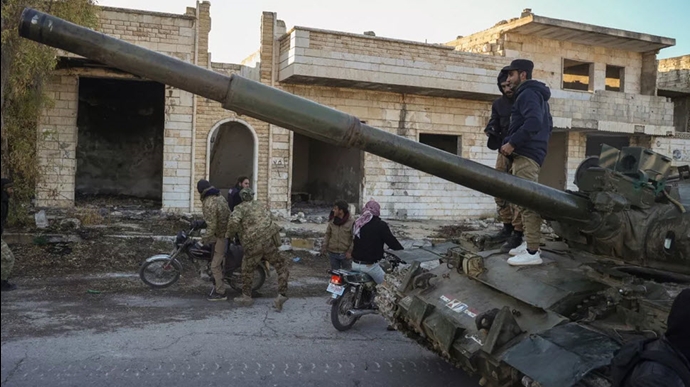

The fall of Aleppo on November 29 has sent shockwaves throughout the ranks of Iran’s regime, which has been a staunch supporter of the regime of Bashar Al-Assad and has wasted billions of dollars of the Iranian people’s wealth to prop up the Syrian dictator.
The regime’s media initially denied the news but were eventually forced to acknowledge it, reporting that during the attack, Brigadier General Kiumars Pourhashemi, known as Haj Hashem and one of the highest commanders of the IRGC, was killed.
Analysts report that with the Tehran-backed Hezbollah caught up in other conflicts, Assad’s regime, which has relied heavily on the Iranian regime’s terrorist proxies, has found itself cornered. This allowed the rebels to exploit the regime’s weaknesses and take the city by storm.
Regime-affiliated media reflected limited aspects of the fear and anxiety caused by Aleppo’s fall. Bulletin News reported on November 29, “The recent developments in northern Syria, especially around Aleppo, indicate significant shifts in the balance of power. The Syrian army’s defeat and retreat from key areas like Khan al-Asal and Khan Tuman, along with the rapid advance of opposition forces, particularly Hayat Tahrir al-Sham, have outlined a new regional outlook. These developments are not only a result of the Syrian army’s tactical weaknesses but also reflect the complexity of regional dynamics and the role of external actors.”
The source added: “Following these developments, Khan Tuman, one of the Syrian army’s key bases, fell to opposition forces. This town was critically important for its geographical location in securing supply lines for government forces… The fall of Khan Tuman is considered a strategic defeat for Damascus.”
Regime experts view the fall of Aleppo and the sequential loss of other cities and military centers of Assad’s army as the beginning of a trend. A government-affiliated analyst named Jalal Khoshchehre warned: “The chain of surprising events in the Middle East, which has now extended to Syria, will not end here. Its scope may soon extend to Iraq. If we realistically link these events to the tension between Iran and the West and the conflict between Tel Aviv and Tehran… one could speculate that, given the ongoing tensions and the preparations for the future of the Middle East, the region will remain ripe for sequential, unrelenting, and surprising events” (Ruydad24 – November 30).
Regarding the strategic significance of the blow inflicted on the regime by the fall of Aleppo, the remarks of Hossein Salami, the IRGC Commander-in-Chief, in a televised interview on December 25, 2016, are noteworthy.
In this interview, marking the recapture of Aleppo by Assad’s army and regime forces, Salami stated: “In the political geography of Syria, whoever controls Aleppo holds control over northern Syria, and whoever holds Damascus controls the south. If someone controls these two important and strategic regions in northern and southern Syria, they achieve political, social, and security dominance… Therefore, the characteristics, features, and identity of this city make Aleppo a reference point for positioning any power fighting there.”