

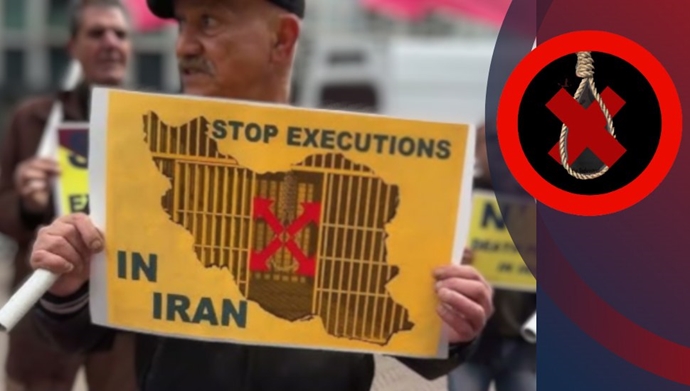

In December 2024, more than 250 members of the UK’s House of Commons and House of Lords issued a statement joining the global campaign “No to Executions” in Iran. Among the signatories were over 10 chairs of parliamentary committees, four former leaders of the Conservative and Liberal Democrat parties, as well as the current leaders of the Democratic Unionist Party (DUP) of Ireland, the Welsh National Party, and the parliamentary group leader of the Scottish National Party (SNP). Additionally, more than 20 former ministers, including previous ministers of defense, armed forces, Scottish affairs, Wales, international trade, home affairs, justice, and culture, as well as several Bishops and prominent legal experts in the parliament, were among the signatories.
This commendable and exemplary action was taken while Iran’s regime remains at the top of the list of countries systematically using capital punishment to suppress protesters and political dissenters.
Background and Alarming Statistics
According to Amnesty International, the Iranian regime was responsible for 74% of all recorded executions worldwide in 2023. In just one year, more than 670 people, including 25 women, were executed in Iran. This figure includes political dissidents as well. A prominent example of these atrocities is the execution of Reza Rasai, a protester arrested during the November 2022 uprising.
The independent International Fact-Finding Mission on Iran, in its March 2024 report, emphasized that many of these executions followed rushed trials with severe human rights violations. According to the mission, such actions constitute crimes against humanity, including murder, torture, imprisonment, and various forms of sexual violence.
Broad Support in the UK
The UK parliamentary statement expressed strong support for Maryam Rajavi, the President-elect of the National Council of Resistance of Iran, and her call to end executions in Iran. Specifically, the statement endorsed her 10-point plan, which prioritizes the abolition of the death penalty and the safeguarding of human rights.
The signatories stressed that executions in Iran, especially those of detained protesters, are entirely political, aimed at instilling fear and preventing future uprisings.
It is noteworthy that Javaid Rehman, the UN Special Rapporteur, described the massacre of 30,000 political prisoners in the summer of 1988 as an “atrocity crime” and “genocide” in his report on July 17, 2024.
The Importance of the “No to Executions” Campaign
The “No to Executions” campaign, initiated with weekly hunger strikes by political prisoners in Iran since early 2024, represents an unwavering flame of popular resistance against the regime’s brutal reliance on executions. The UK parliamentary statement praised this resistance and called on the global community to support this movement.
Professor Lord Alton of Liverpool, co-chair of the British Committee for Iran Freedom, highlighted the dire human rights situation in Iran and emphasized the urgency of international action. He stated, “The time to act is now to prevent further atrocities and support the Iranian people’s fight for justice and freedom. The UK must lead an international coalition to end this alarming trend by referring the regime to the UN Security Council and facilitating the prosecution of its leaders.”
International Community’s Failure and Its Consequences
A prominent point in the UK parliamentary statement was its criticism of the international community’s inaction regarding crimes against humanity in Iran. The representatives argued that the failure to prosecute and hold the regime accountable has fostered a culture of impunity, emboldening the regime to continue its repression and increase executions.
Bob Blackman CBE MP, President of the International Committee of Parliamentarians for a Democratic Iran (ICPDI), said, “This cross-party support demonstrates that the UK Parliament stands united with the Iranian people in their fight for justice, freedom, and an end to repression.” He called on the UK Government to impose concrete sanctions, take legal measures, and establish international mechanisms to hold the regime accountable.
The Need for an International Coalition
The UK parliamentary statement highlighted the urgency of ending executions in Iran and called for the formation of an international coalition to counter the regime’s repression. The representatives urged the UK government to lead this coalition and refer the religious fascism to the UN Security Council.
Baroness O’Loan, another signatory of the statement, emphasized that ending the culture of impunity in Iran is the starting point for defending democracy and global security. She stated, “As Iran’s regime exports its repression to the UK, threatening our democracy and intimidating pro-democracy Iranian dissidents, our government must stand with the regime’s primary victims—the Iranian people—and support their justice-seeking campaign.”
Holding the Regime Accountable to the Global Community
The statement by over 250 members of the UK’s House of Commons and House of Lords holds significant importance for multiple reasons. Firstly, it underscores that the issue of executions in Iran is not merely a domestic matter but a global and humanitarian concern. The support of such many prominent politicians for the “No to Executions” campaign sends a clear message to the regime reliant: its actions are under scrutiny, and it cannot continue its repression without paying a serious price.
Secondly, the statement’s impact on international policymaking is substantial. The UK, as a key player in global politics, can inspire other countries to exert pressure on the Iranian regime. This statement places the religious fascism in a more precarious position and undermines its efforts to normalize relations with the West.
This statement, along with similar initiatives, can amplify international pressure on the regime, restrict its freedom to continue its crimes, and hold it accountable to the global community.