

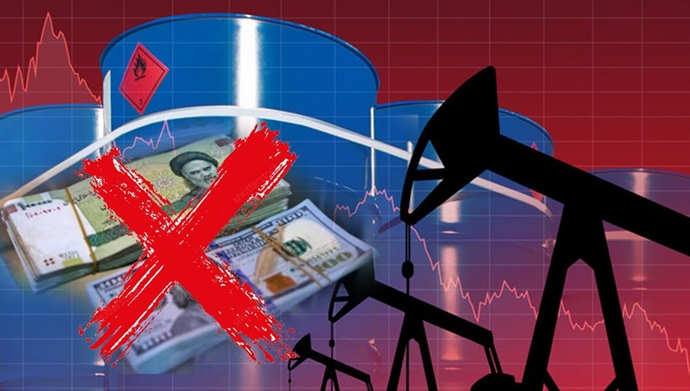

In recent years, Iran’s economy under the clerical regime has plunged into a series of deepening crises, each of which is powerful enough to shake the very foundations of an economic system. From massive, accumulated government debts and rampant inflation to an ever-growing budget deficit, widespread unemployment, and social unrest triggered by energy price hikes—such as gasoline—all of these indicate an economic bankruptcy that can no longer be concealed by mere slogans and empty promises.
Accumulated Debt and an Empty Treasury
One of the clearest indicators of economic bankruptcy is the massive accumulated debt that the regime reluctantly acknowledges in small doses.
during the impeachment of former Economy Minister Abdolnaser Hemmati, regime president Masoud Pezeshkian revealed that Iran’s Ministry of Health alone has an outstanding debt of 900 trillion rials, the Ministry of Roads and Urban Development owes 1.2 quadrillion rials, and the Social Security Organization has 1.39 quadrillion rials in accumulated debt. However, these figures are just the tip of the iceberg.
According to the Central Bank of Iran, by July 2024, the Iranian government’s debt to the banking system had soared to 16 quadrillion rials—a 148% increase since the start of the 13th administration. Additionally, government debt to the Central Bank has surged from 2.01 quadrillion rials to 4.9 quadrillion rials, marking a 128% increase in less than three years.
These numbers indicate that not only is the government incapable of repaying its debts, but it is also recklessly borrowing, placing a crippling financial burden on future generations.
Economist Morteza Afghah describes Iran’s current economic situation as a clear case of bankruptcy. He emphasizes that after seven years of severe sanctions and the failed policies of Ebrahim Raisi’s administration, the country’s resources have been plundered, and the treasury is completely empty.
Afghah warns that with the maturity of government bonds and the potential intensification of sanctions under Donald Trump’s second presidency—who has stated his intent to reduce Iran’s oil exports to just 100,000 barrels per day—Pezeshkian’s government will face an unprecedented crisis.
He believes that under such circumstances, even securing the country’s needs will become an unsolvable challenge.
The 2025 Budget: An Unrealistic Mirage
The budget crisis is another link in this chain of economic collapse. The 2025 Iranian budget has been drafted without considering regional developments or the potential return of maximum pressure sanctions under a second Trump administration. Instead, it is unrealistically optimistic about oil and tax revenues. Afghah estimates that under continued sanctions, the likelihood of this budget being achieved is less than 50%. In recent years, budget deficits have become the norm, with successive governments resorting to borrowing from the Central Bank or issuing bonds—both of which have only fueled inflation and further devalued the national currency.
During his impeachment hearing, Hemmati defended his performance, stating that when he took over the Ministry of Economy, inflation stood at 40%, the budget deficit was 30%, and unemployment was 13%.
He claimed that he had managed to control these indicators to some extent, but these improvements were only temporary. With rising government debt and the failure to curb inflation, the foundations of the economy remain shaky.
This highlights the fact that even short-term measures have failed to prevent the structural collapse of the economy.
Gasoline: A Double-Edged Sword for the Government
One of the most critical challenges facing the government is the adjustment of energy prices, particularly gasoline. With declining oil revenues and a chronic budget deficit, the government is forced to seek alternative sources to bridge the financial gap. However, raising gasoline prices—given widespread public discontent and the memory of the 2019 protests—is akin to walking a tightrope for the regime.
Afghah stresses that Pezeshkian’s administration, facing multiple crises, lacks the courage to address this issue, as any change in gasoline prices could spark mass public outrage.
While high gasoline consumption and heavy subsidies are straining the budget, failing to adjust prices means continued energy imbalances and waste of national resources. This dilemma highlights the deadlock the regime finds itself in it cannot maintain the current situation, yet it also lacks the ability to manage the consequences of necessary reforms.
Runaway Inflation, Unemployment, and Worsening Poverty
With inflation exceeding 40%, unemployment at 13%, and rising poverty, Iran’s economic collapse is the direct result of failed economic policies and crippling sanctions. The explosive growth of government debt and the declining purchasing power of the people have pushed society toward absolute misery.
A Regime on the Brink of Economic Collapse
The bankruptcy of the clerical regime is no longer just a warning, it is a reality. This is evident in massive government debt, an unachievable budget, the failure to implement structural reforms, and the inability to manage crises.
A combination of foreign sanctions, internal mismanagement, and deep-rooted corruption has trapped the regime in a cycle of crises with no clear way out.
The growing anger of the people, visible in daily street protests and silent defiance, shows that this crisis is no longer merely economic, and it has become an existential threat to the regime itself. The only conceivable and attainable solution is the overthrow of this corrupt and tyrannical system.