


Across Iran, a nation grapples with debilitating power outages. Hospitals struggle to function, factories grind to a halt, and citizens endure extreme temperatures without relief. While the Iranian regime often deflects blame, a significant cause of this crisis lies in the systematic plunder of national electricity resources by a powerful cartel, spearheaded by entities directly linked to Supreme Leader Ali Khamenei and the Islamic Revolutionary Guard Corps (IRGC). These groups prioritize lucrative cryptocurrency mining operations, seeking vital foreign currency, while the Iranian people are left to suffer the consequences of a collapsing power grid.
The regime’s crypto gold rush
The intensification of sanctions, particularly after the United States’ withdrawal from the Iran nuclear deal in 2019, and the subsequent reimposition of oil and banking sanctions, marked a turning point.
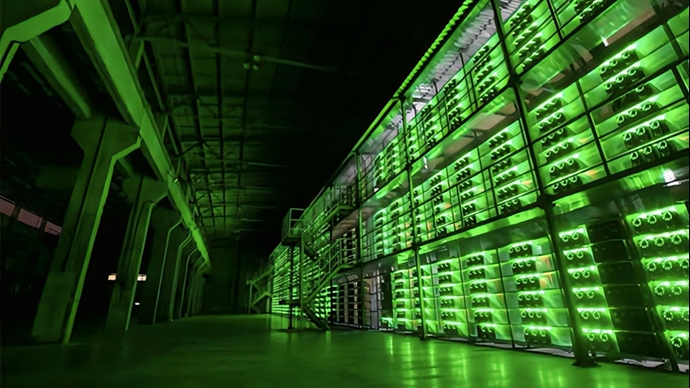
Reports of cryptocurrency mining farms operating in Iran began to surge. Concurrently, from the summer of 2019, severe power outages became a nationwide phenomenon. Sources indicate this timing was no coincidence. Under Khamenei’s directive, the IRGC, in collaboration with Chinese partners, established massive mining operations to generate Bitcoin and other cryptocurrencies, aiming to compensate for the regime’s dwindling access to dollars. These energy-guzzling farms quickly became a primary driver of the widespread blackouts.
The IRGC and Khamenei-linked entities at the helm
The IRGC stands as the central pillar of this crypto mining “mafia,” leveraging its extensive control over Iran’s economy and security apparatus to direct these operations. However, the network extends to other powerful, Khamenei-linked institutions. Reports highlight that major mining operations are controlled not only by the IRGC but also by entities such as Astan Quds Razavi, a massive bonyad (charitable trust) under the direct supervision of the Supreme Leader. These organizations effectively form a cartel, exploiting national resources for their gain.
Vast scale and state control under a legal veneer
While the Iranian regime officially recognized cryptocurrency mining as a legal industry in 2019, with licensing ostensibly managed by the Ministry of Industry, Mines, and Trade, this has primarily served to consolidate control for regime-affiliated entities. Estimates suggest around 180,000 mining devices are active in Iran. Of these, approximately 80,000 are in private hands, leaving a substantial portion—potentially up to 100,000 units—under the direct control of state or quasi-state organizations. This framework allows the regime’s cartel to operate with a semblance of legitimacy while commandeering a vast share of the country’s energy.
Foreign involvement and official acknowledgements
The regime’s crypto operations also involve foreign partners, primarily from China. In 2020, Reza Ardakanian, the then-Minister of Energy, publicly admitted that the government had issued licenses to foreign investors, including Chinese entities, to engage in cryptocurrency mining. This was echoed by the state-run “Haft Sobh” newspaper, which reported at the time that “the largest mining farms in Iran are in the hands of the Chinese, who operate with the cooperation of governmental institutions.”
The large mining farm in Rafsanjan, established with Chinese investment, serves as a prominent example of such collaborations, underscoring the international dimension of this resource drain.
Privileged access and immense energy consumption
These regime-controlled mining farms are the primary culprits behind the excessive electricity consumption driving the power crisis. They often operate with heavily subsidized or even free electricity and enjoy immunity from the oversight and legal repercussions that ordinary citizens or smaller, private miners might face, thanks to their powerful political connections. The sheer scale of energy consumed is staggering. A May 2019 report by the Strategic Research Institute of the regime’s Expediency Council noted that mining a single Bitcoin requires approximately 2,150 kilowatt-hours of electricity, an amount equivalent to the energy content of 20 barrels of oil.
The regime’s blame game exposes its hypocrisy
Despite clear evidence of its own entities draining the national grid, the regime consistently deflects blame for the power outages onto the general public, citing high household consumption. This narrative, however, crumbles under scrutiny. While ordinary Iranians face darkness and disruption, the IRGC’s and Khamenei’s crypto operations continue to devour electricity largely unchecked.
Enforcement actions, when they occur, disproportionately target small, often unauthorized, private miners, while the large, politically connected operations continue their plunder with impunity.
Profit over people
The severe power shortages are not an unavoidable consequence of sanctions or public demand alone. They are a direct result of a calculated strategy by the Iranian regime’s core institutions—Khamenei’s office and the IRGC—to enrich themselves and secure foreign currency through energy-intensive cryptocurrency mining.
This crypto cartel operates with blatant disregard for the well-being of the Iranian people, diverting essential resources and plunging the nation into darkness to fuel its financial ambitions. The suffering of millions is the price paid for the profits of a corrupt elite. This is one more reason that the people’s livelihoods will only improve after the regime is overthrown and replaced by a democratic state that serves the welfare of the people.