

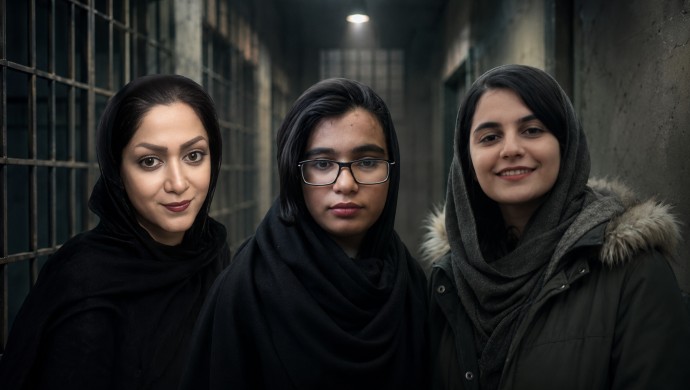

On the eve of the 61st anniversary of the founding of the People’s Mojahedin Organization of Iran (PMOI/MEK) on September 6, political prisoners in Evin and Yazd prisons have sent messages marking the occasion and declaring that decades of imprisonment and executions have failed to extinguish the resistance that began in 1965.
In a joint message from Evin Prison, political prisoners Arghavan Fallahi and Forough Taghipour trace their struggle from the PMOI’s founders to the political prisoners executed in 1988 and a new generation of PMOI supporters who have been executed in recent months. Their message culminates in a direct response to the regime’s repression: “Put us in prison or close our throats with the hangman’s noose; we have become one living spirit that never dies.”
From Yazd Central Prison, political prisoner Parisa Kamali describes the anniversary in deeply personal terms. “If today I stand on the right side of history, I owe it to the People’s Mojahedin Organization of Iran,” she writes, adding that the organization “opened my eyes to the realities.”
🚨 EXCLUSIVE | Message From Political Prisoner Parisa Kamali in Yazd Prison
In an exclusive message from Yazd Central Prison, political prisoner Parisa Kamali marks the 61st anniversary of the founding of the PMOI:“If today I stand on the right side of history, I owe it to the… pic.twitter.com/VQzWbLxbBL
— SIMAY AZADI TV (@en_simayazadi) September 3, 2026
The significance of the messages lies as much in where they were written as in their words. Arghavan Fallahi is under a death sentence that has been upheld by the regime’s Supreme Court. Forough Taghipour has already received an additional prison sentence for issuing a political message from prison. Kamali is serving an eight-and-a-half-year sentence in internal exile in Yazd.
Yet their letters do not portray themselves primarily as victims. They speak instead as participants in a struggle they believe has passed from one generation to another for 61 years. Their central message is that prison, torture, and execution have failed to accomplish their intended purpose: breaking that continuity.
From Evin: “We have become one living spirit that never dies”
Fallahi and Taghipour begin their joint message by looking back to the PMOI’s origins. “We are of the bloodline of Mohammad Hanifnejad, Saeid Mohsen, and Ali Asghar Badizadegan,” they write, referring to the three men who founded the organization in September 1965.
But the letter quickly turns the anniversary from a remembrance of the past into a statement about the present.
They describe a movement that, in their view, has challenged “two dictatorships, the Shah and the Sheikh,” and has carried what they call the “torch of honesty and sacrifice” through six decades of repression.
“This path, with all its ups and downs, is so beautiful and extraordinary that after 61 years it has not only failed to grow old, but becomes fresher and more vibrant with every passing day,” they write.
The women then identify themselves with another generation: the political prisoners executed in the 1988 massacre. “We are of the generation of those who went to the gallows in 1988,” they declare, describing them as embodiments of fidelity to their commitments and unlimited sacrifice.
Yet Fallahi and Taghipour do not stop with previous generations. They explicitly place themselves among Iran’s young generation today.
“We are Generation Z, against dictatorship and dependency, against the Shah and the mullahs,” they write.
It is one of the most significant statements in their letter. For the two prisoners, the PMOI’s 61-year history is not a memory preserved by an older generation. They present themselves as a new link in that history.
A new generation carries the names of those executed
The most immediate bridge between generations in the Evin message comes when Fallahi and Taghipour name four PMOI members executed by the regime this year: Babak Alipour, Pouya Ghobadi, Vahid Bani Amerian, and Mehdi Khanaki.
Alipour and Ghobadi were executed on March 31. Bani Amerian was executed on April 4. Khanaki, a 26-year-old law graduate arrested following the January 2026 uprising, was executed on July 22.
Fallahi and Taghipour describe them not as a generation that has disappeared, but as one that continues through those still resisting.
“We sing with Pouya’s voice, see with Vahid’s eyes, walk with Babak’s feet, and love the people with Mehdi’s heart,” they write.
“We learned to fly from the doves who became stars.”
Their choice of words captures the central argument running through the letter: execution does not end political aspirations. The prisoners present those who have been killed as examples whose choices are consciously being taken up by others.
They make that connection even more explicit when describing the impact of those deaths on themselves: “The grief of losing such precious people not only does not bring us to our knees, it tightens our fists and makes the fire of anger within us burn more fiercely.”
The stakes behind the message from Evin
The threat of execution in the joint letter is not rhetorical.
Fallahi was sentenced to death on July 1 by Branch 15 of Tehran’s Revolutionary Court. On August 25 the regime’s Supreme Court had upheld the sentence.
Taghipour, meanwhile, has already been punished specifically for speaking from behind bars. In May, a revolutionary court imposed an additional one-year prison sentence on her over a message she issued for Student Day in 2025.
Both women were also among political prisoners denied family visits after singing anthems and chanting “No to execution” as part of the “No to Executions Tuesdays” campaign.
Those circumstances give particular weight to the joint letter’s most forceful passage.
Referring to a government that seeks to assert its authority “with repression and an increase in executions,” Fallahi and Taghipour write: “Put us in prison or close our throats with the hangman’s noose; we have become one living spirit that never dies.”
For Fallahi, the reference is to a noose that directly threatens her own life. For Taghipour, issuing the message means speaking again despite having already received an additional sentence for doing precisely that.
The message therefore becomes more than an expression of support for the PMOI. The act of delivering it is itself a demonstration of the claim the two women make: the threat of additional imprisonment and even death has not silenced them.
From Yazd: “If today I stand on the right side of history”
Parisa Kamali’s message from Yazd Central Prison approaches the anniversary from a more personal perspective.
“If today I stand on the right side of history, I owe it to the People’s Mojahedin Organization of Iran,” she writes.
She recalls the founding of the organization by Hanifnejad, Mohsen, and Badizadegan and describes its history as “61 years” of standing against “every form of dictatorship, whether the Shah or the Sheikh.”
But Kamali’s strongest passage is about what that history means to her personally.
“The People’s Mojahedin Organization of Iran is what opened my eyes to the realities,” she writes. She says its existence gives her hope and declares: “I shout its name with every drop of my blood and every particle of my being.”
These words come from a prisoner serving an eight-and-a-half-year sentence. Kamali was transferred into internal exile in Yazd Prison in 2025 and has repeatedly issued messages from behind bars.
Her anniversary message therefore continues an established pattern. Prison has not separated Kamali from the political struggle with which she identifies. On the contrary, she uses the prison itself as the place from which she reiterates that identification.
“Happy anniversary of the founding of the People’s Mojahedin Organization of Iran to every awakened conscience and every freedom-loving and free-thinking person,” she concludes.
Full text of the messages
Message from Yazd Central Prison — Parisa Kamali
September 2026
If today I stand on the right side of history, I owe it to the People’s Mojahedin Organization of Iran, founded on September 6, 1965, by three great men—Mohammad Hanifnejad, Saeid Mohsen, and Ali Asghar Badizadegan—and preserved through the wisdom of Massoud Rajavi until it reached us.
What a blessed day this is. The existence of an organization that builds human character on the foundations of honesty and sacrifice, and that throughout 61 years of struggle has stood against every form of dictatorship, whether the Shah or the mullahs, has created a star-filled path—a blood-stained path bearing witness to sacrifice, leading toward freedom, the establishment of justice, and prosperity.
My Organization, my eyes are illuminated by you, O my entire body and soul.
The People’s Mojahedin Organization of Iran is what opened my eyes to the realities, and today it is a source of hope for me. I shout its name with every drop of my blood and every particle of my being. Thus the blessing upon me is complete.
Happy anniversary of the founding of the People’s Mojahedin Organization of Iran on September 6 to every awakened conscience and every freedom-loving and free-thinking person.
Parisa Kamali — Yazd Central Prison
Joint message from Evin Prison — Arghavan Fallahi and Forough Taghipour
September 2026
On the 61st anniversary of the founding of the proud People’s Mojahedin Organization of Iran, we, political prisoners Arghavan Fallahi and Forough Taghipour, from behind the fragile walls of Evin Prison, send thousands of salutations and congratulations to the heroic people of Iran, the courageous Resistance Units and standard-bearers of this glorious resistance, Maryam and Massoud Rajavi, and all the PMOI members.
We are of the bloodline of Mohammad Hanifnejad, Saeid Mohsen, and Ali Asghar Badizadegan, those who in September 1965 planted the seed of an organization that grows and blossoms more with every passing day.
An organization that has offered new ideas and new thinking in different fields and challenged everything obsolete and reactionary.
An organization that, in the battle against two dictatorships—the Shah and the mullahs—has become a progressive benchmark of struggle, to the point that anyone seeking to enter the field must first define where they stand in this struggle.
An organization that has the ability to act and organize from the streets of Iran and from Evin and Ghezel Hesar prisons to countries across the world, and that has taken a major step toward eliminating exploitation.
An organization that in every time and place has carried the torch of honesty and sacrifice and has offered the greatest sacrifices and endured the most difficult moments for “freedom.”
We are of the generation of those who went to the gallows in 1988, those who, in the words of the Quran, are forever alive and who embody fidelity to their pledge and boundless sacrifice. Their legacy manifested itself in the eruption of fiery anger in January 2026 and the roar of the Iranian people’s forceful struggle, and history once again witnessed the vindication of the path of the Mojahedin and the statements of the Resistance leadership.
Yes. This path, with all its ups and downs, is so beautiful and extraordinary that after 61 years it has not only failed to grow old but becomes fresher and more vibrant with every passing day. At every step, we understand its righteousness more deeply and see how it inches toward “Tawhid” [oneness] and moves toward creating a new culture, a new society, and a new human being.
We are Generation Z—against dictatorship and dependency, against the Shah and the mullahs—and we continue in the footsteps of our fellow PMOI generation: Babak Alipour, Vahid Bani Amerian, Pouya Ghobadi, and Mehdi Khanaki. How many red flowers have stepped onto this path and embraced the heavens with open arms. Blessed are those whose bond with God and the people became eternal and who stood by their pledge until their final breath. The grief of losing such precious people not only does not bring us to our knees; it tightens our fists and makes the fire of anger within us burn more fiercely. Soon the trembling might of the evil demon of this execution-driven government will be shattered. Under the cover of war, it seeks through repression and increasing executions to prove an authority that is hollow and already lost, unaware that whether you throw us into prison or close our throats with the hangman’s noose, we have become one living spirit that never dies.
We sing with Pouya’s voice, see with Vahid’s eyes, walk with Babak’s feet, and love the people with Mehdi’s heart.
We learned to fly from the doves who became stars.
Long live the anniversary of the founding of the People’s Mojahedin Organization of Iran.
Long live the new democratic republic of Iran.
Hail to Rajavi.
Political prisoners and supporters of the People’s Mojahedin Organization of Iran
Arghavan Fallahi and Forough Taghipour
Evin Prison — September 2026