

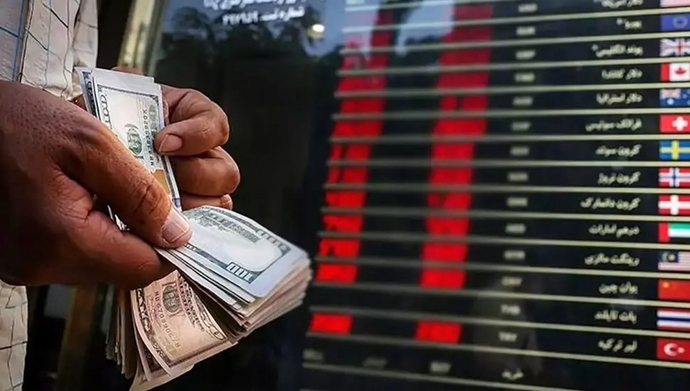

How does a country blessed with some of the world’s largest oil and gas reserves find itself trapped in a quagmire of chronic inflation, currency devaluation, systemic corruption, and a massive exodus of human and financial capital, rather than standing at the pinnacle of development? Answering this requires moving beyond surface-level economic concepts and diving into the deep layers of “political economy.”
A close look at Iran’s economy demonstrates how oil revenues, in the absence of democratic and transparent institutions, led to the formation of a “rentier state.” A cascade of crises followed one another, beginning with Dutch disease and the destruction of domestic production, leading to budget deficits and money printing, and resulting in structural inflation.
Ultimately, it culminated in the state’s capture by a military-security oligarchy, fostering crony capitalism, monopolies, and the irreversible flight of elites and capital. Iran’s economic problem is not a lack of resources; it is the governance of those resources.
1. The Rentier State and the Severed Social Contract
The starting point of this chain is the concept of the “rentier state.” In healthy, production-based economies, the government relies on citizens’ taxes to fund its expenses. This mutual financial dependence creates an unwritten social contract: “taxation in exchange for accountability, transparency, and efficient services.” However, the discovery of oil and the effortless influx of foreign currency into the state treasury upended this equation.
A rentier state does not need its citizens’ taxes, and consequently, it feels no obligation to answer to them. In this structure, national wealth—rather than acting as a lever for development—becomes a tool to consolidate political power, distribute rents, and fund patronage and security networks. This is where the “resource curse” manifests. Massive oil revenues, instead of developing infrastructure, are spent on inflating the government apparatus and suppressing society, downgrading the country from a “producing society” to a “rent-distributing society.”
2. Dutch Disease and the Collapse of Domestic Production
The rentier state’s first blow to the economy is “Dutch disease.” As petrodollars enter the economy and are injected by the government, the demand for goods skyrockets. To control prices and project an illusion of prosperity, the government artificially suppresses the exchange rate. This policy results in cheap imports while making domestic production exorbitantly expensive.
Under these conditions, factories lose their ability to compete with cheap foreign goods, industries shut down, and agriculture declines. Capital flees productive sectors and moves toward non-productive but highly profitable activities like speculation, importing, real estate, and land. Oil, which was supposed to be the engine of production, becomes the silent killer of domestic industry.
3. Oil Budgets, Structural Inflation, and Currency Collapse
Dutch disease leaves the economy addicted to imports and petrodollars, yet the global oil market is inherently volatile. With the first shock to global oil prices or the imposition of sanctions, the government faces the ominous phenomenon of “budget deficits.” A state that has massively bloated its current expenditures suddenly finds itself without the revenue to cover them.
Lacking a production-based economy to tax, the bankrupt government resorts to its last and most destructive refuge: “printing money” and borrowing heavily from the central bank. The unchecked expansion of the monetary base and liquidity, unbacked by actual production, leads to “structural and chronic inflation.” Inflation here is not merely a monetary phenomenon; it is a hidden tax extracted from the pockets of the poor and deposited into the accounts of the wealthy and asset owners. The continuation of this cycle destroys public trust in the national currency, prompting citizens to rush toward purchasing foreign currencies and gold to preserve their wealth, ultimately triggering the freefall of the national currency.
4. Oligarchy, Crony Capitalism, and Military Dominance Over the Economy
When production is destroyed and rent-seeking becomes the sole path to wealth, the structure of economic power shifts. An “economic oligarchy” is born—a powerful minority that seizes control of the main sources of wealth. In Iran’s political structure, this oligarchy is specifically monopolized by institutions subordinate to the Supreme Leader and his military arm, the Islamic Revolutionary Guard Corps (IRGC). With the economy falling into the hands of the military, “crony capitalism” replaces free competition.
The success of a business no longer depends on productivity, innovation, and effort; rather, it hinges on how close an individual is to the core of power, security apparatuses, the IRGC, and the appointees of Supreme Leader.
In this environment, “quasi-state enterprises” (Khosulati) emerge—the vast majority operating as construction headquarters, foundations, and holding companies affiliated with the military. Enjoying unfair advantages, massive tax exemptions, rents, non-repayable loans, and subsidized foreign currency, they stifle competition and drive the genuine private sector out of the market.
5. State Capture and Institutionalized Structural Corruption
Once the military-security oligarchy becomes sufficiently powerful, it transcends the economy and enters the phase of “state capture.” At this stage, networks affiliated with the IRGC and the office of the Supreme Leader do not merely bypass the law; they rewrite legislation to serve their own interests. The parliament, the government, and regulatory bodies effectively become executors enacting laws to guarantee the interests of this economic empire.
In such a state, “corruption” is no longer an individual transgression or an exception; it becomes the “rule” and the “structure” itself. The system is fundamentally designed to reproduce corrupt behavior.
A prime example of this structural corruption is the phenomenon of “Trustees” (sanctions evaders and middlemen). These networks, fully trusted and endorsed by security institutions and the Supreme Leader himself under the guise of bypassing sanctions and selling oil, plunder billions of dollars of national wealth (Anfal) without any independent body having the courage or authority to oversee them.
6. The Final Stop: Capital Flight and the Brain Drain
Capital requires security and stability above all else. An economy plagued by chronic inflation, where laws are dictated by military institutions and competition is meaningless, loses its security. Consequently, “capital flight” begins. Instead of building factories domestically, investors transfer their capital to safer neighboring countries.
However, the most painful and irreversible link in this grim chain is the “brain drain,” or the exodus of human capital. Individuals whose expertise, skills, and knowledge took years of investment to cultivate choose to leave when they realize that merit holds no value in a military-dominated economy, and advancement depends solely on ties to networks of rent and corruption. With the departure of elites, entrepreneurs, doctors, and engineers, the country’s development future and innovation capacity are plundered for decades to come. A light that could have illuminated Iran’s economy is instead turned on in another geography, for another nation.
The Necessity of Fundamental Change
Examining this interconnected chain—from oil wells to departure gates at airports—proves a bitter but clear truth: the main culprit for this backwardness is not the oil itself, but the predatory structure that has taken Iran’s political economy hostage. The experience of the past decades has shown that this system is fundamentally unreformable, and theories like “institutional improvement” within the current framework are merely a mirage.
As long as the arteries of the economy remain in the clutches of the military oligarchy and crony networks, injecting billions of dollars of oil revenue will only reproduce ruin, inflation, and capital flight. Escaping this destructive deadlock is impossible through temporary painkillers and empty promises. It can only be achieved by establishing a democratic state, entirely dismantling the military’s grip on the economy, uprooting the corruption of the supreme leader’s rule, and restoring sovereignty to the hands of the people. Only under such conditions will national wealth be liberated from the monopoly of predators and placed in the service of public welfare and sustainable development.