

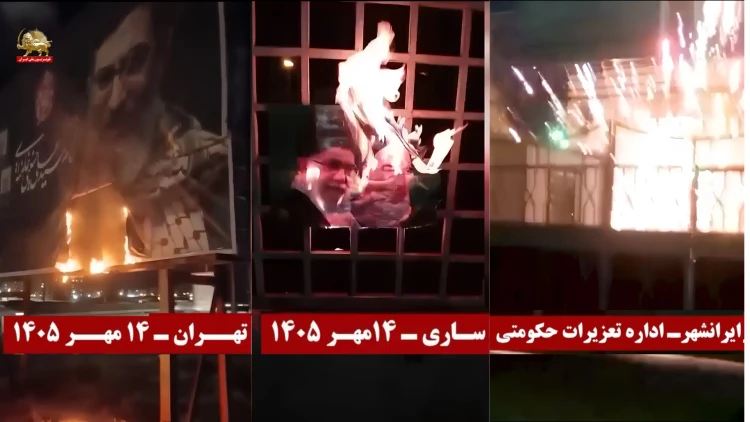

On October 6, PMOI/MEK Resistance Units carried out 20 operations against the Iranian regime’s centers and symbols of repression in response to the execution of Alireza Sepahi and Alireza Raisi, two young protesters arrested during the January 2026 uprising.
The operations were reported in Tehran and 15 other cities, including Shahriar, Andisheh, Isfahan, Mashhad, Chabahar, Zahedan, and Bandar Abbas. They targeted IRGC Basij facilities, propaganda promoting the regime’s intelligence and surveillance apparatus, and billboards and posters featuring regime leaders.
October 6—Iran
PMOI/MEK Resistance Units carry out 20 daring operations against the regime's centers and symbols of repression in response to the criminal execution of Alireza Raisi and Alireza Sepahi, two young protesters arrested during the January 2026 uprising. pic.twitter.com/kiUNGQgozG— People's Mojahedin Organization of Iran (PMOI/MEK) (@Mojahedineng) October 8, 2026
The campaign came just one day after the two young protesters were executed in Isfahan, demonstrating the contrast between the regime’s attempts to intimidate society through executions and the continued activities of organized resistance across Iran.
Targeting the regime’s apparatus of repression and surveillance
Several operations directly targeted institutions associated with the regime’s security and intelligence apparatus.
In Chabahar, Resistance Units set fire to the entrance of an IRGC Basij base. In Iranshahr, they targeted a regime building, while in Zahedan, they set fire to a signpost of another Basij base.
Other operations focused on the regime’s intelligence and surveillance apparatus. In Bandar Abbas, Resistance Units set fire to a propaganda billboard promoting the IRGC’s espionage department. In Bandar Ganaveh, they targeted a billboard advertising a Ministry of Intelligence department responsible for spying on citizens and dissidents. A similar operation in Shahriar targeted a poster promoting the IRGC’s intelligence apparatus.
Andisheh
Resistance Units torch poster featuring Ali Khamenei and Mojtaba Khamenei pic.twitter.com/U6VjjrUic4— People's Mojahedin Organization of Iran (PMOI/MEK) (@Mojahedineng) October 8, 2026
In Isfahan, Resistance Units also set fire to a banner promoting the Basij.
The Basij and intelligence agencies constitute central pillars of the regime’s system of repression and surveillance. By targeting facilities and propaganda associated with these institutions, the Resistance Units challenged the apparatus on which the regime relies to intimidate society and suppress dissent.
Challenging the regime’s symbols of power
Another significant part of the campaign targeted the regime’s propaganda infrastructure and images of its leaders.
In Tehran, Resistance Units set fire to a billboard featuring regime supreme leader Mojtaba Khamenei. In Shahriar, they torched a banner featuring former supreme leader Ali Khamenei, while in Andisheh, they targeted a poster displaying both Ali and Mojtaba Khamenei.
In Isfahan and Mashhad, Resistance Units set fire to posters featuring Mojtaba Khamenei. Similar operations were reported in Sabzevar, where separate posters of Ali and Mojtaba Khamenei were targeted.
Iranshahr
Resistance Units set fire to regime building pic.twitter.com/Biz7Li0OpL— People's Mojahedin Organization of Iran (PMOI/MEK) (@Mojahedineng) October 8, 2026
In Sari, Resistance Units set fire to a poster featuring regime founder Ruhollah Khomeini and Ali Khamenei. In Birjand, they targeted a poster featuring Ali and Mojtaba Khamenei, while in Nikshahr, they burned another poster displaying regime leaders.
Through these images and propaganda installations, the regime seeks to project authority and reinforce its presence in public spaces. The operations challenged that image of unquestioned power, demonstrating that even amid intensified repression, the regime’s symbols continue to face open defiance.
The executions that triggered the response
On October 5, the regime executed Alireza Sepahi, 24, and Alireza Raisi, 21, at Dastgerd Prison in Isfahan. Both had been arrested during the January 2026 uprising.
The two young men were defendants in the Alikhani Square case, stemming from protests in Isfahan. The regime accused them of offenses including moharebeh, or enmity against God, and corruption on earth.
The judicial proceedings were marked by serious violations of defendants’ legal rights, including denial of access to independent lawyers and restrictions preventing defense attorneys from examining case files.
Isfahan
Resistance Units set fire to poster of Mojtaba Khamenei pic.twitter.com/fW7G7o9CU4— People's Mojahedin Organization of Iran (PMOI/MEK) (@Mojahedineng) October 8, 2026
Their executions brought to seven the number of protesters executed in the same case since July. Several others remain under death sentences.
The executions are part of the regime’s broader attempt to terrorize society following the January uprising. By imposing death sentences on young protesters, the authorities seek to make participation in future uprisings synonymous with the threat of imprisonment and execution.
The executions have failed to silence resistance
The October 6 operations exposed the fundamental contradiction in the regime’s strategy of repression. While the authorities seek to create an atmosphere of fear through executions, the Resistance Units continue to challenge the regime’s institutions and symbols of power across the country.
The executions of protesters were intended to serve as a warning to anyone considering another uprising. Instead, they were followed by a campaign of defiance that kept the memory of the executed protesters alive.
The regime may use the gallows to suppress dissent, but it has failed to extinguish the flame of resistance. The blood of the martyrs of the January uprising has not been shed in vain, and their struggle for freedom continues.