

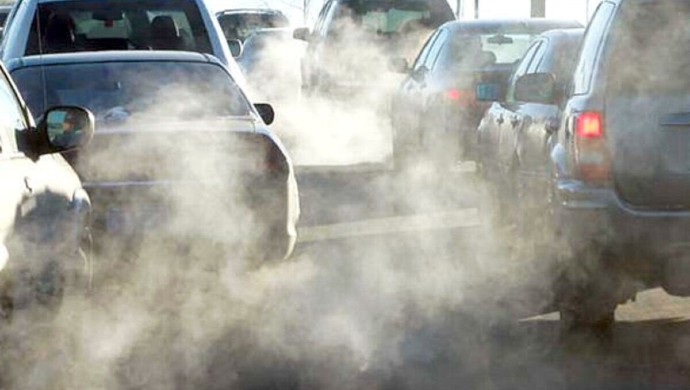

The air pollution crisis in Iran has transcended the boundaries of an environmental challenge, reaching a deadly threshold that can only be described as a “silent massacre.” As winter sets in and flu season exacerbates respiratory issues, the Iranian people are not just battling viruses, but a toxic atmosphere engineered by regime corruption. According to official admissions by the regime’s own Ministry of Health on November 10, air pollution now claims the lives of 57,000 Iranians annually. This staggering figure can no longer be dismissed as the cost of industrial development or a natural occurrence; it is a systematic killing where the perpetrators are well-known figures within the ruling establishment.
While the burning of Mazut (heavy fuel oil) in power plants is a significant factor, a second, equally lethal culprit is the mass production of substandard vehicles by domestic manufacturers. These entities operate as an “automotive mafia” directly linked to the pinnacle of power and Supreme Leader Ali Khamenei. This mafia imposes the lowest quality vehicles on the public at astronomical prices.
Regime officials have been forced to admit the existence of this corrupt network. In 2023, former Minister of Industry, Mine and Trade Reza Fatemi-Amin, acknowledged that “Mafias do not want prices to drop.” Similarly, the former CEO of the state-owned Saipa automaker confessed that mafia elements control the industry from the outside. On November 10, the regime’s Deputy Health Minister stated plainly: “We are facing an automotive mafia. Domestic automakers produce low-quality cars with high fuel consumption.” He added that the primary victims of this pollution are the “young and productive workforce,” the very demographic the country’s future depends on.
The scale of this negligence is reflected in the grim statistics. According to regime experts, 60 percent of urban pollution stems from light, inner-city transport. In Tehran alone, where five million vehicle trips occur daily, at least 40,000 dilapidated taxis have become “mobile sources of pollution.”
Official data reveals that out of 41 million vehicles circulating in the country, over 22 million—more than half—are worn-out. This dilapidated fleet is physically choking the population. The financial toll is equally devastating; the Ministry of Health reported that air pollution inflicted a $17 billion loss on the country last year. Furthermore, when combining the 57,000 pollution-related deaths with the 24,000 annual deaths caused by road accidents involving these unsafe cars and hazardous roads, the regime is effectively responsible for the loss of roughly 80,000 lives per year.
The economic pressure on the people is immense. When the “Pride” vehicle model was discontinued, no affordable replacement was introduced, and prices for the remaining stock surged to 3 billion rials, forcing young Iranians into debt to purchase “death traps” that endanger their lives and the environment.
The solution to this crisis is technically simple but politically impossible under the current rule. Reports indicate that if worn-out cars were removed and production met global standards, daily gasoline consumption would drop by 60 million liters, drastically reducing pollution. However, the market remains a captive monopoly.
This blockade on progress leads directly back to Ali Khamenei. In May 2016, Khamenei personally intervened to ban the import of foreign vehicles, stating, “See what should be imported and what shouldn’t… one must stand firm against these.” Following his order, the Ministry of Industry banned foreign car orders in November 2016. This directive secured the market for the regime-affiliated mafia, ensuring their profits at the cost of Iranian lives.
Ultimately, the 57,000 annual deaths are the direct result of specific policies: the burning of Mazut and the monopoly of the automotive mafia. In this equation, Khamenei’s role is not marginal; he is at the head of this mafia. He is not only responsible for the execution of dissidents but is directly culpable for the silent slaughter of the Iranian people through pollution.