


As of December 18, 2025, the people of Iran are facing a bitter winter. While cold weather, the flu, and severe economic hardship have already made life difficult, the clerical regime is subjecting the population to the hidden crime of burning Mazut. Mazut is the heaviest, dirtiest residue of crude oil, full of sulfur and heavy metals. It is a fuel the world abandoned years ago, yet the mullahs inject it directly into the people’s lungs.
While the regime’s president Masoud Pezeshkian has been in office for over a year, his administration has failed to curb a pollution crisis that is literally choking the nation. According to the regime’s own Ministry of Health, 59,000 Iranians fall victim to air pollution every year.
The regime’s “big lie”: denial and cover-up
Despite the toxic smog blanketing the cities, regime officials continue to lie about the source. On December 9, 2025, Foroughi, an official in the electricity industry, claimed that “for 10 years, no power plant in Tehran has burned Mazut.” However, the lie was so blatant that even state-run media exposed it just a day later. Reports admitted that Mazut consumption in power plants jumped from 37 million liters to 88 million liters in the first half of December alone—a staggering 138 percent increase.
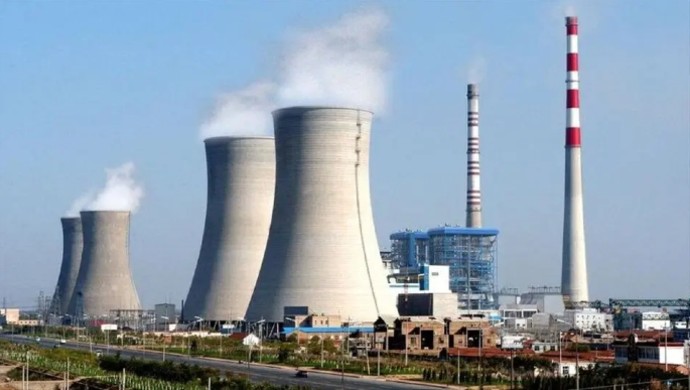
Currently, 15 major power plants, including Rajaei, Montazer Ghaem, and Tabriz, are burning approximately 21.1 million liters of this toxic fuel daily. This massive volume of combustion releases 63,000 tons of carbon dioxide and over 1,000 tons of sulfur dioxide (SO2) into the air every day. These pollutants are not merely dirty; they are lethal. SO2 is a primary cause of acid rain and acute respiratory diseases, while particulate matter (PM10) penetrates deep into the lungs, causing heart attacks and premature death.
Why burn poison? The cost of plunder
Why does a country sitting on the world’s second-largest gas reserves resort to burning toxic sludge? The Mazut produced in Iran is so laden with sulfur—six to eight times the global standard—that no other country is willing to buy it. Consequently, the dictatorship injects it into the lungs of its own citizens.
The root cause of this crisis is the catastrophic “imbalance” in the energy sector caused by decades of looting and negligence. The electricity deficit has reached 16,000 megawatts, roughly equivalent to the capacity of 16 nuclear power plants the size of Bushehr. To put the scale of this failure in perspective, the current electricity shortage in Iran is equal to the total power generation capacity of a country like Switzerland.
War over welfare
Solving this crisis requires an investment of at least $20 billion to fix the dilapidated infrastructure. The regime has the funds, yet supreme leader Ali Khamenei and his mafia of power refuse to spend it on the Iranian people. Instead, the nation’s wealth is poured into nuclear projects, missile programs, and the support of proxy terrorist groups, or it disappears into the pockets of corrupt officials.
The black smoke rising over Iran’s cities is the visible result of a regime that views the lives of the people as expendable. The systemic burning of carcinogenic fuel is not a technical failure; it is a political choice to prioritize the machinery of suppression and warmongering over the health and safety of the Iranian population.