

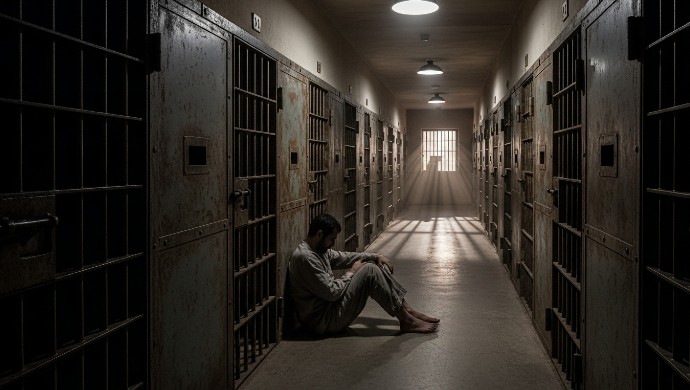

An influential coalition of 301 international human rights experts, Nobel laureates, and former senior UN officials issued an urgent warning on July 23, declaring that the Iranian regime is showing clear signs of preparing for another mass execution of political prisoners. The statement, organized by Justice for the Victims of the 1988 Massacre in Iran (JVMI), was sent to top UN officials and member states, cautioning that “the risk of another mass atrocity, reminiscent of the 1988 massacre, is alarmingly real.”
This grave warning comes as the regime’s state-controlled media has begun openly inciting mass murder, and its judiciary accelerates the pace of executions, particularly targeting supporters of the organized opposition.
A public call for annihilation
In an unprecedented and chilling move, the regime’s Revolutionary Guards (IRGC) have publicly declared their murderous intentions. An editorial published on July 7, 2025, in the IRGC-affiliated Fars News, titled ‘Why the 1988 Executions Should Be Repeated,’ praised the 1988 slaughter of over 30,000 political prisoners as a “‘successful historical experience.’” The piece went on to explicitly call for similar brutal measures to be taken against political prisoners currently held in the regime’s dungeons. This is not mere rhetoric; it is a clear policy directive from the heart of the regime’s repressive apparatus, signaling an intent to annihilate all forms of dissent.
Executions surge under Pezeshkian’s watch
The regime’s threats are being matched by its actions. Under the presidency of Masoud Pezeshkian, who took office in August 2024, the execution machine has gone into overdrive. Over 1,300 people have been executed since he took office, with an astonishing 650 hangings in 2025 alone. This wave of killings is increasingly targeting political dissidents and supporters of the People’s Mojahedin Organization of Iran (PMOI/MEK).
On July 12, 2025, three opposition activists—Farshad Etemadi-Far, Masoud Jamei, and Alireza Mardasi—were sentenced to death in Ahvaz on the charge of “waging war on God” for their support of the PMOI. Dozens more face a similar fate, including political prisoners Behrouz Ehsani and Mehdi Hassani, who are at imminent risk of execution after the Supreme Court rejected their final appeal for a judicial review in July.
A chilling warning from inside prison walls
The alarm is also being raised by those who would be the first victims. Political prisoner Saeed Masouri, a key figure in the “No To Executions Tuesdays” hunger strike campaign, recently smuggled a letter out of Ghezel Hesar Prison. He warned that the regime’s attempt to forcibly transfer him was a prelude to mass executions of other prisoners on death row. Drawing a direct parallel to the prelude to the 1988 massacre, he stated, “a crime is in progress.”
European lawmakers sound the alarm
The warning from the 301 experts is not an isolated event. It is being echoed by a coordinated wave of alarm sweeping across Europe, as parliamentary committees in the United Kingdom, Germany, Romania, the Netherlands, and the Nordic countries issue their own urgent statements. These lawmakers warn that the Iranian regime is exploiting international crises to prepare for a “second massacre” of political prisoners.
They argue this is a calculated strategy to eliminate the organized opposition, pointing to the fact that at least 15 political prisoners are currently on death row for their affiliation with the PMOI. Their statements highlight the same undeniable facts: the death sentences for activists, the targeting of long-serving prisoners like Saeed Masouri, and the regime’s new repressive law designed to expedite executions. They demand a unified international response, including making all diplomatic and economic relations with Tehran conditional on a verifiable halt to executions and an urgent UN fact-finding mission to Iran’s prisons. Their message is clear: the world must not sacrifice fundamental human rights for the sake of geopolitical maneuvering.
The world must not repeat the silence of 1988
The international experts have laid out a clear path for action to prevent this looming atrocity. They have called on UN High Commissioner for Human Rights Volker Türk and Special Rapporteur on Iran Dr. Mai Sato to unequivocally condemn the regime’s incitement and executions. They further demand that Canada and other democratic nations sponsoring the annual UN General Assembly resolution on Iran’s human rights add an explicit reference to the 1988 massacre, ensuring it is recognized as an ongoing crime against humanity.
The world stood by in 1988 as the regime murdered tens of thousands. As the experts’ statement concludes: “The international community failed to act in 1988. It must not fail again. The responsibility to prevent these crimes against humanity from being repeated rests with the United Nations and its member states.”