

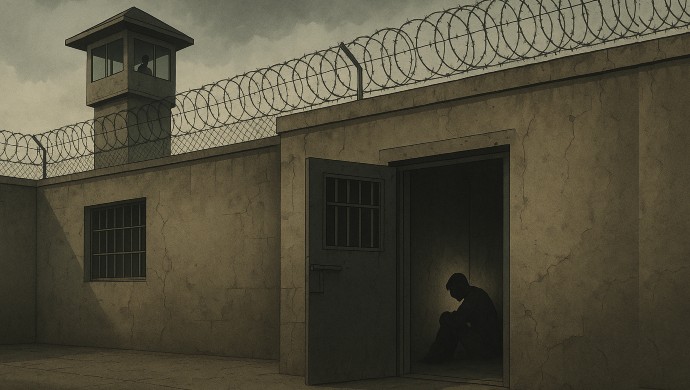

As the Iranian regime navigates the aftermath of a recent ceasefire, a disturbing pattern of intensified repression is emerging, targeting political opponents with renewed brutality. A stark warning issued by the National Council of Resistance of Iran (NCRI) on July 4, 2025, calls for immediate international action to save the lives of four political prisoners currently enduring torture. This specific alert is chillingly corroborated by a United Nations report released the same day, which confirms a widespread, systemic crackdown aimed at crushing all forms of dissent under the pretext of national security.
The NCRI’s urgent statement names Arghavan Fallahi, Bijan Kazemi, Mohammad Akbari Monfared, and Amirhossein Akbari Monfared as the latest victims of the regime’s terror apparatus. They are being subjected to prolonged interrogation and torture in an attempt by the Judiciary’s Intelligence Protection Unit to extract fabricated confessions. The regime aims to falsely link them to the recent deaths of notorious executioner judges Moghiseh and Razini, two of the judiciary’s most infamous figures responsible for countless death sentences.
Targeting the resistance, a decades-long vendetta
The regime’s selection of these prisoners is no coincidence; it reveals a deep-seated vendetta against families associated with the Iranian Resistance. The Akbari Monfared family has been a target for decades. Four of their members—Alireza, Gholamreza, Abdolreza, and Roghieh Akbari Monfared, all supporters of the People’s Mojahedin Organization of Iran (PMOI/MEK)—were executed by the regime in the 1980s. Their sister, Maryam Akbari Monfared, is now serving her sixteenth year in prison without a single day of medical leave, punished simply for seeking justice for her martyred siblings. The arrest of her brother Mohammad and nephew Amirhossein is a continuation of this relentless persecution.
Similarly, Arghavan Fallahi is the daughter of Nasrollah Fallahi, a political prisoner from the 1980s who is currently serving a five-year sentence in Fashafuyeh Prison (Greater Tehran Prison). This pattern demonstrates that the floundering regime is not only attacking the current generation of activists but also settling old scores with families who have a long history of resisting its tyranny.
A systemic post-war crackdown confirmed by the UN
The plight of these four individuals is the sharp end of a much wider campaign of terror. The UN Office of the High Commissioner for Human Rights (OHCHR) issued a report on July 4 expressing alarm over the regime’s crackdown since the ceasefire began. UN experts warned, “Post-conflict situations must not be used as an opportunity to suppress dissent and increase repression.”
Press release: Post-conflict situations must not be used as an opportunity to increase repression against ethnic and religious minorities or suppress dissent. I am alarmed by reports of executions, mass arrests, particularly against of minorities, notwithstanding the impact of…
— Mai Sato (@drmaisato.bsky.social) (@drmaisato) July 4, 2025
The UN report details a terrifying surge in human rights abuses, including:
- The execution of at least six individuals since June 13 on charges of “espionage for Israel.”
- Mass arrests of hundreds of journalists, activists, and ethnic and religious minorities, including Kurds, Baluchis, and Baha’is.
- The imminent risk of execution for Swedish-Iranian researcher Ahmadreza Djalali, whose whereabouts are unknown.
- Dehumanizing rhetoric in state-linked media outlets labeling entire minority communities as traitors and using language that echoes the 1988 atrocities, which saw the massacre of over 30,000 political prisoners, mostly PMOI members.
A two-pronged assault: Brutality in prisons and through legislation
The two reports paint a unified picture of the regime’s dual strategy of physical and legal warfare against its people. The NCRI statement notes that prisoners were moved from Evin Prison to solitary confinement in Fashafuyeh. This is directly corroborated by the UN experts, who condemned the “deteriorating conditions faced by prisoners transferred from Evin Prison,” specifically naming the “Great Tehran Penitentiary” (Fashafuyeh) and Qarchak Prison, where inmates are held in “abysmal conditions.” The UN also warned that the unknown fate of some prisoners amounts to “enforced disappearances.”
Simultaneously, the regime is weaponizing its laws. The UN report highlights legislation being advanced in the parliament that would reclassify intelligence activities for “hostile Governments” as “corruption on earth”—a charge punishable by death. The experts correctly identify this as a “worrying expansion of the death penalty that violates international human rights law.”
A regime in crisis resorts to terror
The regime’s synchronized assault on its citizens is not a sign of strength, but a clear indicator of its profound weakness and fear of an increasingly restive population and their organized Resistance. By torturing prisoners, fabricating cases, and expanding the death penalty, the ruling clerics reveal their desperation.
The NCRI’s call for urgent action must be heeded. The international community has a responsibility to intervene to save these prisoners and hold the regime accountable. As the UN experts concluded, “The world is watching closely… Iran must not allow history to repeat itself by resorting to the same dark patterns of repression.” For the people of Iran, and for the cause of global human rights, that is a warning that cannot be ignored.